
Facial Redness After Exercise: Common Causes and How to Care for Your Skin
Intense facial flushing during or after a workout can be uncomfortable, distracting, and for some people, embarrassing enough to avoid exercise altogether. Understanding why the face turns red, when it's normal, and when it might signal a problem helps put that redness in perspective and makes it easier to build a skincare and workout routine that feels good as well as looks good.
This guide explores the main causes of post-exercise facial redness, how to tell what's normal versus concerning, and practical steps to calm, protect, and support your skin before and after training.
Why the Face Turns Red During Exercise
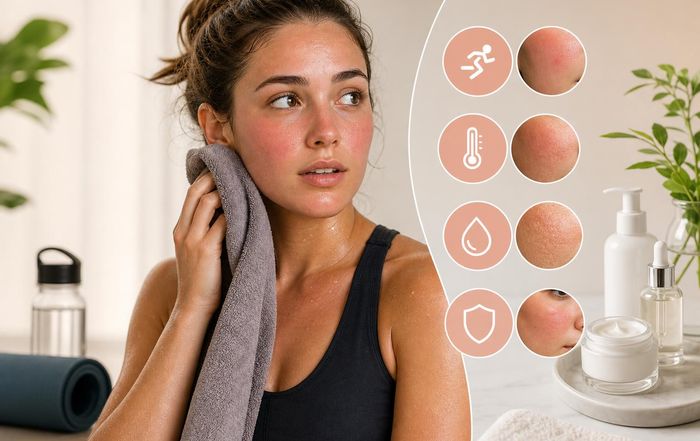
When the body heats up during physical activity, it activates a complex cooling system. One of the most visible changes is vasodilation: blood vessels, especially near the skin's surface, widen to release heat. The American Academy of Dermatology (AAD) explains that as these blood vessels open, more blood flows to the skin to help cool the body, which is why the face and neck often look flushed after a workout. This effect is more noticeable in people with lighter skin, but it happens across all skin tones, even if it is less obvious to the eye.
The face in particular tends to redden because facial skin has a dense network of superficial blood vessels and a relatively thin barrier in certain areas such as the cheeks and nose. As heart rate and body temperature rise, the sympathetic nervous system triggers increased blood flow to these vessels. At the same time, sweat production ramps up, which also helps regulate temperature. Together, this combination of vasodilation and sweating is a normal, healthy response to exercise and usually resolves within 30-60 minutes after you cool down and hydrate.
However, the degree of redness varies widely. Genetics, baseline skin sensitivity, underlying conditions like rosacea, medications, and environmental factors such as heat and humidity can all amplify the flushing response. Some people experience only a mild pink tone, while others develop a deep, hot redness that lingers for hours. Understanding where your skin sits on this spectrum is the first step toward tailoring your skincare and workout environment to minimize discomfort.
Common Causes of Facial Redness After Exercise
Several overlapping factors can drive or intensify facial redness during and after workouts. While some are purely physiological and harmless, others relate to skin conditions that may benefit from targeted skincare or medical advice.
1. Normal vasodilation and high-intensity effort
For many people, facial redness is simply a visible sign of working hard. High-intensity interval training (HIIT), sprinting, heavy lifting, and hot yoga sessions can all push heart rate and core temperature up quickly. According to sports physiology research summarized by organizations like the American College of Sports Medicine (ACSM), the body responds by increasing cardiac output and redirecting blood flow toward the skin to dissipate heat. People with higher cardiovascular fitness sometimes show less visible flushing at a given workload, not because they are "healthier" in a cosmetic sense, but because their bodies are more efficient at managing heat and circulation.
If your redness appears predictably with exertion, feels warm but not painful, and fades as your breathing and heart rate return to baseline, it is usually a normal response. That said, if the redness is accompanied by dizziness, confusion, nausea, or headache, it could be a sign of heat exhaustion or heat stroke, which require prompt cooling and, in more severe cases, medical attention.
2. Rosacea and exercise-triggered flushing
People with rosacea often find that exercise dramatically intensifies facial redness. Rosacea is a chronic inflammatory skin condition characterized by persistent redness, visible blood vessels, and sometimes acne-like bumps on the central face. The National Rosacea Society notes that heat, vigorous exercise, and sudden temperature changes are among the most common triggers for flare-ups. During a workout, already sensitive facial blood vessels may dilate more dramatically and remain dilated longer than in people without rosacea, leading to prolonged flushing and burning sensations.
In rosacea, redness may be accompanied by stinging, visible capillaries, or rough, bumpy patches. The redness can also become more permanent over time if repeated flares are not managed. For those who suspect rosacea, a consultation with a dermatologist is important, as prescription treatments, laser therapy, and lifestyle changes can significantly reduce symptoms. Gentle routines and targeted skincare, as covered in more detail in our skincare section, can help support clinical treatment.
3. Sensitive or compromised skin barrier
Even without a formal diagnosis of rosacea, many people have sensitive or reactive skin that reddens easily. Over-exfoliation, harsh cleansers, strong acne treatments, or frequent use of retinoids can weaken the skin barrier, leaving it more prone to irritation from sweat, friction, and heat. The International Journal of Cosmetic Science and other dermatology sources have highlighted that a compromised barrier allows more irritants and water loss, leading to inflammation and visible redness.
During exercise, sweat and salt can sting compromised skin, and rubbing from towels, helmets, or headbands can further aggravate the surface. If you notice that redness is focused in areas where you apply potent products or where equipment touches the face, barrier health is likely playing a role. Scaling back irritating formulas and focusing on barrier-supportive ingredients, such as ceramides, glycerin, and niacinamide, can help the skin better tolerate workouts.
4. Heat, humidity, and environment
Exercising in hot, humid environments-outdoor summer runs, non-air-conditioned gyms, or heated studios-intensifies vasodilation and sweating. Humidity reduces the efficiency of evaporative cooling, so the body may send even more blood to the skin to compensate. The U.S. Centers for Disease Control and Prevention (CDC) warns that high heat and humidity increase the risk of heat-related illness, and facial flushing can be one of the early visible signs that the body is struggling to cool itself.
Cold weather can also paradoxically cause redness. When you move from a cold outdoor environment into a warm gym or vice versa, blood vessels may constrict and then rapidly dilate, leading to a flushed, sometimes blotchy appearance. Windburn or cold-induced irritation can further sensitize the skin, especially on the cheeks and nose.
5. Allergic or irritant contact reactions
Sometimes, redness after exercise is not just about heat and blood flow but about what is on the skin. Fragranced pre-workout products, certain sunscreens, laundry detergents on towels, or even metals in fitness equipment can cause contact dermatitis in susceptible individuals. The American Academy of Allergy, Asthma & Immunology (AAAAI) notes that allergic contact dermatitis often presents as red, itchy, sometimes swollen patches that may appear or worsen with sweating and rubbing.
If redness is patchy, itchy, or accompanied by swelling, rash, or hives, consider whether a new product, fabric, or accessory might be involved. Patch testing with a dermatologist or allergist can help identify culprits. In the meantime, simplifying products and choosing fragrance-free, hypoallergenic formulas may reduce reactivity.
When Facial Redness May Signal a Health Concern
Most exercise-induced facial redness is harmless, but there are situations where it can be a sign of something more serious or part of a broader pattern that deserves medical evaluation.
If redness appears alongside symptoms such as shortness of breath disproportionate to the level of exertion, chest pain, severe headache, or visual changes, immediate medical help is essential, as these can be signs of cardiovascular or neurological events. The Mayo Clinic and other major health organizations advise treating sudden, intense flushing with systemic symptoms like dizziness, confusion, or rapid heartbeat as potential medical emergencies.
Chronic, unexplained flushing unrelated to exercise can also be associated with conditions such as hormonal changes (including menopause), certain endocrine disorders, carcinoid syndrome, or adverse reactions to medications such as niacin or some blood pressure drugs. If facial redness is frequent, unpredictable, or accompanied by gastrointestinal issues, palpitations, or significant sweating, a clinician should investigate further.
For people with darker skin tones, redness may be less visible, but sensations of heat, burning, or tightness can still signal inflammation. In these cases, looking for other clues such as swelling, texture changes, or hyperpigmentation may help identify a pattern. Our broader health and fitness and wellness coverage often emphasizes listening to these subtler signals, as they can be easy to overlook.
Pre-Workout Strategies to Reduce Redness
Adjusting what you do before you exercise can make a significant difference in how intensely your face flushes and how comfortable your skin feels.
One effective approach is to manage environmental stress. Whenever possible, schedule workouts for cooler times of day or choose indoor, climate-controlled environments. Gradual warm-ups rather than abrupt high-intensity starts allow your circulatory system to adapt more smoothly, potentially moderating the intensity of flushing. Staying well hydrated before and during exercise also helps regulate body temperature; organizations like the European Hydration Institute and sports medicine groups recommend starting exercise already hydrated and sipping fluids throughout, especially in hot conditions.
Pre-workout skincare can play a protective role. A gentle, non-stripping cleanser and a lightweight, fragrance-free moisturizer can help support the skin barrier and reduce friction. For outdoor workouts, broad-spectrum sunscreen with at least SPF 30 is essential, as sun exposure itself can trigger flushing and worsen conditions like rosacea. The Skin Cancer Foundation and British Association of Dermatologists both recommend water-resistant, non-comedogenic sunscreens for active use; mineral formulas with zinc oxide or titanium dioxide are often better tolerated by sensitive or redness-prone skin.
Clothing and accessories matter too. Breathable, moisture-wicking fabrics help sweat evaporate and keep overall body temperature more stable. Avoid overly tight headbands or hats that may trap heat and rub against the hairline and forehead. For outdoor running or cycling, a lightweight, brimmed cap can shield the face from direct sun without significantly increasing heat, especially if made from technical, ventilated materials.
Finally, consider adjusting your workout style if redness is severe and distressing. Lower-impact or moderate-intensity activities such as brisk walking, Pilates, or steady-state cycling may provoke less dramatic flushing than all-out intervals. Our routines and fitness content often highlights how consistency matters more than intensity for many long-term health benefits, so it is reasonable to prioritize forms of exercise that your skin tolerates better.
During Your Workout: Gentle Habits That Protect Skin
How you treat your face while you are actually exercising can either calm or compound redness. Many people instinctively wipe sweat away with their hands or rough towels, but this can create friction and push irritants deeper into the skin. Dermatologists frequently recommend patting rather than rubbing, using a clean, soft towel, and avoiding repeated, aggressive wiping of the same area.
If you are working out in a gym or studio, be mindful of surfaces that touch your face. Yoga mats, shared equipment, and even your phone can harbor bacteria and irritants. Wiping down equipment with provided disinfectant and avoiding pressing your face directly into shared surfaces can help prevent both irritation and breakouts. The American Academy of Dermatology also suggests using clean, oil-free makeup or, ideally, going makeup-free during workouts to reduce clogged pores and product-sweat interactions that may aggravate redness and acne.
For those prone to rosacea or severe flushing, it can be helpful to build short "cool-down" breaks into longer sessions. Stepping into a cooler area, sipping cold water, or using a cool (not ice-cold) damp cloth on the back of the neck or wrists can lower body temperature without shocking the skin. Ice-cold compresses directly on the face are generally not recommended for sensitive or rosacea-prone skin, as the abrupt temperature shift can trigger even more vasodilation once the skin rewarms.
Paying attention to breathing and pacing can also play a subtle role. Controlled breathing techniques used in yoga and endurance training may help keep heart rate and perceived exertion at a sustainable level, which in turn may moderate the most extreme peaks of flushing. While this will not eliminate redness entirely, it can make workouts feel more manageable for people who are self-conscious about facial changes.
Post-Workout Skincare to Calm and Soothe Redness
The period immediately after exercise is a crucial window for calming redness, supporting the skin barrier, and preventing breakouts. Post-workout routines do not need to be elaborate, but a few targeted steps make a meaningful difference.
Dermatology experts widely recommend cleansing the face soon after exercise to remove sweat, salt, environmental debris, and any residual makeup or sunscreen. A gentle, sulfate-free cleanser with a slightly acidic pH helps maintain the skin's natural barrier. Avoid hot water, as it can worsen vasodilation; instead, use lukewarm water and rinse thoroughly. For people with extremely sensitive or rosacea-prone skin, micellar waters or creamy, non-foaming cleansers can be particularly soothing, provided they are fragrance-free and formulated for sensitive skin.
After cleansing, a calming, hydrating product can help reduce the sensation of heat and tightness. Ingredients such as aloe vera, centella asiatica (cica), colloidal oatmeal, panthenol, and allantoin are often recommended by dermatologists for their soothing properties. Lightweight, gel-cream moisturizers with humectants like glycerin and hyaluronic acid, combined with barrier-supporting ceramides, can replenish moisture without feeling heavy or occlusive. Our guides and tips frequently highlight these ingredient families for redness-prone complexions.
For those with persistent redness or rosacea, niacinamide (vitamin B3) at low to moderate concentrations can be helpful over time, as studies referenced by organizations like the Journal of Clinical and Aesthetic Dermatology suggest it may support barrier function and reduce inflammation. However, highly active treatments such as strong retinoids, acids (AHAs/BHAs), or high-percentage vitamin C serums are often best applied at times separate from intense workouts, especially if you notice that your skin stings when you sweat.
It can also be beneficial to avoid heavy, occlusive products immediately after exercise, particularly in hot climates or for acne-prone skin. Thick balms or petrolatum-rich formulas may trap heat and sweat, prolonging redness and potentially contributing to clogged pores. Instead, save richer creams for nighttime if your skin needs them, and focus on breathable, non-comedogenic layers after workouts.
Long-Term Skincare and Lifestyle Approaches for Redness-Prone Skin
Managing exercise-related redness is easier when it is part of a broader strategy for sensitive or redness-prone skin. Consistency in gentle skincare, along with targeted lifestyle adjustments, often produces better results than reacting only when redness is at its peak.
From a skincare perspective, building a minimalist, supportive routine is often more effective than rotating through numerous products. A typical framework includes a gentle cleanser, a calming moisturizer, daily broad-spectrum sunscreen, and, when appropriate, a carefully selected active such as azelaic acid or niacinamide for redness and texture. Over time, this kind of routine can strengthen the barrier, making the skin more resilient to the heat and sweat of exercise. Our beauty and skincare sections explore many of these ingredients and routines in more depth.
Lifestyle factors also matter. Chronic stress, poor sleep, high alcohol intake, and spicy foods are all recognized by the National Rosacea Society and other organizations as potential flushing triggers, especially in people with underlying rosacea or sensitive skin. While it is not necessary-or realistic-to eliminate every possible trigger, noticing patterns can help you prioritize changes that make the biggest difference. For instance, some people find that drinking very hot beverages before a workout amplifies redness, whereas choosing cooler drinks and lighter meals beforehand feels more comfortable.
For individuals particularly concerned about visible redness, cosmetic strategies can complement skincare. Green-tinted primers or color-correcting moisturizers can help neutralize the appearance of redness without requiring heavy coverage. If you prefer to wear makeup during low-sweat activities, look for non-comedogenic, fragrance-free formulas and remove them gently after exercising. Our makeup coverage often highlights base products designed for sensitive or redness-prone complexions.
When to Seek Professional Advice
While self-care strategies and product choices can significantly reduce exercise-related redness, there are clear situations where professional evaluation is warranted. If redness is persistent, painful, associated with bumps or eye irritation, or progressively worsening over months, a dermatologist can help determine whether rosacea, seborrheic dermatitis, acne, or another condition is involved. The American Academy of Dermatology provides guidance on when to seek care and lists common treatment options, including topical and oral medications and laser or light-based therapies.
It is also important to consult a healthcare professional if exercise-induced redness is accompanied by systemic symptoms such as shortness of breath, chest discomfort, palpitations, or lightheadedness, particularly if you are new to exercise or have cardiovascular risk factors. Organizations like the World Health Organization (WHO) and national heart associations emphasize the importance of medical clearance for people with health concerns starting or intensifying exercise programs.
For many, a combination of medical treatment and lifestyle adjustments provides the best outcome. Dermatologists can tailor prescriptions and in-office procedures, while fitness professionals can help design training plans that respect both physical capacity and skin comfort. Exploring resources in our health and fitness, wellness, and trends sections can also introduce newer approaches to balancing beauty and performance, from cooler-temperature workout formats to skin-focused athletic wear.
Bringing Skin Comfort and Fitness Goals Together
Facial redness after exercise is, in many cases, a visible sign that the body's cooling system is working as intended. Yet for people with sensitive skin, rosacea, or strong flushing responses, it can feel like an obstacle to enjoying movement. By understanding the physiological reasons behind redness, recognizing when it might indicate an underlying condition, and adopting thoughtful pre-, during-, and post-workout habits, it is possible to support both skin comfort and fitness goals.
Gentle, consistent skincare; mindful environmental choices; and, when needed, professional guidance together form a balanced approach. With the right adjustments, exercise does not have to come at the expense of your complexion. Instead, it can become a part of a broader routine that supports not only strength and endurance but also calmer, more resilient skin.
