
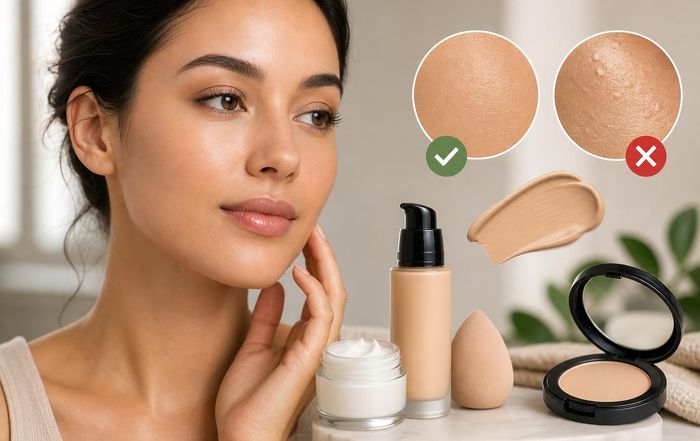
How to Stop Foundation Separating on Oily Skin: A Complete Guide
Foundation that looks smooth at 8 a.m. and streaky, patchy, or "curdled" by lunchtime is one of the most common complaints among people with oily or combination skin. Separation can show up as foundation sliding off the T-zone, clinging to pores, turning cakey around the nose, or breaking into dots and streaks over the day. While marketing often promises "24-hour wear," the reality is that oil production, product formulas, application techniques, and even climate all influence how well base makeup holds up.
This guide walks through why foundation separates on oily skin and how to prevent it, from skincare and priming through to application, touch-ups, and product choices. The aim is not to force the skin to be unnaturally matte, but to balance oil, respect the skin barrier, and help makeup wear more evenly and comfortably.
Why Foundation Separates on Oily Skin
Foundation separation is usually a combination of skin biology and product chemistry. The skin's sebaceous glands produce sebum, a mix of lipids that helps protect and moisturize the skin barrier. In oily and acne-prone skin types, these glands are more active, influenced by genetics, hormones, and sometimes medications or climate. According to the American Academy of Dermatology (AAD), excess oil itself is not harmful, but it does create an environment where makeup can move, dissolve, or mix unevenly with sebum.
Most liquid foundations contain a blend of oils, silicones, water, pigments, and film-formers. When a formula that is not compatible with your skin's oil level or with the products underneath begins to break down, the pigments can separate from the base, leaving streaks, patchiness, or an uneven finish. Humidity and heat further soften makeup, making it more likely to slip. Using very emollient moisturizers, heavy sunscreens, or rich primers under long-wear products can also cause what makeup artists call "slip," where layers never fully set and continue moving throughout the day.
Another factor is application: applying too much product, skipping setting powder, or using tools that leave streaks can exaggerate separation as oil emerges. Over-mattifying can backfire too; when skin is stripped with harsh cleansers or strong alcohol-based toners, it may become dehydrated, prompting more oil production and causing foundation to cling to dry patches while sliding off oily zones. Understanding these interactions makes it easier to choose formulas and techniques that work with, rather than against, oily skin.
Prep the Skin: Skincare Steps That Support Long-Wear Makeup
A well-designed skincare routine is the foundation under your foundation. The goal for oily skin is to gently cleanse, lightly hydrate, support the barrier, and manage shine without triggering rebound oiliness or irritation.
Dermatology organizations such as the AAD and British Association of Dermatologists recommend using a gentle, non-comedogenic cleanser twice daily rather than harsh scrubs or high-alcohol products, which can damage the stratum corneum and lead to increased sensitivity and oil production. For makeup wearers, this means choosing a low-foaming gel or cream cleanser that removes sebum and sunscreen without leaving the skin feeling tight. Double cleansing at night with an oil or balm followed by a water-based cleanser can help remove long-wear makeup thoroughly, reducing the need for aggressive scrubbing the next morning.
After cleansing, a lightweight, oil-free or non-comedogenic moisturizer is still important, even for very oily skin. Research on barrier function shows that dehydration can coexist with excess oil; when skin is dehydrated, fine lines look more pronounced and foundation tends to catch on texture. Look for gel-cream textures with humectants such as glycerin or hyaluronic acid and non-occlusive emollients. Many "oil-free" moisturizers also include niacinamide, which has been shown in clinical studies to help regulate sebum production and improve barrier function over time; a summary of its benefits is available from Paula's Choice's science library and in dermatology literature such as the Journal of Clinical and Aesthetic Dermatology (example review).
In the morning, sunscreen is non-negotiable, but the texture matters. Heavy, occlusive formulas can make foundation slide, so opt for lightweight, non-comedogenic sunscreens marketed as "matte," "oil-free," or "for oily/acne-prone skin." Many modern mineral and hybrid sunscreens use silica or starches to help control shine. The Skin Cancer Foundation maintains a searchable list of recommended sunscreens, including options for oily skin types (here). Let sunscreen fully dry down for several minutes before applying primer or foundation, to minimize pilling and mixing of textures.
For readers interested in building a broader routine around oil balance and barrier support, the skincare hub on beautytipa.com's skincare section provides additional context on ingredients and routines that work well under makeup.
Choose the Right Foundation Formula for Oily Skin
Not every foundation is designed to handle a high-oil environment. Choosing formulas that fit both your skin type and your climate significantly reduces separation. In general, oily skin does better with:
Oil-free or "non-comedogenic" liquid foundations
Soft-matte or natural-matte finishes rather than dewy or luminous
Long-wear formulas that use film-forming agents and volatile silicones
Powder or powder-foundation hybrids for very hot, humid conditions
Many brands now offer foundations specifically marketed as "for oily skin" or "long-wear matte," but marketing claims alone are not enough. Reading ingredient lists can help: look for lightweight silicones such as cyclopentasiloxane and dimethicone, which create a smooth film and help resist sweat and sebum. Avoid very heavy oils and butters near the top of the list, especially if you already use emollient skincare. Cosmetic chemists and dermatologists interviewed by publications like Allure and Dermatology Times often emphasize this silicone-based film as a key to longevity in oily conditions (example analysis).
For those who prefer lighter coverage, tinted moisturizers and skin tints are more challenging on oily skin because they tend to be more emollient and contain fewer film-formers. However, newer matte or oil-free tints can work if paired with a good primer and setting powder. Powder foundation is sometimes recommended as the default for oily skin, but it can emphasize texture and dryness if the skin is dehydrated. A balanced approach is to use a long-wear liquid foundation with targeted powder in the T-zone, which often yields a more skin-like finish.
Makeup enthusiasts exploring broader base options and finishes can find additional context in the makeup section, where complexion products are frequently discussed alongside application techniques.
Primer, Or Not? Creating a Stable Base Layer
Primer can be a powerful tool for preventing separation, but it is not mandatory for everyone with oily skin. The key is choosing the right type and using it correctly. Silicone-based mattifying primers, often containing dimethicone, silica, or polymethylsilsesquioxane, create a smoother surface and help fill in pores and fine lines. Studies on silicone elastomer gels cited in cosmetic science literature show these ingredients can reduce the appearance of texture and improve slip, making foundation application more even and reducing the tendency of pigments to collect in pores.
However, applying too much primer or layering multiple heavy products can create a thick, unstable film that peels or rolls when foundation is applied. A pea-sized amount, focused on the oiliest areas like the nose, forehead, and chin, is usually enough. Letting primer sit for a minute or two before foundation allows it to set slightly, improving grip. Water-based, hydrating primers may be better for combination skin where only the T-zone is oily and the cheeks are normal to dry.
For readers who find that primer makes their makeup worse, consider whether there is a mismatch between the primer and foundation bases. As many professional artists note in interviews with sources like Into The Gloss and Lisa Eldridge's educational content, pairing a very silicone-heavy primer with a water-based, dewy foundation can sometimes cause pilling or uneven blending. Matching like with like-silicone-based primer with silicone-based foundation, or water-based with water-based-often yields better results.
Those looking to refine their daily routine, including where primer fits in, may also want to explore the routines and rituals section, which covers step-by-step approaches to building makeup-friendly skincare.
Application Techniques That Minimize Separation
Even the best products can perform poorly if applied in a way that overloads the skin or disturbs underlying layers. Oily skin typically benefits from thinner, more strategic application and tools that help press product into the skin rather than smear it across the surface.
After skincare and primer have had a few minutes to settle, start with a small amount of foundation-about a pea to a small pump-and build coverage only where needed. Applying a thick layer all over increases the chance that oil will break through unevenly, leading to patchiness and caking. Many professional artists recommend working in thin layers, particularly around the nose and mouth, where expression lines and movement can disrupt heavy product.
Application tools matter as well. Dense synthetic brushes can buff foundation into the skin, but vigorous buffing can sometimes lift primer and sunscreen underneath, especially if they are not fully set. A gentler technique is to use a brush or clean fingers to place foundation, then press it into the skin with a damp makeup sponge using a stamping motion. This helps merge the product with the skin's surface and can remove excess, leaving a thinner, more even film. Tutorials from artists like Wayne Goss and Katie Jane Hughes frequently demonstrate this press-and-roll technique, and their videos are widely referenced by beauty publications for long-wear complexion looks (example breakdown).
Concealer should be used sparingly over foundation rather than as a heavy underlayer over large areas, which can create thickness that is prone to cracking and separating. Spot-conceal blemishes and redness, blend well, and then set selectively with powder rather than dusting the entire face with a heavy layer. If you are experimenting with more advanced complexion techniques, the guides on beauty tips and techniques can provide additional step-by-step breakdowns.
Setting and Touch-Ups: Working With, Not Against, Oil
Setting products are where oily skin types can make the biggest difference in longevity. A finely milled, translucent setting powder helps absorb surface oil and lock foundation in place, but how it is applied is as important as which powder is chosen. Loose powders with ingredients like silica, talc, or mica are commonly used; while talc safety has been debated due to contamination concerns, regulatory agencies such as the U.S. FDA and European Commission currently allow cosmetic-grade talc when it meets strict purity criteria (FDA overview). For those who prefer to avoid talc, many brands offer talc-free alternatives using cornstarch, rice starch, or synthetic fluorophlogopite.
To set oily areas effectively, use a small, dense brush or powder puff to press powder into the skin rather than sweeping it across the surface. Pressing helps powder bind to foundation and absorb more oil. The "baking" technique-leaving a heavy layer of powder under the eyes and on the T-zone for several minutes before dusting off-can increase longevity for special occasions, but on a daily basis it may look too dry or emphasize texture. A lighter press-and-set method is usually sufficient.
Setting sprays can also play a role. Formulas containing film-formers like polyvinylpyrrolidone (PVP) or acrylates copolymers create a flexible mesh over makeup, helping it resist humidity and oil. Some sprays are alcohol-based and provide a stronger, more matte lock, but they can be drying or irritating for sensitive skin; others are more hydrating and may be better suited to combination types. A Consumer Reports and Allure-referenced trick is to mist a setting spray onto a sponge and press it into the skin, which can fuse layers together more effectively than spraying from a distance (setting spray discussion).
For touch-ups, blotting papers are usually preferable to adding more powder immediately. Blotting removes excess oil without disturbing the base too much. The Cleveland Clinic notes that blotting papers are a gentle way to manage shine without overwashing, which can irritate the skin (overview of oily skin care). After blotting, a light dusting of powder can refresh the finish. Continuously layering powder over unblotted oil tends to create a thick, cakey buildup that is more likely to crack and separate.
Readers exploring broader shine-control strategies, including during workouts or hot weather, may also find the health and fitness section helpful for managing sweat and oil around active lifestyles.
Ingredient Strategies: Oil Control Without Over-Stripping
Beyond immediate makeup tactics, certain skincare ingredients can help balance oily skin over time, potentially improving how foundation wears. Dermatologists frequently recommend salicylic acid, niacinamide, and certain retinoids for oily and acne-prone skin, and their effects are supported by clinical research.
Salicylic acid, a beta-hydroxy acid (BHA), is oil-soluble and can penetrate into pores to help dissolve sebum and debris. The AAD notes that salicylic acid products can reduce oiliness and comedones when used consistently (guidance on acne treatments). Using a low-concentration BHA toner or serum a few times a week can help keep pores clearer and texture smoother, which in turn allows foundation to sit more evenly. Overuse, however, can cause irritation and dryness, so it is important to introduce slowly and monitor the skin's response.
Niacinamide, as mentioned earlier, has been shown in multiple studies to reduce sebum excretion rates and improve barrier function. A 4% niacinamide formulation was found to significantly decrease sebum production in a randomized controlled trial published in the International Journal of Cosmetic Science (abstract via Wiley). Incorporating a niacinamide serum under moisturizer or using a moisturizer that already contains niacinamide may help reduce midday shine over time.
Topical retinoids, including adapalene and tretinoin, are often prescribed or recommended for acne and can normalize cell turnover in the follicle, reducing clogged pores and improving texture. The Mayo Clinic and AAD both highlight retinoids as cornerstone treatments for acne, which often coexists with oily skin (Mayo overview). Because retinoids can initially cause dryness and irritation, they should be introduced under the guidance of a dermatologist, especially for those with sensitive or reactive skin.
For readers interested in how these active ingredients fit into a broader beauty and wellness perspective, the wellness section and beauty category offer more context on balancing skin health with aesthetic goals.
Climate, Lifestyle, and When to Adjust Expectations
Environment and daily habits also influence how realistic it is to expect a perfectly intact base all day. In hot, humid climates, even the most matte, long-wear foundation will soften as sweat and oil increase. In these conditions, lighter coverage, strategic concealing, and embracing a bit of natural glow can be more comfortable and practical than striving for a fully matte finish that may look heavy or crack as it wears. Using more robust setting techniques-such as a combination of mattifying primer, powder, and a long-wear setting spray-can extend wear, but touch-ups will still be necessary.
Physical activity and commuting patterns also matter. Those who cycle to work, spend time in crowded public transport, or work under hot lights may benefit from keeping blotting papers and a small powder compact in their bag. For gym sessions or outdoor sports, many dermatologists and sports medicine experts suggest minimizing heavy makeup altogether to reduce the risk of clogged pores and irritation; when foundation is worn, a lighter, non-comedogenic tint plus concealer in key areas may be a better choice. Guidance on balancing makeup with an active lifestyle appears often in health-focused beauty coverage and is echoed by organizations like the American Council on Exercise when discussing skin care around workouts (example article).
Skin changes over time as well. Hormonal shifts, medications such as oral contraceptives or isotretinoin, and even stress can alter oil production. If a foundation that once worked beautifully suddenly starts separating, it may be a sign that your skin type has shifted slightly, and both skincare and makeup choices need updating. Checking in periodically with a dermatologist can help tailor routines to current skin needs rather than relying on products that suited a previous phase.
Putting It All Together
Preventing foundation from separating on oily skin is less about finding a single miracle product and more about aligning several factors: gentle but effective skincare, compatible textures, thin and precise application, smart setting, and realistic expectations based on climate and lifestyle. A typical routine that balances these elements might involve a gentle morning cleanse, a lightweight moisturizer, a matte, non-comedogenic sunscreen, a targeted mattifying primer on the T-zone, a thin layer of long-wear foundation applied with a brush then pressed in with a sponge, selective concealing, careful powdering where needed, and blotting plus light powder touch-ups through the day.
For those who enjoy experimenting, treating this as an evolving routine rather than a rigid formula can be helpful. Adjusting one variable at a time-switching sunscreen texture, trying a different primer type, changing application tools-makes it easier to see what truly improves wear. Over time, many people with oily skin find a combination that allows their base makeup to look smoother for longer, without feeling heavy or suffocating.
Readers who want to go deeper into product comparisons, seasonal updates, or emerging technologies in base makeup-such as adaptive pigments or sebum-absorbing polymers-can explore the brands and products section and beauty trends coverage for more detailed breakdowns and reviews.
