
How to Store Vitamin C Serum to Reduce Oxidation (and Make It Last Longer)
Vitamin C serums are among the most researched and effective skincare products for brightening, evening skin tone, and supporting collagen. The catch is that vitamin C is notoriously unstable. If it's not stored properly, it can oxidize quickly, turning from a powerhouse active into a weakened, potentially irritating formula.
This guide explains what oxidation is, how to tell if your vitamin C has gone off, and-most importantly-how to store different types of vitamin C serums so they stay potent as long as possible.
Why Vitamin C Serums Oxidize So Quickly
Most classic vitamin C serums use ascorbic acid (L-ascorbic acid), the pure, water-soluble form of vitamin C. It's also the most unstable. Ascorbic acid is highly reactive with oxygen, light, and heat. When exposed to these, it undergoes oxidation: its chemical structure changes, reducing its antioxidant capacity and, in some cases, producing byproducts that may irritate skin.
In practice, that means a bottle that started out clear or very pale can gradually turn yellow, orange, brown, or even almost rust-colored. The more advanced the color shift, the more oxidized the formula usually is. You may also notice a change in smell or texture.
Brands try to slow this process with stabilizing ingredients and packaging. Common strategies include:
Using low pH formulas (around 2.5-3.5) to help maintain ascorbic acid stability.
Adding co-antioxidants like ferulic acid and vitamin E, as in the widely studied Skinceuticals C E Ferulic formulation, which has been shown in peer-reviewed research to improve stability and photoprotective effects when used with sunscreen.
Packaging in air-restrictive or opaque bottles to limit light and oxygen exposure.
Even so, oxidation is inevitable over time. The goal of good storage is not to stop oxidation completely-that's impossible-but to slow it down enough that you can use the product while it's still effective and safe.
For readers who are new to actives, our broader skincare section offers helpful background on how serums fit into a routine.
Recognizing Oxidation: When Has Your Vitamin C Gone Bad?
Knowing when a serum has oxidized beyond safe or useful levels is just as important as knowing how to store it. Vitamin C oxidizes gradually, and a mild color shift doesn't necessarily mean you must throw the product out immediately. However, there are clear warning signs to watch for.
Fresh L-ascorbic acid serums are usually clear, very pale straw, or slightly cloudy depending on the base. As they oxidize, they typically move through a color spectrum: light yellow, deeper yellow, orange, then dark orange or brown. According to cosmetic chemists and dermatologists interviewed in reputable sources such as the American Academy of Dermatology and Journal of Cosmetic Dermatology, a light tint is often acceptable, but deeper orange-brown suggests significant degradation.
Besides color, pay attention to smell and texture. Some oxidized formulas develop a metallic, sour, or almost "hot dog water" smell. Texture can become thicker or tackier, and dropper tips may show crusting or residue. If you notice any of the following, it's safer to stop using the serum:
Deep orange to brown color
Strong off-putting or metallic odor
Visible separation or clumping
Increased stinging or irritation compared with earlier use
While oxidized vitamin C is not typically dangerous in the way spoiled food is, it may generate more oxidative byproducts than beneficial antioxidant activity. Some dermatologists caution that heavily oxidized formulas could contribute to irritation or even free radical formation on the skin instead of preventing it. When in doubt, it is usually better to replace the product, especially if you have sensitive or compromised skin.
For those building or repairing their routine, pairing vitamin C with supportive products covered in our routines guides can also help minimize irritation.
Core Storage Principles: Light, Air, Heat, and Contamination
Regardless of the specific formula, four main factors drive vitamin C oxidation: light, oxygen, temperature, and contamination. Effective storage is essentially about controlling these.
First, protect your serum from light. Ultraviolet and visible light can accelerate the breakdown of ascorbic acid. That's why many brands use amber, cobalt, or opaque packaging. Storing the bottle in a dark cupboard, drawer, or cosmetic fridge (used correctly) can further limit light exposure. A study in the International Journal of Cosmetic Science notes that light is a significant driver of degradation in aqueous vitamin C solutions, even over relatively short periods.
Second, minimize contact with air. Every time you open a bottle, oxygen can enter and start reacting with the formula. Packaging types like airless pumps or single-dose ampoules drastically cut down on oxygen exposure compared with traditional droppers. If you do use a dropper bottle, recap it tightly immediately after dispensing and avoid leaving the pipette exposed while applying other products.
Third, keep the serum cool but not frozen. Heat speeds up chemical reactions, including oxidation. Storing your serum at room temperature away from heat sources (radiators, sunny windowsills, steamy bathrooms) is usually enough. Some users prefer refrigeration. Research suggests that cooler storage conditions can slow vitamin C degradation, but not all formulas are designed to be chilled. Always check the brand's instructions: some emulsions or encapsulated formats may separate or thicken in very cold conditions.
Finally, avoid contamination. Touching the dropper to your face, hands, or other products can introduce microbes and other substances that may destabilize the formula. Always dispense into clean hands without letting the applicator touch your skin, and never add DIY ingredients directly into a commercial serum bottle.
If you are exploring other active ingredients, our guides and tips hub covers broader storage and layering advice across skincare categories.
How Storage Needs Differ by Vitamin C Type
Not all vitamin C serums are created equal. The type of vitamin C and the overall formulation determine how fragile the product is and how strictly it must be stored.
The classic form, L-ascorbic acid, is water-soluble and the most unstable. It is also the most studied for collagen support, pigmentation, and photoprotection, especially in concentrations between 10-20% with low pH. Because of its sensitivity, formulas with L-ascorbic acid benefit most from careful storage in opaque or amber glass, limited air contact, and cooler temperatures. These serums often have a shorter shelf life-sometimes 3-6 months after opening-so buying smaller bottles can help you finish them while still fresh.
Fat-soluble derivatives, such as ascorbyl tetraisopalmitate and tetrahexyldecyl ascorbate, are generally more stable in oils or emulsions. While they still should be protected from heat and light, they tend to oxidize more slowly. That can make them appealing for those who do not use vitamin C daily or who live in warmer climates where storage conditions are harder to control. However, they often need to be converted into active ascorbic acid in the skin, and clinical data is less extensive than for L-ascorbic acid, as noted in reviews in the Dermatologic Therapy and Skin Pharmacology and Physiology journals.
Other water-soluble derivatives like sodium ascorbyl phosphate and magnesium ascorbyl phosphate are also more stable than pure ascorbic acid at neutral or slightly acidic pH. They typically come in creams or gels that can tolerate room temperature storage more easily, though they still benefit from being kept away from direct light and heat.
If you are choosing a serum and know your storage options are limited-for example, no cool, dark place in a small apartment-opting for a more stable derivative or an airless pump delivery system can be a practical compromise. Our brands and products section often highlights this kind of formulation detail in product reviews.
Best Practices for Storing Dropper-Bottle Vitamin C Serums
Dropper bottles remain common for vitamin C serums, especially those inspired by or similar to Skinceuticals C E Ferulic, La Roche-Posay Pure Vitamin C10, or The Ordinary Ascorbic Acid offerings. These bottles can be more vulnerable to oxidation because each use exposes the formula to air and light, but careful handling can significantly slow degradation.
First, store the bottle in a cool, dark place. A closed drawer or cabinet away from windows is ideal. Avoid leaving it in a steamy bathroom where temperature and humidity fluctuate daily. Heat and moisture together can accelerate breakdown and potentially compromise preservatives. If you live in a hot climate without air conditioning, you may consider refrigeration, but again, check the brand's storage advice to ensure the formula tolerates cold.
Second, minimize the time the bottle is open. When using a dropper serum, open the cap, draw the product up, dispense it quickly into your palm or fingertips, and recap immediately. Do not hold the bottle open while you apply or layer other products. This simple habit can reduce cumulative oxygen exposure over weeks or months.
Third, never touch the dropper directly to your face or other surfaces. It can be tempting to "paint" serum onto the skin using the pipette, but this increases the risk of contamination and can introduce oils, makeup residue, or bacteria back into the bottle. Instead, drop the serum into your hand or onto a clean spatula, then apply with fingers.
Finally, track opening dates. Many skincare products include a PAO (Period After Opening) symbol, such as "6M" or "12M," indicating how long the product is expected to remain stable once opened. For L-ascorbic acid serums, it's often wise to use them more quickly than the maximum PAO if you notice color shifts. Keeping the bottle's outer box and jotting down the opening date can help you stay aware of how long it has been in use.
Readers interested in broader routine-building can find complementary advice in our beauty and makeup sections, especially if you're pairing vitamin C with SPF and cosmetics.
Are Skincare Fridges and Refrigeration Actually Helpful?
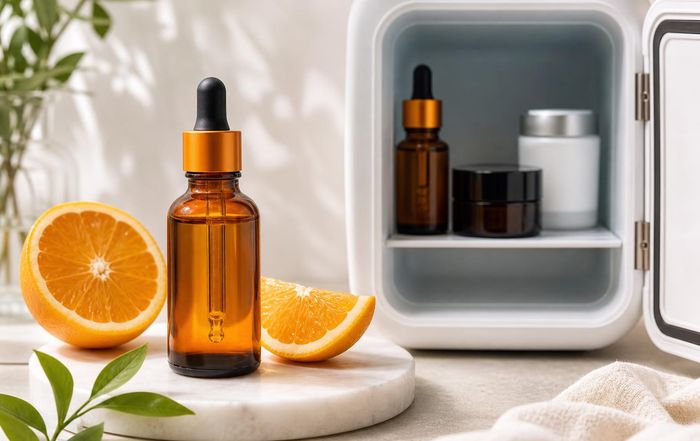
The rise of skincare fridges has sparked debate about whether vitamin C serums should be stored in the refrigerator. From a chemical perspective, lower temperatures generally slow down reaction rates, including oxidation. Several stability studies on aqueous vitamin C solutions, such as those published in the Journal of Pharmacy and Pharmacology, indicate that cooler storage conditions can extend the time before significant degradation.
However, there are caveats. First, refrigerators are humid environments, and frequent temperature shifts from taking the product in and out can cause condensation inside the cap or bottle, potentially affecting the formula over time. Second, some emulsions or oil-in-water systems may become more viscous or separate at low temperatures, which can impact texture and performance.
If a brand specifically states that its vitamin C serum can be refrigerated, doing so can be beneficial, especially in hot climates or during summer. If the label does not address refrigeration, a safe middle ground is to store the product in the coolest, darkest, and most stable-temperature room in your home rather than defaulting to the fridge. Avoid the bathroom if you regularly take hot showers there, and never leave the serum in a car, near radiators, or in direct sunlight.
For those considering skincare fridges as part of a broader wellness and beauty setup, our wellness section often explores how tools and devices can fit realistically into everyday routines.
How Packaging Influences Oxidation and Storage Needs
Packaging is a major determinant of how quickly vitamin C oxidizes. When comparing products, it's worth paying attention not just to the active ingredient list but also to how the serum is housed.
Airless pumps are among the most protective formats. They limit oxygen exposure by dispensing product through a one-way mechanism, meaning air does not easily flow back into the container. Many brands using more delicate actives or combinations of antioxidants and peptides choose this format to help extend shelf life. These bottles still need protection from heat and light, but they give you more margin for error with handling.
Opaque or tinted glass bottles offer good light protection but less control over air exposure. Amber and cobalt blue glass, for instance, filter out a significant portion of UV and visible light. However, if paired with a dropper, they still expose the formula to oxygen with every use. In this case, the user's storage habits and hygiene become more important.
Single-use ampoules or capsules, common in some European and Asian brands, provide maximal protection by isolating each dose in its own sealed container. Once opened, the ampoule is used immediately, so there is almost no ongoing oxidation risk. These formats can be more expensive and less convenient but are excellent for highly unstable actives or infrequent users.
The material of the container also matters. Glass is generally inert and stable. Certain plastics can be permeable to oxygen or interact with solvents and oils, though reputable brands typically choose cosmetic-grade plastics designed for stability. Where possible, look for clear storage instructions from the manufacturer; brands that invest in stability testing often share guidance on ideal conditions.
If you are curious about how beauty technology and packaging innovations are evolving, our technology and beauty coverage frequently highlights advances in airless systems, encapsulation, and smart dispensers.
How Long Vitamin C Serums Typically Last Once Opened
Shelf life varies widely depending on formula, packaging, and storage. Unopened, many vitamin C serums are stable until the expiry date printed on the box, assuming they have been stored correctly at the retailer and in transit. Once opened, the clock speeds up as oxygen, light, and temperature fluctuations come into play.
For L-ascorbic acid serums in dropper bottles, a realistic usage window is often 3-6 months after opening, even if the PAO symbol suggests longer. Some dermatologists and cosmetic chemists recommend using these products within 3 months for optimal potency, especially if you notice any yellowing. More stable derivatives in pumps or opaque tubes may remain effective for 6-12 months after opening, provided they are stored away from heat and light.
If you want to maximize freshness, consider buying smaller bottles, even if the price per milliliter is higher. A 15 ml bottle that you finish in 8-10 weeks may deliver more consistent results than a 30 ml bottle that sits half-used and oxidizing on your shelf for half a year.
It is also worth noting that some brands conduct in-house stability and efficacy testing to determine how long their formulas maintain a certain percentage of active vitamin C. When brands disclose this information on their websites or through dermatology partnerships, it can be a useful guide. Always remember that real-world storage conditions (hot bathrooms, sunny shelves, travel) may be less ideal than lab conditions, so treat published stability data as an upper bound rather than a guarantee.
Practical Daily Habits to Keep Your Serum Potent
Translating all this chemistry into simple daily habits can make storage feel more manageable. A few consistent behaviors have an outsized impact on how long your vitamin C serum stays fresh.
First, choose where your serum "lives" and keep it there. Instead of moving it between rooms or leaving it out on counters, designate a cool, dark spot-like a bedroom drawer or interior cabinet-and return it there after each use. Reducing environmental fluctuation helps maintain stability.
Second, integrate application into a predictable part of your routine. Many users apply vitamin C in the morning under sunscreen because studies, including those referenced by the American Academy of Dermatology and British Association of Dermatologists, suggest that topical antioxidants can enhance photoprotection when combined with broad-spectrum SPF. Applying at the same time each day means you open the bottle once daily, minimizing cumulative air exposure and helping you finish the product before it degrades.
Third, monitor your serum. Every few weeks, check the color in good natural light and note any changes in scent or texture. Subtle shifts are normal over time, but sudden darkening or strong odors suggest you may be nearing the end of the product's useful life. If you experience new or increased irritation from a serum you previously tolerated well, consider whether oxidation might be a factor and evaluate whether to replace it.
Finally, resist the urge to hoard backups. Because vitamin C is inherently unstable, stocking multiple bottles for long-term use is rarely cost-effective unless you are certain they are well within their expiry dates and stored in ideal conditions. It is usually wiser to purchase fresh bottles as needed, especially for high-strength L-ascorbic acid formulas.
For broader context on how vitamin C fits into overall skin health and how lifestyle influences oxidative stress, our health and fitness and food and nutrition sections regularly explore diet, antioxidants, and wellness choices that complement topical skincare.
When to Replace, When to Adjust, and When to Switch Formulas
Even with perfect storage, every vitamin C serum eventually reaches the end of its useful life. Knowing when to replace it, when to adjust your habits, and when to switch to a different type of formula helps you get consistent benefits without wasting product or risking irritation.
If your serum has turned noticeably orange-brown, smells off, or feels different on the skin, it is usually time to replace it. At that point, the antioxidant benefits are likely significantly diminished. If this happens repeatedly before you finish a bottle, consider a smaller size, more protective packaging, or improved storage-perhaps moving the serum from a bathroom shelf to a bedroom drawer, or avoiding travel with partially used bottles.
If you find that you rarely use vitamin C or only apply it a few times a week, a more stable derivative in an airless pump or single-use ampoules may be more practical than a classic L-ascorbic acid dropper serum. You may sacrifice some of the rapid, well-documented effects of pure ascorbic acid, but in exchange you get a product that remains more consistent over the longer intervals between uses.
For those with very sensitive or reactive skin, irritation from vitamin C may stem from both the acidity and the presence of oxidized byproducts. Switching to lower concentrations, buffered derivatives, or pairing vitamin C with barrier-supporting moisturizers may help. Dermatologists often recommend patch-testing new products on a small area of the jawline or behind the ear for several days before applying them to the full face.
If you are uncertain about which format suits your skin type, consulting a board-certified dermatologist or qualified skincare professional is wise. Reputable sources such as the American Academy of Dermatology and British Association of Dermatologists provide directories and educational material that can help you prepare for that conversation with informed questions.
Storing vitamin C serum well is less about elaborate rituals and more about consistent, simple habits: keep it cool, keep it dark, keep it closed, and keep it clean. With those principles in place-and by choosing formulas and packaging that match your lifestyle-you can significantly slow oxidation and enjoy the brightening, protective benefits of vitamin C for much longer.
