
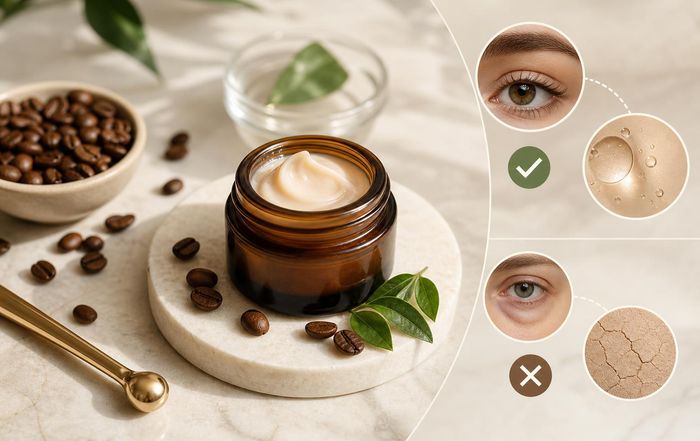
The Benefits and Limits of Caffeine Eye Creams
Caffeine eye creams have become a staple in many skincare routines, promising to de-puff, brighten, and revive tired-looking under-eyes. The ingredient sounds reassuringly familiar-most people already consume it in coffee or tea-and brands often lean on that familiarity in their marketing. Yet the science behind topical caffeine is more nuanced than the "miracle fix" language on some packaging. Understanding what caffeine can and cannot do around the eyes helps consumers choose products more intelligently, set realistic expectations, and know when other strategies may be more effective.
This guide looks at how caffeine eye creams work, what the research says about their benefits, where the evidence is limited, and how to use them safely as part of a broader eye-area routine.
How caffeine works in skincare
Caffeine is a naturally occurring stimulant found in coffee, tea, cacao, and several plants. In skincare, it is valued for three main properties: vasoconstriction (narrowing of blood vessels), antioxidant activity, and potential influence on fat metabolism.
Laboratory and small clinical studies suggest that topical caffeine can constrict blood vessels and temporarily reduce blood flow in the area where it is applied. A paper in Skin Pharmacology and Physiology reported that caffeine can penetrate the skin barrier and may enhance microcirculation and lipolysis (fat breakdown) in certain formulations, although translation to visible cosmetic effects is not always straightforward. The American Academy of Dermatology (AAD) notes that topical caffeine is often used in products for puffiness and cellulite for this reason, even though most evidence comes from small or manufacturer-sponsored studies rather than large independent trials.
Caffeine also behaves as an antioxidant, helping neutralize free radicals generated by UV exposure and pollution. Research published in the Journal of Investigative Dermatology has linked caffeine intake with reduced risk of some skin cancers, and topical caffeine has been explored as a photoprotective agent, though sunscreen remains the primary defense. In eye creams, this antioxidant role is usually supportive rather than central: it may help protect the delicate eye area from environmental damage alongside other ingredients such as vitamin C or niacinamide.
Finally, some lab data suggest caffeine can promote lipolysis in adipocytes (fat cells). This is why it appears in many "firming" and anti-cellulite products. However, the under-eye area is structurally complex, and visible under-eye bags are not simply "pockets of fat" that can be dissolved with a cream. Most dermatologists and organizations such as the British Association of Dermatologists emphasize that any fat-mobilizing effect from topical caffeine is modest at best and not a substitute for medical or surgical treatments when structural changes are involved.
Proven and likely benefits for the eye area
For people dealing with mild puffiness, transient dark circles, or general tiredness around the eyes, caffeine creams can offer noticeable-though usually temporary-improvements. The benefits tend to be most visible when the concern is largely vascular or fluid-related rather than deeply structural or pigment-driven.
One of the most consistent short-term effects is a reduction in under-eye puffiness caused by fluid retention. Because caffeine constricts blood vessels and may influence lymphatic drainage, it can help the area look less swollen for a few hours after application. This is particularly useful in the morning when puffiness is often worst due to overnight fluid shifts, salty food, or alcohol. Studies on caffeine-containing gels for eye puffiness are relatively small but have reported subjective improvements in swelling and skin smoothness, especially when combined with cooling application or massage.
Caffeine can also help some types of dark circles appear less obvious. When under-eye darkness is partly due to visible blood vessels or a bluish tint from thin, translucent skin, vasoconstriction can reduce that purplish cast. A review in the Journal of Clinical and Aesthetic Dermatology notes that ingredients like caffeine and vitamin K may help vascular dark circles look lighter, although they do not affect true pigment (such as melasma) or deep hollows. In practice, many users notice a subtle brightening and more "awake" look rather than a dramatic disappearance of dark circles.
Because it is an antioxidant, caffeine may contribute modestly to protecting collagen and elastin in the thin periorbital skin. Typically, however, this effect is small compared with more established anti-ageing ingredients such as retinoids and peptides. Still, as part of a well-formulated eye cream that includes humectants (like glycerin or hyaluronic acid) and emollients (like squalane or ceramides), caffeine can support overall skin health and barrier function around the eyes. Hydrated skin tends to look smoother and reflect light better, which can visually soften fine lines even if it does not remove them.
A practical advantage is that caffeine eye creams are generally easy to incorporate into existing routines. They are often lightweight, fast-absorbing, and compatible with makeup, making them attractive to those who want a quick morning step before concealer. For readers building a more structured regimen, pairing a caffeine eye product with a broader skincare routine that includes daily sunscreen and gentle cleansing can improve overall results.
What caffeine eye creams cannot realistically do
Despite their popularity, caffeine eye creams have clear limits. Many marketing claims stretch beyond what current evidence supports, and recognizing these boundaries can prevent disappointment and unnecessary spending.
First, caffeine creams do not cure deep, chronic dark circles that are primarily pigmentary (due to melanin) or anatomical (due to hollowing or bone structure). Hyperpigmentation around the eyes often stems from genetics, sun exposure, or post-inflammatory changes and typically responds better to ingredients like vitamin C, niacinamide, azelaic acid, or dermatologist-prescribed lightening agents, along with strict sun protection. Hollowing and tear troughs, on the other hand, are structural and may require procedures like hyaluronic acid fillers or fat repositioning, which the American Society for Dermatologic Surgery discusses as standard options. No over-the-counter caffeine cream can rebuild lost volume or change bone structure.
Second, these products are not a solution for pronounced, persistent under-eye bags caused by herniated fat pads. With age, the ligaments and structures that hold fat in place can weaken, allowing fat to bulge forward and create visible bags. While caffeine may slightly improve fluid-related swelling on top of those bags, it cannot reverse the underlying anatomical change. In such cases, dermatologists often recommend surgical lower blepharoplasty or other in-office treatments, not topical caffeine.
Third, caffeine eye creams are not a substitute for sleep, hydration, or addressing lifestyle triggers. Chronic sleep deprivation, high stress, smoking, and high-salt diets can all worsen under-eye puffiness and discoloration. Organizations such as the U.S. Centers for Disease Control and Prevention (CDC) and the National Sleep Foundation highlight that insufficient sleep affects circulation, inflammation, and skin repair; no topical product can fully offset that. At best, caffeine eye creams can help you look slightly more rested while you work on the underlying habits.
Fourth, while caffeine has some antioxidant activity, it is not the most potent anti-ageing ingredient available and should not be relied upon as the main strategy for wrinkle prevention. Sunscreen remains the most important daily product for slowing eye-area ageing, as confirmed by dermatology consensus and resources such as the Skin Cancer Foundation, which emphasizes broad-spectrum SPF around the eyes (including on the eyelids, using suitable formulas). Retinoids, peptides, and alpha hydroxy acids, when used carefully and appropriately, have more robust evidence for stimulating collagen and improving fine lines than caffeine alone.
Finally, topical caffeine is not guaranteed to work for everyone. Skin thickness, vascular visibility, genetic factors, and product formulation all influence outcomes. Some people see a clear difference in puffiness; others notice very little. When evaluating claims, it is worth remembering that many studies are small, short-term, or sponsored by manufacturers, and individual results can vary considerably.
What the research actually shows
The evidence base for caffeine in eye creams is still relatively limited compared with long-studied ingredients like retinoids or niacinamide, but several lines of research help explain its cosmetic role.
In vitro and ex vivo studies (on skin models or isolated cells) have demonstrated that caffeine can penetrate the stratum corneum and reach deeper layers of the skin. Work published in Skin Pharmacology and Physiology and related journals shows that caffeine can modulate microcirculation and has lipolytic effects in fat cells under certain conditions. However, translating these findings to visible changes under the eyes is complex, because human skin, especially around the eyes, varies widely in thickness, vascular density, and fat distribution.
Small clinical or consumer studies on caffeine-containing eye gels often report improvements in subjective measures like "perceived puffiness" or "brightness" over several weeks. These studies are sometimes open-label or lack placebo controls, making it difficult to separate the effect of caffeine from that of hydration, massage, or other actives in the formula. For example, many eye creams combine caffeine with ingredients such as hyaluronic acid, peptides, vitamin C, or botanical extracts, all of which can independently improve the appearance of the eye area.
Dermatology reviews, including those in the Journal of Drugs in Dermatology and the Indian Dermatology Online Journal, generally categorize caffeine as a supportive ingredient for periorbital puffiness and vascular dark circles rather than a stand-alone treatment. They also note that cold temperature and gentle massage enhance its de-puffing effect by constricting blood vessels and encouraging fluid drainage. This is one reason many brands recommend storing eye gels in the refrigerator or using metal applicators that feel cool on the skin.
Importantly, there is little evidence that long-term daily use of caffeine eye creams causes harm in healthy individuals, provided the product is well-formulated and used as directed. Regulatory bodies like the U.S. Food and Drug Administration (FDA) and the European Commission's Scientific Committee on Consumer Safety treat caffeine as a permitted cosmetic ingredient within defined concentration ranges, and adverse reactions are relatively uncommon. Most reported issues are mild irritation or contact dermatitis, usually due to fragrance or preservatives rather than caffeine itself.
Who is most likely to benefit
Caffeine eye creams are not essential for everyone, but they can be a worthwhile addition for specific concerns and lifestyles. People who wake up with mild to moderate puffiness that improves throughout the day are prime candidates, particularly if the swelling is linked to sleep position, allergies, or dietary factors. For these individuals, a chilled caffeine eye gel used in the morning can noticeably speed up the de-puffing process.
Those with early or mild vascular dark circles-where the under-eye skin looks bluish or purple rather than brown-may also see modest improvement. Younger adults who spend long hours on screens or in dry office environments often appreciate the immediate cooling and hydrating effect, even if changes in darkness are subtle. For makeup wearers, a lightweight caffeine product can also serve as a smoother base for concealer, helping prevent it from creasing under the eyes.
People building a more comprehensive routine might combine caffeine eye creams with other targeted treatments. For example, someone using a gentle retinol or peptide eye product at night might choose a caffeine gel for the morning to address puffiness and provide a refreshed look. This type of layered approach aligns well with broader beauty and skincare routines that separate active, potentially irritating steps (often at night) from soothing, de-puffing ones (often in the morning).
On the other hand, individuals whose main concern is deep wrinkles, severe pigmentary dark circles, or pronounced structural bags will likely need more than caffeine. For them, a consultation with a board-certified dermatologist or oculoplastic surgeon can help identify whether prescription topicals, energy-based devices, fillers, or surgery are more appropriate. Understanding this distinction prevents people from relying on caffeine eye creams for problems they are unlikely to solve.
How to choose a caffeine eye cream wisely
Selecting an effective caffeine eye cream involves more than just checking whether caffeine appears on the ingredient list. Concentration, supporting ingredients, formulation type, and packaging all influence performance and tolerability.
Because cosmetics are not required to disclose exact percentages for every ingredient, consumers often need to infer concentration from ingredient order and brand information. Caffeine typically appears near the middle of the list in effective formulas; if it is listed at the very end after fragrance or colorants, the amount may be too low to have a meaningful effect. Some brands voluntarily state the percentage (often between 0.5% and 5% for leave-on products), but higher is not always better, especially around the sensitive eye area.
The best caffeine eye creams usually pair caffeine with hydrating and barrier-supporting ingredients. Humectants such as glycerin and hyaluronic acid attract water into the skin, while emollients and occlusives like squalane, shea butter, or ceramides help lock in moisture. Niacinamide can support barrier function and brighten uneven tone, and peptides may help with firmness over time. Readers interested in building a broader regimen around these ingredients can explore dedicated content on skincare and brands and products to understand how different formulations compare.
Formulation texture matters as well. Gels and gel-creams tend to feel lighter and cooler, making them ideal for morning de-puffing and layering under makeup. Richer creams may be better suited to dry or mature skin, especially at night, though they can sometimes contribute to milia (tiny white bumps) if too occlusive. Fragrance-free formulas are generally recommended for the eye area to minimize irritation risk, a point echoed by organizations like the National Eczema Association, which advises avoiding unnecessary fragrance in sensitive zones.
Packaging is another practical consideration. Opaque tubes, airless pumps, and metal-tipped applicators help protect antioxidants from light and air while offering hygienic, precise application. Jar packaging exposes the formula to repeated air and finger contact, which can degrade antioxidants and introduce microbes over time, although preservatives help mitigate this. For antioxidants like caffeine and vitamin C, more protective packaging is usually preferable.
When researching options, consulting independent reviews, dermatologist recommendations, and ingredient-focused resources such as the Environmental Working Group's Skin Deep database, INCI Decoder, or major dermatology clinics' educational pages can help separate marketing from substance. However, personal patch testing and observing how one's own skin responds remain crucial, since even highly rated products can irritate some users.
How to apply caffeine eye creams for best results
Technique and timing can significantly influence how effective a caffeine eye product feels. Applying it correctly also reduces the risk of irritation, especially for those with sensitive or reactive skin.
Most dermatologists recommend using a small amount-about a grain of rice per eye-after cleansing and before heavier creams or sunscreen. For morning use, gently tapping the product along the orbital bone (the bony rim around the eye) with the ring finger or a cool metal applicator helps distribute it evenly without dragging the skin. Light, upward and outward motions can encourage lymphatic drainage, which complements caffeine's de-puffing effect. Storing the product in the refrigerator can enhance this effect by adding temperature-induced vasoconstriction.
Care should be taken not to apply the product too close to the lash line or directly on the mobile eyelid unless the formula is specifically tested and labeled as safe for that area. The eye's warmth and natural blinking motion will usually move the product slightly, so starting just outside the lash line is often sufficient. People who wear contact lenses or have a history of eye irritation may want to be especially cautious and consult an eye-care professional if they experience stinging or redness.
Layering with other products requires some thought. In the morning, a typical sequence might be: gentle cleanser, caffeine eye cream, facial serum (if used), moisturizer, and then sunscreen. Sunscreen is critical around the eyes, as UV exposure worsens dark circles, fine lines, and overall skin ageing. Many people prefer mineral sunscreens or stick formulations around the eyes to reduce stinging, a practice supported by dermatology guidance and resources like the Skin Cancer Foundation. For those interested in wider sun-protection strategies, reporting on wellness and health and fitness can offer complementary advice on lifestyle and prevention.
At night, caffeine is less essential, but some users still enjoy its soothing feel. Others prefer to focus on reparative actives such as retinoids or peptides and reserve caffeine for the morning when puffiness is most noticeable. Whichever approach is chosen, consistency is important: most products require daily use for several weeks before their full cosmetic benefit becomes apparent.
Safety, side effects, and who should be cautious
For most healthy adults, caffeine eye creams are considered safe when used as directed, but there are a few caveats to keep in mind. The skin around the eyes is thinner and more sensitive than most other facial areas, so it is more prone to irritation from preservatives, fragrance, or high concentrations of active ingredients.
The most common side effects are mild stinging, redness, or dryness. These often resolve when the product is discontinued, but they signal that the formula may not be ideal for that individual. People with eczema, rosacea, or a history of contact dermatitis should patch test new products on a small area of skin (such as the side of the neck or just outside the orbital bone) for several days before applying them more broadly. Guidance from organizations like the American Academy of Dermatology emphasizes patch testing for those with sensitive or allergic skin.
Systemic absorption of caffeine from eye creams is minimal and unlikely to contribute meaningfully to overall caffeine intake in healthy adults. However, pregnant or breastfeeding individuals, or those with specific medical conditions, may still wish to discuss any concerns with their healthcare provider, especially if they use multiple caffeine-containing products on large skin areas. People with certain eye conditions, recent eye surgery, or chronic eye dryness should also consult their ophthalmologist before introducing new eye-area cosmetics.
Another subtle risk is over-reliance on quick cosmetic fixes at the expense of addressing underlying health or lifestyle issues. Persistent under-eye swelling, sudden asymmetry, or discoloration that appears rapidly or is associated with systemic symptoms can sometimes signal medical problems such as thyroid disease, kidney issues, or allergic reactions. In such cases, seeking medical evaluation is more important than adjusting skincare products. Reliable health organizations, including the Mayo Clinic and NHS websites, provide guidance on when eye swelling and discoloration warrant professional assessment.
Lifestyle and routine factors that matter more than caffeine
Even the best-formulated caffeine eye cream can only do so much without supportive lifestyle habits and a thoughtful overall routine. Several everyday factors have a stronger impact on under-eye appearance than any single topical product.
Sleep quality and quantity consistently rank among the most influential. Chronic sleep deprivation affects circulation, increases inflammatory markers, and disrupts skin barrier function, all of which can worsen puffiness and dark circles. Health authorities like the National Sleep Foundation recommend 7-9 hours of sleep for most adults, along with consistent sleep-wake times and a dark, quiet sleep environment. Adjusting sleep posture-such as using an extra pillow or sleeping slightly elevated-can also reduce overnight fluid accumulation under the eyes.
Hydration and diet also play a role. High-salt meals, alcohol, and dehydration can all contribute to morning puffiness. Moderating salt intake, staying adequately hydrated, and prioritizing antioxidant-rich foods (such as fruits, vegetables, and healthy fats) support overall skin health, complementing topical care. Readers interested in a more holistic approach to beauty often benefit from exploring content on food and nutrition and wellness, which connect internal habits with external appearance.
Allergy management can be crucial for some individuals. Seasonal or environmental allergies cause vasodilation and inflammation around the eyes, leading to redness, puffiness, and darkening. Rubbing itchy eyes further damages delicate capillaries and can worsen hyperpigmentation over time. Appropriate allergy treatment, whether through over-the-counter antihistamines or medical supervision, often yields more improvement than any cosmetic product alone, a point frequently highlighted by allergy and immunology organizations worldwide.
Finally, consistent sun protection is indispensable. UV exposure accelerates collagen breakdown, deepens fine lines, and darkens pigment around the eyes. Daily use of sunglasses with UV protection, broad-brimmed hats, and broad-spectrum sunscreen (selected and applied carefully around the eyes) will do more to preserve the eye area long term than caffeine alone. For those exploring broader beauty and trends, the move toward "skin health first" routines reflects this growing emphasis on prevention over quick fixes.
Putting caffeine eye creams in perspective
Caffeine eye creams occupy a useful but modest niche in modern skincare. They are best understood as cosmetic tools that can temporarily improve puffiness, subtly brighten certain types of dark circles, and help the eye area look more refreshed-especially in the morning or after a late night. Their strengths lie in short-term vascular and fluid-related effects, mild antioxidant support, and pleasant sensorial benefits that make daily routines feel more enjoyable.
However, they are not cures for deep, pigmentary dark circles, structural under-eye bags, or significant wrinkles, and they cannot replace adequate sleep, healthy habits, or robust sun protection. For more stubborn or structural concerns, dermatologist-guided treatments remain the gold standard. As part of a balanced regimen that may include targeted actives, sunscreen, and supportive lifestyle choices, caffeine eye creams can still be a smart, practical addition.
Consumers who approach these products with realistic expectations, read ingredient lists critically, and pay attention to how their own skin responds are likely to get the most value from them. For those interested in building or refining a full routine-whether focused on makeup, skincare, or a blend of beauty and wellness-caffeine eye creams can be one helpful piece of a much larger, more holistic picture.
