
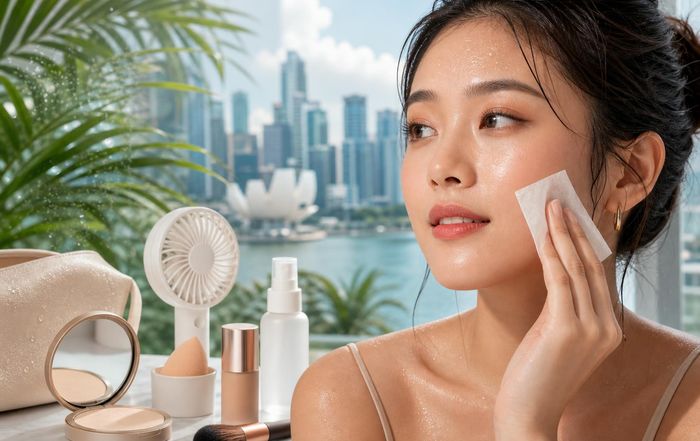
How to Keep Your Makeup Fresh in Singapore's Humidity
Makeup that looks polished in an air-conditioned room can start sliding, creasing, and disappearing within minutes of stepping into Singapore's heat. High temperatures and year-round humidity (often above 80%) make sebum production, sweat, and clogged pores more likely, so products break down faster and skin concerns can flare. Yet long-lasting, comfortable makeup is still possible if application and product choices are adapted to the climate rather than fighting against it.
This sunny guide looks at how humidity affects skin and cosmetics, how to prep and set your base, and what textures, tools, and habits help makeup stay put from MRT commute to late-night supper. While it focuses on Singapore, the advice is equally useful for other tropical and monsoon climates.
Why Makeup Melts in Humid Weather
Singapore's climate is both hot and humid, and that combination changes how skin behaves. In high humidity, the skin tends to sweat more and can produce more sebum, especially in the T-zone. According to dermatology research summarised by the American Academy of Dermatology (AAD), heat and humidity can increase oiliness and acne in those who are already prone, which in turn destabilises makeup. Humidity also slows the evaporation of sweat, so moisture sits on the skin's surface and interferes with how foundation, concealer, and powder adhere.
Many long-wear formulas are tested in controlled lab conditions, not in outdoor, equatorial heat. Emollient, heavy creams can feel suffocating and cause slippage, while powders may cake when they absorb too much moisture. On top of that, moving between strong air-conditioning and outdoor heat can dehydrate the skin surface even in a humid climate, which paradoxically can trigger more oil production. Understanding this push-pull between moisture, sweat, and sebum is key to choosing products and techniques that work with your skin rather than against the weather.
For those interested in broader complexion care in challenging climates, our dedicated skincare section explores hydration, barrier repair, and acne care in more depth.
Start with Climate-Smart Skincare, Not Just Makeup
Long-lasting makeup in Singapore starts well before foundation. The condition of the skin surface-balanced, not stripped or overloaded-determines how well products grip. A gentle, non-drying cleanser that removes sweat, sunscreen, and pollution without leaving the skin squeaky tight helps maintain the barrier. Over-cleansing with harsh surfactants can lead to rebound oiliness, which then destabilises your base. Dermatologists often recommend low-pH, fragrance-minimal cleansers for oily or combination skin; the AAD provides general guidance on gentle cleansers for acne-prone skin that also applies in humid climates.
Lightweight, water-based or gel moisturisers work particularly well because they hydrate without leaving a heavy film. Look for humectants like glycerin and hyaluronic acid, balanced with light emollients such as squalane. Occlusive textures that are ideal in cold, dry countries can feel stifling in Singapore and may cause makeup to slide. For very oily skin, a hydrating serum plus a mattifying sunscreen may be enough during the day. For dry or sensitive skin, a thin layer of a non-comedogenic cream is still important to prevent dehydration from air-conditioning.
Sunscreen is non-negotiable in the tropics. The Skin Cancer Foundation stresses that UV exposure is cumulative and recommends daily use of a broad-spectrum SPF 30 or higher, even on cloudy days (guidance here). In humid heat, lightweight gel or fluid sunscreens, including many newer Asian formulas, tend to layer better under makeup and are less likely to pill. Allow sunscreen to set for at least 10-15 minutes before applying base products so it can form a proper film on the skin; otherwise, foundation can mix with it and break apart.
Those curious about how skincare fits into daily beauty habits in different environments can explore our routines hub, which looks at morning and evening steps for different lifestyles and climates.
The Right Base: Primers, Foundations, and Tinted Products
A well-chosen base can make the difference between makeup that lasts all afternoon and one that streaks by lunchtime. Primers formulated for oily or combination skin can help control shine and give foundation something to cling to. Silicone-based primers with dimethicone or similar ingredients create a smoother surface and can blur pores, but they should be applied in a thin layer to avoid pilling. For those sensitive to silicones, water-based primers with film-forming polymers can also improve longevity. The Cleveland Clinic notes that silicone primers are generally safe for most skin types but should be removed thoroughly to avoid congestion (overview of silicone in skincare).
In Singapore's humidity, medium-coverage, long-wear liquid foundations or skin tints are often more successful than very dewy or very heavy matte formulas. Extremely matte bases can look flat and cakey when mixed with sweat, while ultra-glowy products may become greasy. Oil-free or non-comedogenic labels can be helpful, but it is more important to look for lightweight, buildable coverage that can withstand some blotting and touch-ups. Many consumers now favour tinted moisturisers or cushion compacts with SPF for daily wear, reserving fuller coverage for occasions; this approach reduces the amount of pigment and texture that can break down in heat.
Application technique matters as much as formula. Using a damp makeup sponge or a dense synthetic brush to press, rather than swipe, foundation into the skin helps it meld with skincare and primer, creating a thinner, more even layer that is less likely to slide. Spot-correcting with concealer only where needed, instead of applying a thick layer of foundation everywhere, also reduces the amount of product exposed to sweat and oil. For more detailed complexion techniques, see our makeup section, which covers tools, textures, and finishes.
Strategic Powdering and Setting Techniques
Powder is often the first tool people reach for in humidity, but using too much or applying it in the wrong way can create a cakey, uneven finish once sweat appears. Translucent, finely milled loose powders tend to perform better than heavy pressed formulas in tropical weather because they absorb oil without adding noticeable texture. Focusing powder on the T-zone (forehead, nose, and chin) and areas where glasses or masks sit can control shine while allowing the rest of the face to retain some natural skin sheen.
A technique sometimes called "powder sandwiching" can be effective in very humid conditions: after skincare and sunscreen have set, a tiny amount of loose powder is pressed onto oily areas, followed by primer and foundation, and then a final light dusting of powder. This creates multiple thin, breathable layers rather than one thick coat. However, those with dry or sensitive skin should use this approach cautiously, as too much powder can emphasise flaking or fine lines.
Setting sprays designed to lock in makeup can be particularly useful in climates like Singapore's. Many contain film-forming polymers similar to those in long-wear foundations and are tested for humidity resistance. Consumer testing and brand claims should be treated with caution, but independent reviews and laboratory-style tests by reputable beauty publications can help identify which formulas hold up best in sweat and heat. The U.S. Food and Drug Administration (FDA) regulates setting sprays as cosmetics and notes that products should be used as directed and kept away from eyes and inhalation where possible (cosmetics safety overview). Spraying in an "X" and "T" pattern from about 20-25 cm away usually provides even coverage without drenching the face.
Those wanting to explore longer-term shine control beyond makeup can look into skincare approaches for oil regulation in our guides and tips section, including ingredients like niacinamide and gentle exfoliants.
Eye Makeup That Resists Sweat and Oil
The eye area is especially vulnerable to smudging in humid climates because the skin is thinner, and many people experience oiliness around the eyelids. Using an eyeshadow primer or a small amount of concealer set with powder on the lids helps prevent creasing and provides a base for shadows to grip. Silicone-based eye primers are designed specifically to block oil from breaking down pigment and are widely recommended by professional artists for hot environments.
Waterproof or tubing mascaras are often the most reliable choice in tropical humidity. Tubing mascaras form tiny polymer "tubes" around each lash that resist sweat and sebum but can be removed with warm water and gentle pressure, reducing the need for heavy oil-based removers. Ophthalmologists generally consider these formulas safe when used as directed, though they advise replacing mascara every three months to reduce the risk of eye infections; guidance from sources like Mayo Clinic supports frequent replacement of eye cosmetics for hygiene (eye makeup safety tips).
For eyeliner, gel and liquid formulas with long-wear or waterproof claims tend to last longer than traditional kohl pencils, which can migrate in humidity. Tightlining (applying liner very close to the lash line) rather than creating thick, extended wings can also reduce visible smudging if some breakdown occurs. Powder eyeshadows in satin or matte finishes usually hold up better than very creamy or glittery textures, which can move around when mixed with sweat. If shimmer is desired, pressing it over a set matte base rather than applying directly onto bare, moist skin improves adherence.
Readers interested in trend-driven looks that can still survive Singapore's weather can find inspiration in our trends coverage, where seasonal colours and finishes are often adapted for real-world wear.
Humidity-Proof Brows, Blush, and Lip Colour
Brows frame the face, and in a climate where sebum, sweat, and rain can all conspire to fade them, formula selection is crucial. Long-wear brow gels and pens with fine tips allow for hair-like strokes that anchor pigment to both skin and hairs. Many of these products use film-forming polymers similar to those in waterproof eyeliners, making them more resistant to smudging. Powder brow products can still work if they are applied over a base (such as a light brow wax or pencil) and set with clear gel, but they are generally less durable in very humid conditions.
When it comes to cheek colour, cream and liquid blushes can actually last longer than some powders in Singapore's climate because they fuse with the skin and base products rather than sitting on top. Applying a thin layer of cream blush and then lightly setting it with a matching powder blush can create a "locked-in" effect that survives heat and blotting. The key is to use sheer layers; heavy application of either cream or powder is more likely to move or look patchy when sweat appears.
For lips, long-wear liquid lipsticks and lip tints are obvious choices, but they can be drying, especially when exposed to air-conditioning. Many modern formulas incorporate flexible polymers and emollients to improve comfort, yet the risk of dryness remains. The British Association of Dermatologists notes that frequent use of very drying lip products can contribute to cheilitis (lip inflammation) and recommends balancing them with regular application of non-irritating balms (lip health advice). In practice, a stain or tint layered under a comfortable bullet lipstick or gloss offers both longevity and comfort; even if the top layer wears off in the heat, the stain underneath provides colour.
Those who enjoy exploring colour and finish options can find product-focused discussions in our brands and products section, where textures and performance in different climates are often compared.
Midday Maintenance: Blotting, Touch-Ups, and Hygiene
No matter how carefully makeup is applied, some maintenance is realistic in Singapore's humidity, especially for oily or combination skin. Blotting paper or oil-absorbing sheets can remove shine without disturbing the base more effectively than adding more powder. The AAD suggests oil-blotting papers as a useful tool for managing shine in acne-prone skin, as they reduce surface oil without over-drying (shine control tips). Pressing, rather than dragging, the sheet onto the skin helps preserve coverage. After blotting, a small amount of powder can be dusted over areas that need extra mattifying.
Carrying a small kit with essentials-blotting papers, a compact powder or cushion foundation, and a lip product-makes on-the-go touch-ups more practical. When reapplying base products, it helps to first gently remove any visible sweat with a tissue, then blot oil, and only then add product. Applying foundation directly over sweat can lead to streaking and patchiness. For those who wear masks on public transport or in crowded places, focusing touch-ups on the upper half of the face and blending the mask line softly can maintain a polished look without constant full-face reapplication.
Hygiene is particularly important in a hot, humid environment where bacteria thrive. Brushes and sponges that stay damp in bathrooms or makeup bags can harbour microbes, increasing the risk of breakouts and infections. The Centers for Disease Control and Prevention (CDC) recommends regular cleaning of items that come into contact with the face and avoiding sharing eye and lip products to reduce infection risk (general hygiene guidance). Washing brushes weekly (or more often for liquid and cream products) with a gentle cleanser and allowing them to dry completely in a well-ventilated area is a simple but powerful step.
Readers who like to integrate beauty with broader wellness and self-care habits can find related advice in our wellness section, where stress, sleep, and lifestyle factors are linked to skin and hair health.
Night-Time Removal and Skin Recovery in a Tropical Climate
Keeping makeup fresh all day in Singapore is only half the story; removing it thoroughly at night is just as important for maintaining clear, resilient skin. Heavy sunscreens, long-wear foundations, and waterproof eye products often require more than a single quick cleanse. Dermatologists widely support the use of oil-based or balm cleansers as the first step to dissolve makeup and sunscreen, followed by a gentle water-based cleanser if needed, especially in polluted urban environments. The Journal of Clinical and Aesthetic Dermatology has published reviews indicating that proper cleansing can reduce acne flares and irritation when long-wear cosmetics are used regularly, provided the cleansers are non-stripping.
In a humid climate, it may be tempting to over-exfoliate to "feel clean," but daily use of strong acids or scrubs can weaken the barrier and paradoxically increase sensitivity and oiliness. Mild chemical exfoliants like low-percentage salicylic acid or lactic acid, used a few times a week according to product directions, can help keep pores clear without excessive irritation. Those with melanin-rich skin should be especially cautious, as over-exfoliation can trigger post-inflammatory hyperpigmentation; organisations such as the Skin of Color Society provide resources on tailored skincare for darker skin tones (educational materials).
Night-time is also an opportunity to use targeted treatments-such as niacinamide for oil control, retinoids for acne and texture, or soothing ingredients like centella asiatica and ceramides-to help the skin recover from heat and environmental stress. Lightweight, hydrating serums followed by a non-comedogenic moisturiser are usually sufficient, even in air-conditioned bedrooms. There is no need to sleep in heavy occlusive layers in Singapore's climate unless specifically advised by a dermatologist for a particular condition.
For those interested in how skincare, makeup, and overall health intersect, the health and fitness section and food and nutrition coverage explore topics such as diet, hydration, and lifestyle and their impact on skin appearance.
Bringing It Together: A Climate-Aware Makeup Mindset
Keeping makeup fresh in Singapore's humidity is less about forcing products to behave as they might in a temperate climate and more about respecting what heat and moisture do to skin and formulas. A well-balanced skincare base, breathable layers of foundation and concealer, targeted powdering, and humidity-resistant eye and brow products all contribute to better wear. Equally important is accepting that some shine and minor movement are natural in the tropics; the goal is a healthy, polished look that evolves gracefully through the day, not a rigid, mask-like finish.
Adapting routines can take some experimentation. Skin type, daily environment (office vs. outdoors), and personal style all influence which techniques are most effective. However, by prioritising skin health, using thin, strategic layers, and building in simple midday maintenance, it is entirely possible to enjoy expressive, long-lasting makeup in even the stickiest weather. That wraps up this subject for today. Continue following the questions it raised and remain open to where the next answer might come from.
