
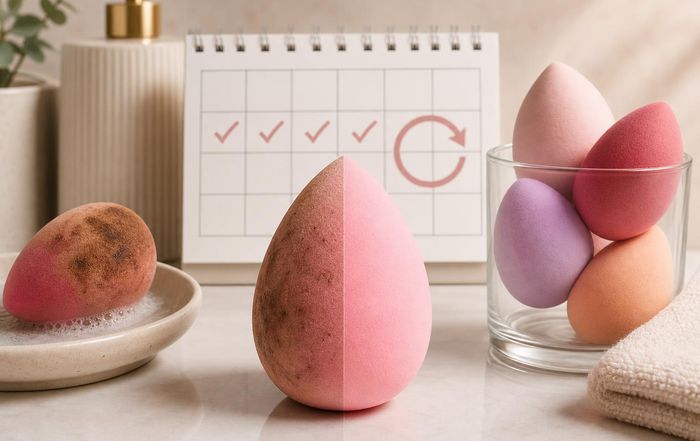
How Often Should You Replace Makeup Sponges? A Practical, Hygienic Guide?
For many people, a makeup sponge is as essential as foundation itself. It buffs, blends, and blurs imperfections in seconds. But because sponges are porous, constantly dampened, and in direct contact with skin, they are also ideal environments for bacteria and product buildup. How often to replace them is not simply a matter of performance; it is also a question of skin health and hygiene. This awesome guide brings together dermatologist advice, microbiology research, and real-world usage patterns to help you decide when to toss your sponge, how to clean it effectively, and what signs mean it needs to go sooner rather than later.
The Short Answer: Typical Replacement Timelines
There is no single universal rule, but there is a clear consensus range.
Most dermatologists and makeup hygiene experts recommend replacing reusable makeup sponges about every 1-3 months, depending on how often they are used and how well they are cleaned. Daily users who wear liquid or cream products most days should aim closer to every month, while occasional users who clean thoroughly may be comfortable stretching to two or three months.
This recommendation aligns with guidance from major brands such as Beautyblender, which suggests replacing its iconic sponge roughly every 3 months with regular use. Independent testing has shown that makeup tools can quickly accumulate bacteria; for example, a 2019 study published in the Journal of Applied Microbiology found that used makeup products and tools, including sponges, often carry high levels of microbes, especially when not cleaned regularly.
However, the calendar alone should not be your only guide. Visible wear, changes in texture, lingering stains, or new skin irritation are all signs that a sponge may need to be replaced sooner than a standard schedule would suggest.
Why Replacement Matters: Bacteria, Breakouts, and Skin Health
Makeup sponges are designed to be soft, porous, and absorbent, which is excellent for blending but also makes them a perfect breeding ground for microorganisms. When a sponge is damp, loaded with leftover foundation, and stored in a closed bag or drawer, it becomes a warm, moist environment that can support bacterial growth.
Studies on cosmetic hygiene have repeatedly found that used makeup tools can harbor bacteria such as Staphylococcus aureus and, in some cases, even fecal bacteria, particularly when tools are dropped or stored in unsanitary conditions. While not every bacterium on a sponge will cause infection, higher bacterial loads may contribute to acne, irritation, or, in rare cases, more serious skin issues, especially if the skin barrier is compromised or if there are open blemishes.
Dermatologists frequently highlight tool hygiene as part of acne management. The American Academy of Dermatology notes that dirty makeup brushes and applicators can worsen breakouts and recommends regular cleaning and replacement. For people with sensitive or acne-prone skin, the cleanliness of applicators can be as important as the formulation of the products themselves.
Beyond bacteria, old sponges can trap oil, dead skin cells, and environmental debris. This buildup can change how foundation sits on the skin, leading to patchiness, streaking, or an uneven finish. In other words, replacing a sponge on time is not only about hygiene; it also helps maintain a smoother, more polished makeup look.
Readers who want to align their tools with a broader healthy-skin strategy can also explore structured skincare routines and skincare-focused guides to build a more holistic approach.
Key Factors That Change How Often You Should Replace Your Sponge
While "every 1-3 months" is a useful starting point, individual habits can push that timeline shorter or longer. Several practical variables matter more than the date on the calendar.
Frequency of Use
If a sponge is used almost every day for liquid or cream products, it is being repeatedly dampened, loaded with pigment, and exposed to skin oils and environmental microbes. In this case, a replacement every 4-6 weeks is often more realistic, especially if you notice staining or a persistent odor despite regular washing.
If you only wear full makeup on weekends or special occasions, and you clean the sponge after each use, you may be able to keep it for up to three months without obvious hygiene or performance issues. However, even infrequent users should still watch for signs of deterioration rather than assuming a long shelf life.
Type of Products Used
Liquid and cream foundations, concealers, cream blush, and contour products all saturate the sponge more deeply than most powders. Oil-based or long-wear formulas can be especially difficult to remove fully, even with thorough cleansing, and they can leave residue that encourages bacterial growth and alters the feel of the sponge.
If your sponge is primarily used with:
Liquid or cream complexion products: lean toward more frequent replacement (about every 1-2 months).
Powder only: the sponge may last a little longer if kept dry and clean, but you should still watch for texture changes and staining.
Cleaning Habits
How often-and how well-you clean your sponge significantly affects its lifespan.
The U.S. Centers for Disease Control and Prevention (CDC) notes that germs thrive in moist environments, which is directly relevant to a damp makeup sponge. If the sponge is rarely washed and often left wet in a closed space, bacteria can multiply quickly. In such cases, even a month may be too long to keep the same tool.
By contrast, users who:
Wash their sponge after each use or at least several times per week,
Use a proper cleanser,
Rinse thoroughly until water runs clear, and
Allow it to dry completely in a well-ventilated area
can often safely extend the life of their sponge closer to the upper end of the 2-3 month range. This level of maintenance not only improves hygiene but also supports a more flawless makeup application, similar to how clean tools contribute to better results with makeup brushes and other tools.
Skin Type and Sensitivity
People with acne-prone, sensitive, or reactive skin may benefit from replacing sponges more frequently than others. Dermatologists often recommend minimizing prolonged contact with potentially contaminated tools in patients who experience recurrent breakouts or inflammatory skin conditions.
If you are dealing with:
Active acne,
Recent cosmetic procedures (such as microneedling, peels, or laser treatments),
Eczema, rosacea, or other barrier issues,
it may be wise to use sponges for a shorter period, clean them more often, or even consider single-use applicators for a time, following your dermatologist's advice. Reliable organizations such as the American Academy of Dermatology and the British Association of Dermatologists provide guidance on managing skin conditions that can help you decide how strict your tool hygiene should be.
Clear Signs Your Makeup Sponge Needs to Be Replaced Now
Regardless of the time elapsed, certain changes in a sponge's appearance, smell, or performance are strong indicators that it should be discarded. Watching for these signs can be more reliable than counting weeks.
Common red flags include:
Persistent stains or discoloration that do not fade even after thorough washing. This suggests that product and pigment have penetrated deeply into the sponge structure and are unlikely to be fully removed.
An unpleasant or musty odor, especially if the sponge is often stored damp. A sour or moldy smell is a clear signal that microbes may be thriving inside the sponge.
Visible tears, cracks, or flaking of the material. Once the surface is damaged, it can be harder to clean effectively, and small pieces may shed onto the skin during application.
Texture changes, such as feeling unusually rough, slimy, or less bouncy. When a sponge loses its original feel, its performance typically declines, and the altered surface may hold onto more residue.
Mold spots or unusual dots that were not there before. Any suspicious spots-especially dark or fuzzy areas-warrant immediate disposal. The U.S. Environmental Protection Agency notes that mold can cause allergic reactions and irritation, and there is no safe way to "rescue" a moldy sponge.
New irritation or breakouts localized to areas where the sponge is used, particularly if other parts of your routine have not changed. While correlation is not proof, a sudden change in skin behavior may suggest that the sponge has become a problem.
If any of these signs appear, it is safer to err on the side of caution and replace the sponge, even if it has been less than a month.
How to Clean Makeup Sponges Properly (So They Last Their Full Lifespan)
Thoughtful cleaning can extend the usable life of a sponge and reduce the risk of skin problems. Many people give sponges only a quick rinse, but deeper cleansing is needed to remove foundation, oil, and microbes.
A simple but effective routine typically includes:
Daily or near-daily cleansing for frequent users. Ideally, wash the sponge after each use. At minimum, aim for several thorough washes per week if you wear makeup regularly.
Use a suitable cleanser. Dedicated sponge and brush cleansers, gentle fragrance-free soaps, or mild facial cleansers can work. Avoid harsh detergents or products with strong perfumes that may irritate skin or degrade the sponge material. The U.S. Food and Drug Administration offers general guidance on cosmetic product safety, which can be helpful when choosing cleansers used on tools that contact the face.
Work the cleanser in gently. Thoroughly wet the sponge, apply cleanser, and gently squeeze and roll it under running water. Continue until the water runs clear and no visible product remains.
Rinse extremely well. Residual soap inside the sponge can irritate skin, especially around the eyes. Take time to ensure all cleanser is removed.
Dry in a ventilated space. Avoid storing a damp sponge in closed containers, makeup bags, or drawers. Place it on a clean surface or stand in an open area to air-dry completely. This step is crucial to limit bacterial and mold growth.
Deep clean periodically. If you use heavy or long-wear foundation, consider a more intensive clean once a week, allowing extra time for soaking in cleanser before rinsing.
Readers interested in broader hygiene tips around tools, gym accessories, and personal-care items can also explore wellness-focused content and health and fitness guidance to create routines that support overall skin and body health.
Reusable vs. Disposable Sponges: Does It Change the Timeline?
Not all sponges are designed to be used in the same way. Understanding the differences can help you set realistic expectations for how long each type should last.
Reusable Makeup Sponges
Reusable sponges, such as latex-free blending sponges and teardrop applicators, are intended for repeated use with regular cleaning. For these:
A 1-3 month lifespan is typical, assuming good hygiene.
Heavy daily users may lean toward monthly replacement.
Occasional users who clean and dry thoroughly may comfortably reach closer to three months.
These sponges are usually made from materials designed to withstand repeated wetting and cleansing, but they are still consumable items rather than long-term investments. Over time, the material inevitably breaks down.
Disposable Wedges and Single-Use Sponges
Some brands sell inexpensive latex or latex-free wedge sponges designed for brief or single-use application, often in professional settings or for clients with sensitive skin. For disposables:
Many makeup artists discard wedges after a single use to prevent cross-contamination between clients.
Personal users might use each wedge a few times, but these sponges are not meant to be washed extensively or kept for months.
From a hygiene standpoint, single-use applicators can be safer for compromised skin or post-procedure care, but they also generate more waste. If sustainability is a concern, consumers can look for brands that offer eco-conscious beauty tools or explore other low-waste application methods, such as clean fingers or reusable tools that are carefully maintained.
Travel, Gym Bags, and Other High-Risk Habits
How a sponge is stored between uses can be almost as important as how often it is washed. Certain everyday habits unintentionally create ideal conditions for microbes.
Common risk factors include:
Storing a damp sponge in a closed makeup bag or brush roll, especially in warm environments such as cars or bathrooms.
Leaving sponges loose in gym bags, where they can collect sweat, dust, and contact with other items like shoes or towels.
Keeping sponges in humid bathrooms without adequate ventilation or airflow.
Sharing sponges with others, which can spread bacteria, fungi, and even viruses between users.
Public health authorities, including the World Health Organization, have repeatedly emphasized the importance of basic hygiene to reduce the spread of microbes and antimicrobial resistance, and while a makeup sponge is not a medical tool, the same principles of minimizing unnecessary exposure and contamination apply.
To reduce risk:
Always allow sponges to dry completely before packing them away.
Use ventilated cases or holders rather than fully sealed containers.
Avoid sharing sponges, even with close friends or family.
Consider keeping a separate sponge or applicator for travel and replacing it more frequently, as travel conditions are often less controlled.
Readers interested in how everyday habits intersect with beauty and wellness can find more context in sections focused on guides and tips and beauty trends, where hygiene and lifestyle often overlap.
When to Replace Sponges After Illness or Skin Infection
One situation where replacement should be more aggressive is after any skin infection or systemic illness that may involve microbes on the face.
If you have experienced:
Eye infections such as conjunctivitis (pink eye),
Cold sores around the mouth,
Bacterial skin infections, or
Significant viral illnesses where nasal or oral secretions may have contacted tools,
it is generally advisable to discard sponges and other applicators used during that period. Organizations such as the Centers for Disease Control and Prevention emphasize the role of surfaces and objects in spreading infections; while makeup sponges are not the main route, they can contribute. Similarly, if a dermatologist has diagnosed a fungal or bacterial skin infection, ask whether you should replace current tools once treatment begins. Continuing to use heavily contaminated applicators can undermine recovery and potentially reintroduce pathogens to the skin.
Practical Replacement Guidelines You Can Actually Use
Bringing all of this together, a simple, realistic framework for most users looks like this:
Daily or near-daily users of liquid/cream productsReplace every 4-8 weeks, depending on how well you clean and dry the sponge and how sensitive your skin is.
Moderate users (a few times per week)Replace about every 2-3 months, assuming consistent cleaning and no signs of damage or odor.
Occasional users (special events, weekends)You may be able to keep a sponge up to three months, but still watch for staining, texture changes, and smell, and store it in a dry, ventilated place.
High-risk situations (acne flares, infections, post-procedure)Replace more often, consider single-use applicators, and follow medical advice tailored to your skin condition.
Whatever your schedule, treat the sponge as a consumable tool rather than a long-term accessory. If you notice performance issues, unusual smells, or skin changes, do not hesitate to replace it early. The cost of a new sponge is typically small compared with the potential impact of persistent breakouts or irritation. For fashionable readers building a broader beauty toolkit, exploring categories like beauty essentials and fashion and lifestyle can help integrate tool hygiene into an overall routine that balances aesthetics, comfort, and health.
Making Hygiene a Seamless Part of Your Beauty Routine
Replacing makeup sponges on an appropriate schedule is a small habit that can quietly support clearer skin, better makeup application, and more confidence in your daily routine. While it may be tempting to stretch a favorite sponge as long as possible, the combination of regular washing, mindful storage, and timely replacement is far more important than squeezing every last month out of a tool. By paying attention to how often you use your sponge, how you clean it, and how your skin responds, you can set a replacement rhythm that feels both practical and protective. Over time, this kind of thoughtful maintenance-applied not just to sponges but to brushes, skincare tools, and even gym accessories-can make your entire beauty and wellness routine cleaner, safer, and more effective.
