
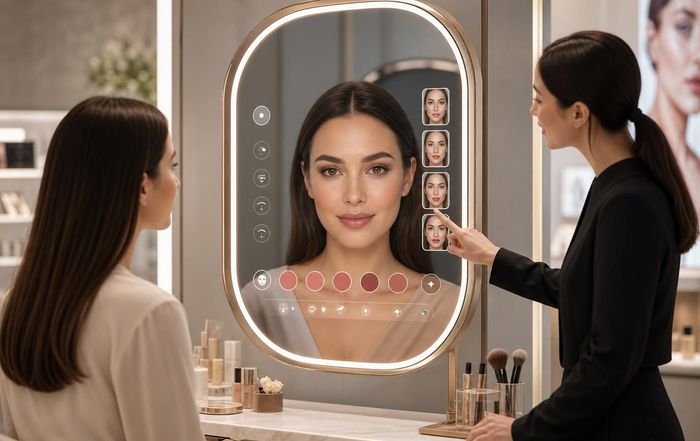
How Smart Mirrors Are Changing Beauty Consultations
A New Reflection: The Rise of Smart Mirrors in Beauty
By mid-2026, smart mirrors have moved from futuristic curiosities into central tools of the modern beauty ecosystem, reshaping how consumers explore products, receive advice, and build daily routines. For BeautyTipa and its fashionable and glamorous audience across North America, Europe, Asia, Africa, and South America, this transformation is not merely about novel hardware; it is about a profound shift in how expertise, personalization, and trust are delivered at the intersection of beauty, wellness, and technology. Smart mirrors now sit in flagship stores, dermatology clinics, hotel spas, fitness studios, and increasingly in private homes, combining high-resolution imaging, augmented reality overlays, artificial intelligence-driven analysis, and cloud connectivity to create a new kind of interactive consultation that blends digital precision with human judgment.
As leading beauty groups such as L'Oréal, Estée Lauder Companies, and Shiseido invest heavily in AI-enhanced diagnostics and virtual try-on platforms, and as technology players like Google, Apple, and Samsung refine computer vision and edge-AI capabilities, the smart mirror has become an anchor device that connects product discovery, medical-grade insights, and lifestyle coaching. In this environment, a platform updated everyday like BeautyTipa plays a critical role in helping consumers and professionals interpret what these devices reveal, compare brands and formulations, and translate digital recommendations into coherent, sustainable beauty and wellness strategies.
From Static Reflection to Intelligent Advisor
Traditional mirrors have always been tools of self-assessment, but they were limited to what the naked eye could perceive. Smart mirrors, by contrast, integrate cameras, depth sensors, spectral imaging, and machine learning models trained on vast skin and hair datasets to detect subtle variations that human observers often miss. In premium retail environments from New York and Los Angeles to London, Paris, Berlin, Toronto, Sydney, and Singapore, customers now stand in front of a smart mirror that can map fine lines, pore size, redness, pigmentation, and hydration levels, generating a real-time skin health score and personalized product pathway.
Research laboratories at organizations such as MIT Media Lab and Fraunhofer Institute have contributed to advances in computer vision and imaging that underpin these capabilities, while dermatological insights from institutions like the American Academy of Dermatology and the British Association of Dermatologists have informed how these systems interpret clinical markers such as erythema, melasma, or rosacea tendencies. Consumers who once relied solely on subjective impressions can now see longitudinal graphs of their skin condition, making it easier to evaluate whether a new serum, retinoid, or sunscreen is delivering measurable benefits over weeks and months.
For readers exploring foundational concepts of appearance and self-care, the editorial teams at BeautyTipa have been aligning these technological developments with core coverage on beauty, ensuring that the narrative around smart mirrors remains grounded in realistic expectations, evidence-based claims, and an understanding of how digital tools should complement, not replace, professional expertise.
The New Consultation Journey in Retail and Clinics
In leading beauty retailers and department stores across the United States, United Kingdom, Germany, France, Italy, Spain, the Netherlands, Switzerland, and the Nordic countries, the consultation journey has been redesigned around smart mirrors as the first touchpoint. A customer approaches a device integrated into a counter from Sephora, Douglas, or Ulta Beauty, grants consent for imaging, and within seconds receives an assessment that highlights key focus areas such as uneven tone, early photoaging, or barrier impairment. The system then suggests tailored regimens, often cross-referencing large product databases and ingredient libraries maintained by both retailers and major manufacturers.
In parallel, dermatology and aesthetic clinics in markets like Canada, Australia, South Korea, Japan, and Singapore are deploying medical-grade smart mirrors that incorporate polarized light, UV imaging, and multispectral analysis. These systems assist clinicians in tracking pigmentation changes, vascular patterns, and textural irregularities associated with acne, rosacea, or early skin cancers. While diagnostic responsibility remains firmly with licensed practitioners, the mirror provides objective baselines and visualizations that enhance patient understanding, making consultations more collaborative and transparent. Patients can see side-by-side comparisons of their skin before and after treatments such as chemical peels, laser resurfacing, or biologic therapies, which improves adherence and satisfaction.
For BeautyTipa readers interested in the business and operational side of these deployments, the economics of smart mirrors are increasingly relevant. Investments in hardware, software licenses, and integration with customer relationship management platforms are now analyzed within a broader framework of omnichannel engagement and return on experience, a topic explored in depth in the site's business and finance section. Retailers are measuring not only higher conversion rates from consultations, but also richer customer data profiles and improved product matching, which in turn reduce returns and increase lifetime value.
Personalization, Data, and the Science Behind Recommendations
The promise of smart mirrors rests on personalization, yet personalization must be grounded in robust data science and dermatological insight to be credible. Behind the mirror's interface, complex pipelines process high-resolution images, extract features related to texture, color, and morphology, and compare them against reference datasets. Many of these algorithms draw from advances in deep learning documented by organizations such as the IEEE and the Association for Computing Machinery, adapted specifically for skin analysis under varying lighting conditions and across diverse phototypes.
To deliver accurate and inclusive recommendations for consumers in regions as diverse as South Africa, Brazil, Malaysia, Thailand, and the Middle East, training data must represent a wide range of Fitzpatrick skin types and ethnic backgrounds. This has led to closer collaboration between beauty companies and academic centers like the University of Cape Town and National University of Singapore, which contribute expertise on pigmentation disorders, sun exposure patterns, and cultural preferences in skincare and makeup. As a result, smart mirrors in 2026 are markedly better at recognizing concerns such as post-inflammatory hyperpigmentation in darker skin tones or sensitivity patterns prevalent in fair, Northern European skin.
At the same time, ingredient intelligence has become more sophisticated. Smart mirrors are increasingly linked to formulation databases and regulatory resources such as the Cosmetic Ingredient Review and the European Commission's Cosmetic Regulation portal. When a mirror recommends a moisturizer or serum, it can now highlight key actives, potential allergens, and regulatory status, helping consumers make informed choices. For BeautyTipa, this convergence of science and consumer education aligns closely with its mission in areas such as skincare and guides and tips, where the editorial focus is on demystifying labels, explaining mechanisms of action, and clarifying which claims are substantiated by peer-reviewed evidence.
Smart Mirrors in Daily Routines and At-Home Wellness
While in-store and in-clinic experiences capture headlines, the most profound behavioral change is occurring in private homes across major cities and smaller communities alike. Connected mirrors installed in bathrooms and dressing areas now guide users through morning and evening routines, offering step-by-step prompts, timing cleansers and masks, and providing feedback on application techniques. For instance, a user in Toronto or Stockholm might receive gentle alerts if sunscreen coverage is uneven, while a user in Seoul or Tokyo could be advised to adjust the layering order of essences, ampoules, and creams based on humidity levels and recent skin responses.
These devices interface with broader wellness ecosystems that incorporate sleep tracking, nutrition logging, and stress monitoring. Platforms such as Apple Health, Samsung Health, and Google Fit feed data into algorithmic models that correlate lifestyle patterns with skin outcomes. A period of poor sleep or high stress, documented by wearables and validated by bodies like the National Sleep Foundation, might be associated with increased dullness or flare-ups, prompting the mirror to suggest calming ingredients, breathing exercises, or schedule adjustments. Similarly, dietary shifts tracked through apps that reference guidelines from institutions like the Harvard T.H. Chan School of Public Health can be linked to changes in skin hydration or oiliness.
For BeautyTipa, which covers wellness, health and fitness, and food and nutrition, this integration reinforces the editorial stance that skin health cannot be separated from overall lifestyle. Smart mirrors, when thoughtfully designed, encourage users in the United States, United Kingdom, Germany, Canada, Australia, and beyond to view their reflection not as a purely aesthetic evaluation, but as a daily checkpoint for holistic wellbeing.
Makeup, Fashion, and the Evolution of Virtual Try-On
In 2026, virtual try-on is no longer a novelty but an expected feature in both beauty and fashion. Smart mirrors enable consumers to experiment with foundations, lip colors, eyeliners, and eyeshadows from brands like MAC Cosmetics, Fenty Beauty, Lancôme, and Charlotte Tilbury without physical testers, which has significant implications for hygiene, inventory, and sustainability. The color accuracy of augmented reality overlays has improved substantially, thanks to better calibration, device-agnostic rendering engines, and color science research referenced by organizations such as the International Commission on Illumination.
In major beauty markets such as South Korea and Japan, where gradient lips, glass skin, and subtle color harmonies are highly valued, smart mirrors help users fine-tune undertones and finishes, aligning looks with local trends while respecting individual preferences. In Western markets, where bold statements and seasonal collections remain popular, mirrors support rapid experimentation and comparison across brands, making it easier to align personal style with runway influences documented by platforms like the Council of Fashion Designers of America and British Fashion Council. For BeautyTipa, this convergence of digital artistry and product innovation enriches its coverage of makeup and fashion, offering readers concrete examples of how to translate virtual looks into real-world techniques and purchases.
Beyond color cosmetics, smart mirrors in fashion boutiques and luxury department stores now enable virtual fitting of accessories and, in some cases, garments, using body scanning and avatar technology. Although full-body smart mirrors are still more common in flagships in cities like New York, London, Paris, Milan, and Shanghai, they foreshadow a future in which beauty and fashion consultations merge into a single, cohesive experience. For global consumers, especially in regions where physical access to flagship stores is limited, these tools promise a more inclusive and immersive form of participation in international style culture.
Sustainability, Hygiene, and Post-Pandemic Retail Expectations
The acceleration of smart mirror adoption was partly catalyzed by the COVID-19 pandemic and its aftermath, which reshaped consumer expectations around hygiene and contactless experiences. Testers and in-person sampling were scrutinized, and retailers sought safer ways to deliver discovery and personalization. Smart mirrors, by enabling virtual try-on and precise product matching without physical contact, addressed these concerns while also reducing product waste associated with opened but unsold items.
From a sustainability perspective, this shift aligns with broader efforts by organizations such as the Ellen MacArthur Foundation and the World Business Council for Sustainable Development to promote circularity and resource efficiency in consumer goods. Fewer discarded testers, more accurate shade matching, and optimized inventory planning contribute to lower environmental impact. As BeautyTipa continues to highlight in its coverage of trends and technology-driven innovation, smart mirrors are becoming an important component of sustainable retail strategies, especially in Europe, where regulatory pressure and consumer expectations around green practices are particularly strong.
Hygiene considerations remain central even as pandemic memories recede. In markets such as Singapore, Denmark, Norway, and Finland, where public health infrastructure and trust are high, consumers still value touchless options that feel modern and efficient. Smart mirrors, when paired with clear privacy policies and transparent consent mechanisms, signal that brands are attentive to both health and data protection, two pillars of trust in the contemporary retail environment.
Data Privacy, Ethics, and Regulatory Scrutiny
As smart mirrors collect increasingly detailed biometric and behavioral data, ethical and regulatory questions have moved to the forefront. Facial images, skin maps, and usage logs, if mishandled, could expose consumers to privacy violations or discriminatory practices. Regulators in the European Union, through frameworks like the General Data Protection Regulation, and authorities in the United States, Canada, and other jurisdictions are scrutinizing how beauty retailers and technology providers store, process, and share this information.
Leading companies such as L'Oréal, Procter & Gamble, and Unilever have responded by publishing more explicit data governance principles, including commitments to anonymization, limited retention, and opt-in consent for profiling and marketing. Civil society organizations, including the Electronic Frontier Foundation and Future of Privacy Forum, have raised awareness about facial recognition and algorithmic bias, pushing the industry to adopt fairness testing and independent audits. For global consumers from Brazil to South Africa, China to New Zealand, this evolving landscape underscores the importance of choosing services and brands that demonstrate not only technological sophistication but also ethical maturity.
Within the editorial framework of BeautyTipa, discussions of smart mirrors are consistently linked to broader conversations about digital rights and consumer protection, helping readers evaluate whether the convenience and personalization offered by these devices are balanced by robust safeguards. Coverage in areas such as technology beauty and international policy developments ensures that audiences in different jurisdictions understand how local regulations may affect their data and options.
Workforce Transformation and New Career Paths
The rise of smart mirrors is also reshaping jobs and employment across the beauty and wellness sectors. Beauty advisors, makeup artists, aestheticians, and retail associates are learning to interpret digital analyses, configure devices, and translate algorithmic recommendations into human-centered conversations. Far from replacing professionals, smart mirrors are creating a new hybrid role that blends technical literacy with emotional intelligence and creative skill. Training programs offered by companies such as Sephora, LVMH, and Douglas Group increasingly include modules on AI tools, digital clienteling, and remote consultation techniques.
At the same time, new career paths are emerging at the intersection of data science, user experience design, and cosmetic science. Professionals with backgrounds in computer vision, dermatology, and product development are collaborating to refine algorithms, build inclusive datasets, and design interfaces that are intuitive for users across age groups and cultures. Academic institutions and vocational programs are beginning to reflect this shift, with courses in beauty tech innovation and digital aesthetic services appearing in curricula in the United States, United Kingdom, Germany, South Korea, and Japan.
For readers exploring career opportunities, BeautyTipa highlights these trends in its jobs and employment coverage, profiling roles such as digital beauty consultant, AI-enabled skincare specialist, and beauty data analyst. As smart mirrors become standard equipment in salons, spas, clinics, and retail environments worldwide, familiarity with these tools is rapidly becoming a differentiator in hiring and career progression.
Global Adoption Patterns and Cultural Nuances
Although smart mirrors are a global phenomenon, adoption patterns and use cases vary across regions, influenced by cultural attitudes toward technology, privacy, and beauty ideals. In East Asian markets such as South Korea, Japan, and China, where digital innovation and skincare sophistication are deeply embedded in consumer culture, smart mirrors are widely accepted as natural extensions of existing routine-oriented behaviors. Consumers in Seoul or Tokyo may use mirrors to track the effects of multi-step regimens and seasonal product rotations, aligning with the meticulous approaches documented by organizations such as the Korea Dermatological Association and local beauty research centers.
In Western Europe and North America, consumers often prioritize convenience and efficiency, using smart mirrors to streamline product selection and simplify routines, particularly in busy urban centers like London, New York, Berlin, and Toronto. Privacy concerns are more pronounced in some European markets, leading to a preference for on-device processing and minimal data sharing, in line with guidance from bodies like the European Data Protection Board. In emerging markets across Africa and South America, including South Africa and Brazil, adoption is more uneven, but mobile-first approaches and partnerships with local retailers are expanding access, often through shared devices in salons and community centers.
These regional differences underscore the need for nuanced, culturally aware coverage, something BeautyTipa emphasizes in its international reporting. By comparing how smart mirrors are integrated into beauty rituals from Scandinavia to Southeast Asia, the platform helps readers recognize that there is no single "correct" way to use these tools; instead, they must be adapted to local climates, lifestyles, and value systems.
The Road Onwards: Integrating Human Insight with Intelligent Surfaces
Looking toward the late 2020s, smart mirrors are likely to evolve from standalone devices into nodes within a broader network of intelligent surfaces and ambient computing. Bathroom mirrors, vanity stations, car displays, and even fitness studio walls may interpret biometric signals and environmental factors to provide context-aware guidance that spans skincare, makeup, fragrance, haircare, posture, and stress management. Advances in edge AI, 3D sensing, and privacy-preserving computation, as discussed by organizations like the World Economic Forum, will enable more powerful analytics to run locally, reducing the need to transmit sensitive images to the cloud.
For this vision to deliver genuine value, however, the industry must maintain a clear focus on experience, expertise, authoritativeness, and trustworthiness. Algorithms must be transparent enough to be questioned, recommendations must be grounded in dermatological and cosmetic science, and users must retain control over what is captured and how it is used. Equally important, the human dimension of beauty consultations-empathy, creativity, cultural sensitivity-must remain central. Smart mirrors can highlight concerns and suggest options, but they cannot fully replace the nuanced understanding that an experienced dermatologist, makeup artist, or aesthetician brings to each unique face and story.
Within this evolving landscape, BeautyTipa is positioning itself as a trusted interpreter and guide, connecting readers to the latest developments in smart mirror technology while anchoring those innovations in practical advice across routines, brands and products, and cross-disciplinary wellness insights. As consumers from the United States, United Kingdom, Germany, Canada, Australia, France, Italy, and others navigate this new era of intelligent reflection, the role of independent, expert-driven platforms becomes more important than ever.
Smart mirrors are changing beauty consultations not by replacing the mirror's fundamental function of reflection, but by deepening it. They reflect not only the surface of the skin but also the interconnectedness of health, lifestyle, technology, and identity. For individuals and businesses alike, the challenge and opportunity lie in using this deeper reflection wisely: to make better choices, to foster more inclusive and sustainable practices, and to ensure that, even as our mirrors grow smarter, our approach to beauty remains human at its core.
