
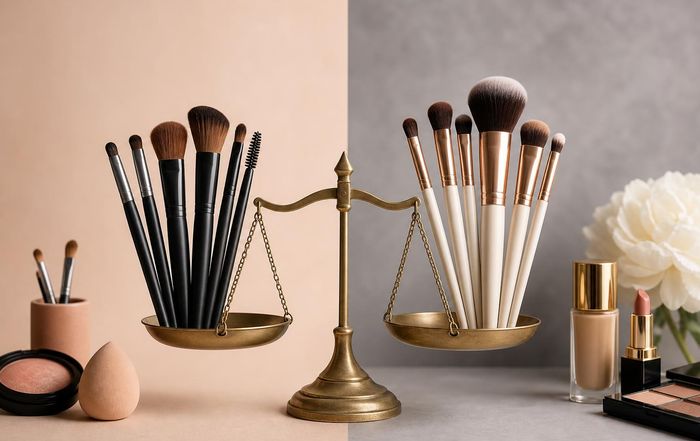
Are Expensive Makeup Brushes Really Worth It?
For many people who love beauty, the first "grown-up" purchase is not a luxury foundation or a designer lipstick, but a brush set that costs more than the makeup itself. With individual brushes reaching well over $50 and full sets running into the hundreds, it is reasonable to ask whether high-end tools genuinely perform better than affordable options-or whether you are mostly paying for branding and aesthetics.
Now consider what actually makes a makeup brush "good," how price connects to performance, when it is worth splurging, and where budget tools can match or even beat prestige options. The focus is practical: helping readers decide what to invest in, what to save on, and how to care for brushes so they last.
What Really Makes a Good Makeup Brush?
Price is only one variable in brush quality. What matters more is how a brush is constructed and how it behaves with the products you use.
The first major factor is the fiber itself: synthetic versus natural. High-quality synthetic fibers (such as Taklon or proprietary blends used by brands like Real Techniques and Morphe) are smooth, uniform, and less porous. They tend to excel with liquid and cream products because they do not absorb as much foundation or concealer, making application more efficient. Natural hair brushes (often goat, squirrel, pony, or sable) are more porous and can grip powder particles exceptionally well, which is why many professional artists still prefer them for blending powder eyeshadows and setting powders. However, modern synthetics have improved so much that many artists now consider them comparable for most powder applications and superior in terms of durability and ethics. Organizations such as PETA have long encouraged consumers to choose synthetic, cruelty-free brushes, and a growing number of pro brands have transitioned accordingly.
The second factor is density and cut. A well-made brush has bristles that are evenly packed and cut or shaped precisely so the tip forms a smooth dome, angle, or point without stray hairs. This affects how seamlessly product blends and how much control you have. For instance, a dense, flat-top foundation brush will give fuller coverage, while a loosely packed duo-fiber brush diffuses pigment for a sheerer, airbrushed finish. Inexpensive brushes can be dense but often lack refined shaping, which can lead to patchy or streaky application.
Ferrule and handle quality are the third piece. The ferrule (the metal part that connects bristles to the handle) should be crimped and glued securely to prevent shedding and wobbling over time. Handles made of wood or high-quality plastic should feel balanced in the hand and be coated to resist swelling or cracking when exposed to moisture. Poorly made brushes often reveal themselves after a few washes when the ferrule loosens or the finish chips. The Personal Care Products Council notes that tool quality and maintenance meaningfully affect hygiene and performance, especially when brushes are used near the eyes and lips, where infection risk is higher.
Ultimately, a good brush is one that picks up the right amount of product, releases it smoothly onto the skin, feels comfortable, and withstands regular washing. Expensive brushes are more likely-but not guaranteed-to meet these criteria. Affordable brushes can absolutely meet them too; the difference is in consistency across the line and long-term durability.
Where the Money Goes: Why Some Brushes Cost So Much
Understanding what drives cost helps clarify when a high price tag reflects real value and when it is mostly marketing. At the top end of the market, price often rises because of labor-intensive craftsmanship. Japanese brush makers in regions like Kumano have centuries-old traditions of hand-bundling and shaping bristles rather than machine-cutting them. Brands that rely on this artisanal production, such as Hakuhodo or Chikuhodo, emphasize that hand shaping preserves the natural taper of each hair, creating a softer feel and more precise application. This craftsmanship and the smaller production scale genuinely increase costs and can be felt in the smoothness and blendability of the brushes, particularly for powder eye and face products.
Material sourcing also matters. Natural hair brushes that use high-grade goat or squirrel hair tend to be more expensive than those using lower-grade hair or synthetics. That said, animal welfare and sourcing transparency are increasingly scrutinized. The Humane Society International and similar organizations have raised concerns about animal hair in cosmetics tools, which has pushed many brands to either certify humane sourcing or move to synthetics. Ethically sourced natural hair and high-performance synthetics can both raise costs compared with generic, low-grade fibers.
Beyond materials and labor, there are the usual business factors: brand positioning, packaging, and marketing. Luxury beauty brands often price brushes to match their overall prestige image, even when the tools are manufactured in the same facilities as mid-range competitors. Designer branding, heavy lacquered handles, and elaborate brush rolls or cases add cost without necessarily improving performance. Independent testing by reviewers and artists-such as comparative reviews from Allure, Into The Gloss, or professional artists' blogs-often finds that some mid-priced or even drugstore brushes perform as well as or better than designer-label tools that cost several times more.
In short, higher prices can reflect better craftsmanship, better materials, and ethical sourcing-but they can just as easily reflect a luxury logo and pretty packaging. Deciding whether a brush is "worth it" means looking beyond the brand name to how it is made and how it works on the skin.
Performance: Do Expensive Brushes Actually Apply Makeup Better?
When comparing expensive and affordable brushes side by side, performance differences show up most clearly in certain categories and less in others. For face brushes used with liquid foundation, many users find that high-quality synthetic brushes from both drugstore and prestige ranges perform similarly. The American Academy of Dermatology (AAD) notes that synthetic fibers are often preferable for people with sensitive or acne-prone skin, because their smoother surface can be less irritating and easier to clean thoroughly. Since many budget brands now use advanced synthetic fibers, the gap in streak-free, even foundation application has narrowed considerably.
Where expensive brushes more often stand out is in powder blending, especially for eyeshadows and subtle face work like contouring or highlighting. High-end natural or ultra-fine synthetic brushes tend to have more nuanced shapes-smaller crease brushes that taper just so, fluffy blending brushes that diffuse color without skipping or catching on texture, and fan or tulip-shaped brushes that pick up a whisper of highlighter. These refinements can make it easier to achieve soft gradients and precise placement with minimal effort, especially if someone works with very pigmented powder products or prefers detailed eye looks. For those who mostly wear wash-of-color eyeshadow or simple bronzer and blush, the difference may be less noticeable.
Another performance aspect is consistency across the line. A premium brush line is more likely to have even quality from brush to brush: no scratchy outliers, no wildly inconsistent density, and fewer issues with shedding. Inexpensive sets sometimes include a few excellent brushes and several that feel rough, shed, or are oddly shaped. Over time, that inconsistency can make a routine more frustrating, even if the overall cost was low.
However, it is important not to overstate the differences. Many popular affordable brands-such as e.l.f. Cosmetics, Real Techniques, and EcoTools-regularly appear in professional kits and editorial shoots, precisely because their synthetic brushes deliver reliable, blendable results. Publications like Allure's brush round-ups and Byrdie's tool guides consistently highlight budget tools alongside luxury options. For most everyday makeup wearers, a curated mix of affordable and a few carefully chosen higher-end brushes can deliver all the performance needed.
Skin Health, Hygiene, and Longevity
Brush quality is not only about how makeup looks; it also affects skin health and hygiene. Poorly made brushes can have rough cut ends that feel scratchy and create micro-irritation on sensitive skin, especially around the eyes. Over time, this can worsen redness or trigger flare-ups in conditions like rosacea or eczema. The National Eczema Association suggests choosing soft, non-irritating tools and cleaning them regularly to reduce the risk of irritation and secondary infection.
More expensive brushes are not automatically gentler, but high-end lines often emphasize bristle softness and careful shaping, which can be beneficial for sensitive or mature skin. On the other hand, many budget synthetic brushes are now remarkably soft, sometimes softer than mid-range natural hair options. Testing the brush on the inside of the wrist or along the neck can quickly reveal whether it feels scratchy.
Hygiene and longevity are closely linked to how a brush stands up to washing. Dermatologists generally recommend cleaning makeup brushes at least every 7-10 days for frequently used face brushes, and even more often for brushes used with cream products or on acne-prone skin. A well-constructed brush should tolerate repeated washing without the ferrule loosening, the handle finish bubbling, or the bristles splaying and shedding excessively. High-end brushes often perform better here, but some affordable synthetics are just as robust. The key is a combination of good construction and gentle cleaning habits.
From a sustainability perspective, durability matters too. A brush that lasts five to ten years with regular use and proper care may ultimately be more environmentally and financially responsible than repeatedly replacing cheaper tools that fall apart after a year. The United Nations Environment Programme (UNEP) has highlighted the impact of single-use and low-durability plastics in beauty tools, encouraging longer-lasting products and better materials. A mid-range or even premium brush that truly endures can therefore be "worth it" beyond immediate performance.
For readers interested in broader wellness and skin-health routines, the hygiene side of tools connects naturally with broader skincare and wellness habits, from cleansing practices to how often pillowcases and towels are changed.
When It Makes Sense to Invest in Expensive Brushes
Not every brush in a collection needs to be premium. However, there are scenarios where paying more can be a smart choice. One is when someone wears complex eye looks or works with very pigmented powder formulas regularly. Investing in two or three excellent eye brushes-a tapered crease brush, a soft blending brush, and a small detail brush-can dramatically improve blend quality and reduce time spent correcting patchiness. For makeup artists, content creators, or enthusiasts who love experimenting with color, these tools often justify their price in daily use.
Another case is if a person has very sensitive, reactive, or mature skin and finds that many brushes feel scratchy or irritating. In that situation, splurging on a few exceptionally soft face brushes for blush, bronzer, and setting powder can make makeup application more comfortable and reduce redness. Dermatologists frequently recommend minimizing mechanical irritation for conditions like rosacea; choosing soft, high-quality brushes can be part of that strategy alongside a gentle skincare routine.
Long-term cost per use is also a factor. A $60 brush used almost every day for five years works out to a few cents per use, while a $15 brush that starts shedding or splaying after a year and needs replacing may ultimately cost more over time. This logic is similar to investing in a good pair of jeans or running shoes: the upfront cost is higher, but the value stretches over years if the item is truly durable.
Professionals, bridal artists, and those working on camera have additional reasons to invest. Consistent, reliable tools save time on set and reduce the risk of inconsistent results between clients. Many pro-level education programs, such as those referenced by Make Up For Ever Academy and Cinema Makeup School, emphasize building a core kit of dependable brushes rather than buying large, cheap sets. For professionals, the question is less "Is this brush expensive?" and more "Does this tool help me do my job efficiently and hygienically?"
For everyday wearers who enjoy exploring new beauty trends and products, a hybrid approach works well: invest selectively in the brushes that touch the face most frequently and have the biggest impact on finish-such as a foundation brush, a blush/bronzer brush, and one or two key eye brushes-and fill in the rest of the kit with well-reviewed affordable options. Readers can explore more on building a functional kit in our guides and tips section and dedicated makeup coverage.
Where You Can Safely Save Money
There are many categories where affordable brushes perform on par with, or very close to, luxury options. Spoolies for brows and lashes, lip brushes, and simple flat shader brushes for packing eyeshadow are often indistinguishable in use between budget and high-end versions. These tools are relatively straightforward to manufacture and do not rely on complex bristle shapes or density variations, so paying extra rarely delivers noticeable benefits.
Synthetic foundation brushes and stippling brushes are another area where drugstore lines excel. Brands like e.l.f., Real Techniques, and EcoTools have developed strong reputations for high-performing, affordable face brushes, and many professional artists use them in their kits. Because foundation application depends heavily on technique and formula compatibility, a well-designed synthetic brush at a moderate price can rival or surpass prestige alternatives.
Travel or "complete" brush sets marketed as luxury can also be an area to save. These sets sometimes include many redundant or rarely used brushes, inflating the total cost without adding real value. Building a small, intentional collection of individual brushes-mixing affordable and higher-end-often leads to better performance and less clutter. Our brands and products section frequently explores which tools justify their price and which can be swapped for more budget-friendly alternatives.
Finally, if someone primarily uses fingers or makeup sponges for base products and only occasionally wears powder eyeshadow or contour, there is little need for a large or expensive brush collection at all. In that case, a couple of well-chosen affordable brushes can handle the occasional task without compromising results.
Animal Hair, Ethics, and Modern Synthetic Alternatives
Ethics and sustainability are increasingly central to the "worth it" question. Traditional high-end brushes often used animal hair, which raised animal welfare and allergy concerns. Over the last decade, improvements in synthetic fibers have changed the landscape. Brands like Sigma Beauty, IT Cosmetics, and many K-beauty and J-beauty lines now emphasize proprietary synthetic blends that aim to mimic the cuticle structure and performance of natural hair while avoiding animal-derived materials.
Animal advocacy groups, including Humane Society International, have documented cases where animal hair collection involved poor welfare standards. While some manufacturers claim to source hair ethically as a by-product of the food industry or from shearing, verifying these claims can be difficult. Consumers who prefer to avoid animal-derived materials entirely may find it simpler to choose clearly labeled synthetic, vegan brushes.
From a performance perspective, modern synthetics now hold powder well, blend smoothly, and resist staining and swelling from repeated washing. They are also less likely to harbor allergens compared with some animal hairs. The American Academy of Allergy, Asthma & Immunology notes that animal dander and hair can be potential allergens, so those with sensitivities may prefer synthetic tools. For many readers, this combination of ethical, practical, and performance benefits makes high-quality synthetic brushes a sweet spot, whether from affordable or premium ranges.
Practical Tips for Choosing and Caring for Brushes
Regardless of budget, a few practical checks can help identify good brushes in store or online. If possible, gently run the brush across the back of the hand or inner wrist to assess softness and check for immediate shedding. Look at the shape head-on and from the side: is it symmetrical, with no obvious gaps or wild hairs? Press the bristles lightly against the skin to see how they splay; they should fan out smoothly, not bend sharply at one point. For online shopping, zoomed-in product photos and close-up video reviews from reputable creators can provide similar clues.
It is also worth reading ingredient or material lists where available. Look for clear descriptions such as "synthetic Taklon fibers" or "goat hair," and consider whether that aligns with personal ethics and skin needs. Reputable brands will often specify whether brushes are vegan or cruelty-free. Independent organizations like Leaping Bunny maintain cruelty-free brand lists, which can be helpful when evaluating options.
Once brushes are in use, care has a huge impact on both performance and lifespan. Dermatologists generally recommend using a gentle soap or dedicated brush cleanser and lukewarm water, avoiding soaking the entire brush, which can loosen glue inside the ferrule. After rinsing thoroughly, reshape the bristles with fingers and dry brushes flat or with the bristles pointing slightly downward so water does not seep into the handle. The American Academy of Dermatology provides a step-by-step guide to cleaning makeup brushes that is worth reviewing, particularly for anyone dealing with breakouts or irritation.
Fans interested in integrating brush hygiene into top routines can find more ideas in our beauty, health and fitness, and trends sections, where tool care often intersects with skin health, wellness, and evolving product technologies.
So, Are Expensive Makeup Brushes Worth It?
Whether expensive brushes are "worth it" depends less on the price tag and more on how someone uses them, cares for them, and what they value. High-end brushes can offer superior softness, more refined shapes, and better longevity, particularly for detailed powder work and for people with sensitive skin or professional needs. In these contexts, a few well-chosen premium tools can significantly improve ease of application and long-term value.
At the same time, advances in synthetic fibers and manufacturing mean that many affordable brushes now deliver excellent performance, especially for foundation, concealer, and straightforward eye and face applications. For most everyday routines, a thoughtful mix of budget-friendly synthetics and selective splurges provides the best balance of performance, ethics, and cost.
Ultimately, the goal is not to own the most expensive brushes, but to have a small, reliable set of tools that make makeup application smoother, more enjoyable, and kinder to the skin. By understanding what drives quality and cost, readers can build a brush collection that fits their routine, values, and budget-without paying for prestige when it does not add real benefit. We’re grateful you spent time with this topic. Keep following the questions that interest you and see where thoughtful exploration leads.
