
How Cultural Exchange Is Shaping Global Makeup
In 2026, the global makeup landscape is evolving with a speed and complexity that would have been difficult to imagine even a decade ago, and at the center of this transformation lies cultural exchange, which has moved from a background influence to the primary force determining how beauty concepts emerge, travel and take root across continents. For BeautyTipa and its international readership, who view beauty, wellness, skincare, fashion and lifestyle as a connected ecosystem rather than isolated silos, understanding how cultures inform one another in makeup is no longer simply a matter of following trends; it has become essential for interpreting identity, evaluating brand integrity, assessing sustainability claims and making informed business and career decisions in a beauty industry that operates on a truly global scale.
Digital Culture and the New Geography of Beauty Influence
The globalization of beauty has long been underway, but the current decade has been defined by an unprecedented acceleration driven by video-centric platforms, algorithmic discovery and frictionless cross-border e-commerce, which together have turned what used to be slow, linear diffusion of trends into a dense, multidirectional web of exchanges. Platforms such as YouTube, TikTok and Instagram now function as real-time laboratories where creators in Seoul, New York, Lagos, Berlin, São Paulo, London and Bangkok continuously influence one another's aesthetics, techniques and product choices, while livestream commerce and shoppable content compress the time between inspiration and purchase to a matter of minutes.
This shift has eroded the idea of a single "capital" of beauty and replaced it with a network of influential hubs spread across North America, Europe, Asia, Africa and South America, each contributing distinctive visual codes, product formats and narratives that rapidly circulate and recombine. For readers who explore evolving aesthetics on BeautyTipa through sections such as beauty and trends, this means that a gradient lip technique developed in South Korea can shape routines in the United States, the United Kingdom or Canada within days, while a bold editorial eye look rooted in West African artistry can appear in European fashion campaigns or Australian influencer content within the same season. Consultancies such as McKinsey & Company continue to document how global beauty revenues are amplified by this borderless exchange, and those who wish to understand the macroeconomic forces behind it can explore broader analyses of the global beauty market, which show that brands able to interpret and localize cross-cultural trends tend to outperform those that cling to a single regional aesthetic.
From Inspiration to Appropriation: Navigating Ethical Boundaries
As cultural exchange in makeup has intensified, the ethical boundary between respectful inspiration and exploitative appropriation has become a central concern for consumers, creators and executives, particularly in markets such as the United States, United Kingdom, Germany, France, Canada and Australia, where multicultural populations are increasingly vocal about representation and credit. Makeup looks are seldom neutral; motifs, color combinations and application styles often carry deep historical, religious or social significance, and when these elements are lifted from their original context and repackaged as novelty for a different audience, questions quickly arise about whose stories are being told and who benefits economically.
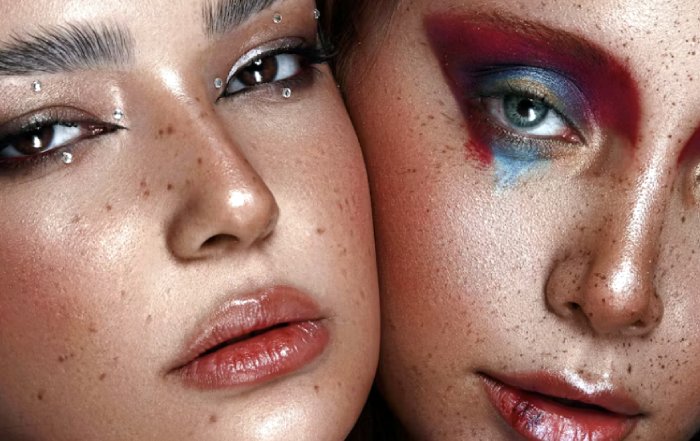
Runway and editorial examples continue to illustrate this tension, such as festival-inspired eye adornments rooted in South Asian bridal traditions being used in Western campaigns without acknowledgment, or traditional Japanese theatrical makeup elements being deployed purely for shock value in European or North American imagery. Institutions such as UNESCO highlight, through their work on intangible cultural heritage, that traditional beauty practices are inseparable from broader cultural expressions and should not be reduced to surface-level aesthetics. For BeautyTipa, which prioritizes experience, expertise, authoritativeness and trustworthiness, engaging with this topic means consistently spotlighting brands and artists who pursue genuine collaboration, shared authorship and fair economic participation, while using its guides and tips to help readers adopt looks they love in ways that acknowledge origins, avoid stereotypes and align with their ethical values.
K-Beauty, J-Beauty and the Continuing Power of Asian Aesthetics
The influence of K-beauty and J-beauty remains one of the most visible examples of cultural exchange reshaping makeup, as South Korea and Japan continue to act not merely as trendsetters but as engines of product innovation and philosophical reframing for consumers in the United States, Europe, Latin America, the Middle East, Australia and beyond. What began globally as fascination with multi-step skincare routines, sheet masks and advanced sun protection has evolved into a comprehensive aesthetic that prioritizes skin health, light-reflective radiance and subtle dimension, with dewy or semi-matte bases, soft watercolor blush, gradient or blurred lips and refined eye definition now embedded in mainstream offerings from multinational conglomerates.
South Korea's entertainment ecosystem, including K-pop, streaming dramas and variety shows, has normalized a playful yet technically sophisticated approach to makeup, where complexion perfection, strategic glow and expressive color coexist with a strong belief that skincare is the true foundation of beauty. Japan, by contrast, continues to champion understated elegance, precise textures and ritualized routines, emphasizing long-term skin resilience and minimal but perfectly executed color accents. Market research organizations such as Euromonitor International have tracked the steady rise of Asian brands in North America and Europe and the parallel adoption of K-beauty-inspired formats such as cushion foundations, lip tints and hybrid skincare-makeup products by Western corporations; readers can explore beauty and personal care insights to see how these aesthetic preferences translate into investment flows, mergers and innovation pipelines.
On BeautyTipa, the impact of these Asian aesthetics extends across skincare, routines and technology and beauty, with particular attention to how Korean preventive philosophies and Japanese ritual-based approaches have encouraged audiences worldwide, from the United States and the United Kingdom to Singapore, South Korea, Japan and New Zealand, to integrate daily sunscreen, gentle exfoliation, barrier-supporting ingredients and lightweight, buildable coverage into their lives. This shift in how people care for their skin fundamentally changes how makeup sits, wears and photographs, reinforcing the idea that complexion products and skincare cannot be meaningfully separated in any serious discussion of global makeup trends.
African and Afro-Diasporic Creativity: Color, Technique and Representation
Alongside Asian innovation, African and Afro-diasporic makeup traditions have become crucial drivers of global color stories, sculpting techniques and inclusive product development, particularly as creators from Nigeria, South Africa, Ghana, Kenya and the broader diaspora in the United States, United Kingdom, Brazil, France and Canada bring bolder, more experimental approaches into mainstream visibility. High-impact pigments, intricate eye artistry, sophisticated contour and highlight placement and a deep understanding of undertone variation across deeper skin tones have all emerged from these communities, compelling legacy brands in Europe, North America and Asia to expand their shade ranges, reformulate textures and reconsider what "universal" truly means.
The success of entrepreneurs such as Rihanna with Fenty Beauty remains a touchstone in this narrative, as the brand's extensive foundation range and undertone-sensitive approach forced the industry to confront the commercial and ethical consequences of excluding large segments of the global population. Industry bodies such as the British Beauty Council and the Personal Care Products Council in the United States have repeatedly underscored that inclusivity is now a non-negotiable business requirement, and those interested in how policy, representation and education intersect can review perspectives from the British Beauty Council, which regularly examines diversity in product development, marketing and leadership.
For BeautyTipa, which serves a readership spanning North America, Europe, Africa and beyond, honoring Afro-diasporic influence is a core component of building credibility and trust. This entails highlighting complexion lines that excel for deeper skin tones, analyzing how editorial staples such as hyper-real glow, graphic liner and sculpted cheeks often originate in Black creative communities, and curating brands and products that invest in undertone accuracy, shade breadth and culturally resonant storytelling. It also means amplifying artists and founders from Nigeria, South Africa, the United States, the United Kingdom and Brazil whose work continues to redefine what aspirational beauty looks like on a truly global stage.
Global Makeup Cultural Exchange Map 2026
Explore how different regions influence the global beauty landscape
🌏 East Asia
K-beauty & J-beauty drive skin-first philosophy, dewy finishes, gradient lips, and cushion foundations globally
🌍 Africa & Diaspora
Bold pigments, inclusive shade ranges, sophisticated contouring, and undertone mastery reshape industry standards
🌎 Latin America
Sun-kissed glow, body makeup, saturated lips, and heat-resistant formulas influence tropical beauty worldwide
🌍 Middle East
Dramatic eyes, sculpted complexions, precise brows, and long-wear glamour set high-impact standards
🌍 Europe
Timeless elegance, clean formulations, minimal aesthetics, and sustainability-focused innovation lead change
🌎 North America
Multicultural fusion, tech innovation, inclusive marketing, and digital-first trends accelerate global exchange
Digital Acceleration
TikTok, Instagram & YouTube compress trend cycles from months to days across continents
Ethical Boundaries
Clear distinction needed between cultural appreciation and appropriation with proper credit
Tech Integration
AR try-on and AI matching enable cross-border discovery and personalized global shopping
Sustainability Focus
Traditional low-waste practices inspire circular economy models in modern beauty
Multi-Step Skincare Foundation
Asian philosophies establish skincare as makeup's essential base, changing global routines
Inclusive Shade Revolution
Afro-diasporic expertise forces industry to expand ranges and improve undertone accuracy
Climate-Adapted Formulas
Latin American and Middle Eastern innovations create transfer-proof, heat-resistant products
Wellness-Beauty Integration
European and Asian wellness principles merge beauty with mental health and sustainability
Key Cultural Influence Factors
Latin American, European and Middle Eastern Aesthetics in Dialogue
Beyond Asia and the Afro-diasporic world, Latin American, European and Middle Eastern beauty cultures have contributed significantly to the layered, hybrid aesthetics that define 2026, often blending with one another as trends move across borders and are adapted to new climates, lifestyles and values. In Latin America, and especially in Brazil, Mexico and Colombia, sun-kissed skin, luminous body makeup, saturated lip colors and expressive festival-inspired eye looks have shaped global enthusiasm for bronzing, body glow and transfer-resistant formulas that can withstand heat, humidity and active urban living. These trends resonate strongly in regions such as Southeast Asia and parts of Africa, where climate conditions and lifestyle patterns are similar, reinforcing the idea that cultural exchange is often mediated by shared environmental realities as much as by digital proximity.
In Southern Europe, particularly Italy, Spain and France, a long-standing tradition of fashion-led yet wearable makeup continues to emphasize timeless red lips, softly defined eyes and polished but not overly perfected skin, which together project effortlessness while drawing on decades of editorial refinement. Northern and Western European countries, including Germany, the Netherlands, Sweden, Norway, Denmark and Finland, have advanced a more functional, minimal aesthetic that aligns beauty with wellness, clean formulations and sustainability, often favoring sheer bases, subtle monochromatic looks and multi-use products. Meanwhile, Middle Eastern beauty cultures centered around cities such as Dubai, Riyadh and Doha have solidified their global influence through dramatic eye makeup, precise brows, sculpted complexions and long-wear, high-coverage formulas that withstand both climate challenges and social expectations around high-impact glamour.
These overlapping aesthetics reflect broader shifts in consumer identity, urbanization and digital connectivity documented by organizations such as the World Economic Forum, whose analyses of global consumer trends show how people increasingly curate their appearance from multiple cultural reference points. For BeautyTipa, which speaks to audiences across Europe, Asia, North America, South America, Africa and Oceania, this reality shapes editorial choices that present makeup as a palette of possibilities rather than a single ideal, encouraging readers to combine Brazilian body glow with French lip classics, Scandinavian minimalism with Middle Eastern eyeliner artistry, or Latin American festival color with Japanese precision, depending on mood, occasion and personal identity.
Technology as an Accelerator of Cross-Cultural Beauty
Technological innovation has become a powerful accelerator of cultural exchange in makeup by making it easier for consumers in countries as diverse as the United States, the United Kingdom, Germany, Canada, Australia, Singapore, South Korea and Japan to discover, test and purchase products from other regions in highly personalized ways. Augmented reality try-on tools, AI-driven shade and undertone matching, advanced search and recommendation engines and cross-border logistics integrations have all contributed to an environment where a consumer in Sweden can virtually test a Korean cushion foundation, a Nigerian-inspired bold pigment palette and a Japanese soft-focus powder within a single app session, and then receive any of those products within days.
Research institutions such as MIT Media Lab and Stanford University have examined how AI and data science intersect with personal care, exploring both the opportunities for improved customization and the risks of algorithmic bias, exclusion and privacy concerns. Those interested in the broader implications of these technologies can review work on AI and society, which provides useful context for evaluating the promises and limitations of digital beauty tools. On BeautyTipa, these developments are explored in depth within the technology and beauty coverage, where the platform analyzes how virtual try-on, AI-powered content discovery and cross-border e-commerce are compressing the distance between Seoul, Los Angeles, Lagos, London, Tokyo, Toronto and São Paulo, while also raising important questions about authenticity, filter culture and the psychological impact of hyper-edited imagery.
Strategy, Investment and Risk in a Culturally Fluid Beauty Market
For executives, investors and entrepreneurs, cultural exchange in makeup is not only an aesthetic phenomenon but a strategic imperative that shapes portfolio design, market entry, mergers and acquisitions and risk management across regions such as North America, Europe, Asia-Pacific, the Middle East, Africa and South America. Companies that build genuine cultural intelligence into their leadership structures and product development pipelines are better positioned to detect emerging trends, assess sensitivities and co-create offerings that feel authentic to local communities, while organizations that treat cultural borrowing as a superficial marketing tactic face heightened risk of backlash, boycotts and long-term erosion of brand equity.
Professional services firms such as Deloitte and PwC have consistently shown that beauty companies with diverse leadership and inclusive decision-making processes outperform peers on innovation and resilience; readers can explore consumer industry insights to understand how these dynamics play out in revenue and valuation. Within BeautyTipa's business and finance coverage, these macro perspectives are translated into case studies of specific brands that have successfully navigated cultural collaboration, as well as cautionary examples where missteps around appropriation, messaging or shade inclusivity have damaged reputations in key markets such as the United States, the United Kingdom, Germany, France, China, South Korea and Brazil.
At the same time, regulatory environments in the European Union, North America and Asia continue to evolve around ingredient safety, sustainability, marketing transparency and claims substantiation, which adds an additional layer of complexity to culturally inspired product launches. Institutions such as the European Commission and the U.S. Food and Drug Administration provide guidance on issues ranging from banned substances to labeling requirements, and those interested in the regulatory context can review information on cosmetics rules in the EU to appreciate why a product inspired by a traditional remedy in one region may need reformulation, different packaging or alternative messaging when introduced into another jurisdiction.
Cultural Literacy and the Future of Beauty Careers
Cultural exchange in makeup has also transformed the skills and competencies required for success in beauty careers, from product development and artistry to marketing, retail, content creation and executive leadership. In 2026, professionals in the United States, the United Kingdom, Germany, France, Italy, Spain, the Netherlands, Switzerland, South Korea, Japan, Singapore and beyond are increasingly expected to demonstrate not only technical expertise but also cultural literacy, sensitivity to diverse skin tones and features, awareness of regional preferences and fluency in digital communication tools that connect them with global audiences.
Organizations such as the International Labour Organization have documented the continued importance of the beauty and personal care sector as a source of employment, especially for women and younger workers across regions including Europe, Asia, Africa and South America, while also noting the growing need for upskilling in areas such as sustainability, digital marketing and cross-cultural communication. Readers can explore broader labor trends through the International Labour Organization's reports and then connect these insights to beauty-specific roles through BeautyTipa's jobs and employment section, which examines how cultural competence, language skills, knowledge of international regulations and the ability to work with diverse faces and hair types are becoming central to hiring and promotion decisions.
For freelance makeup artists, independent brand founders and content creators in markets from the United States and Canada to South Africa, Brazil, Malaysia and New Zealand, cultural exchange creates unprecedented opportunities for international collaborations, digital education and cross-border brand partnerships, but it also heightens scrutiny. In this environment, professional credibility is closely tied to an individual's willingness to credit original sources, avoid stereotypes, engage in fair collaborations and listen to feedback from communities whose traditions and aesthetics they reference in their work.
Wellness, Identity and the Emotional Meaning of Makeup
Beyond its commercial and creative dimensions, cultural exchange in makeup intersects with personal wellness, mental health and identity formation, particularly in multicultural societies and among diasporic communities who navigate multiple cultural narratives simultaneously. For individuals in the United States, Canada, the United Kingdom, Germany, France, Italy, Spain, the Netherlands, Sweden, Norway, Denmark, South Africa, Brazil, Singapore and other diverse societies, makeup can serve as a way to honor heritage, experiment with hybrid identities, challenge colonial or patriarchal beauty norms or simply find joy and self-expression in daily rituals.
Psychological research from organizations such as the American Psychological Association continues to explore how appearance-related practices influence self-esteem, social belonging and emotional resilience, suggesting that inclusive representation and culturally respectful trends can contribute positively to mental well-being, while exclusionary standards or caricatured portrayals can have the opposite effect. Readers interested in these connections can review discussions on self-image and personality and then reflect on how their own makeup choices relate to feelings of confidence, belonging or resistance.
For BeautyTipa, which covers wellness, health and fitness and food and nutrition alongside beauty, fashion and lifestyle, this holistic perspective is integral to editorial planning. The platform consistently treats makeup not as an isolated surface concern but as part of a broader lifestyle that includes sleep, stress management, movement, nutrition and social connection, recognizing that cultural exchange enriches this ecosystem by introducing new rituals, ingredients and philosophies, from East Asian herbal traditions and Mediterranean lifestyle principles to African plant-based remedies and Scandinavian wellness concepts.
Sustainability, Ethics and the Next Chapter of Cultural Exchange
As climate change and resource constraints intensify, sustainability has become a defining concern for the beauty industry, and cultural exchange is increasingly influencing how brands and consumers think about responsible makeup practices. Many traditional systems of knowledge in Indigenous, Asian, African and Latin American communities emphasize low-waste rituals, local sourcing, plant-based ingredients and multifunctional products, which align closely with contemporary goals around circularity and reduced environmental impact. However, the commercialization of such knowledge without consent or fair compensation raises serious ethical issues related to biopiracy, exploitation and loss of cultural sovereignty.
Organizations such as the United Nations Environment Programme and the Ellen MacArthur Foundation advocate for circular economy models and responsible business practices that can guide beauty companies in designing packaging, supply chains and product concepts with lower environmental footprints. Those who wish to deepen their understanding of these frameworks can learn more about sustainable business practices and then consider how these principles might influence their own purchasing decisions and brand evaluations. On BeautyTipa, sustainability is woven through content across beauty, fashion and international coverage, with a particular focus on how cultural exchange can support more responsible choices, such as refillable packaging inspired by Japanese minimalism, community-led cooperatives producing traditional pigments in fair-trade conditions or Scandinavian clean beauty philosophies intersecting with Korean formulation innovation and African ingredient heritage.
How BeautyTipa Interprets and Curates Global Makeup Trends
Within this multifaceted and rapidly shifting environment, BeautyTipa positions itself as a trusted, globally minded guide that helps readers navigate the constant flow of trends, launches and narratives that appear across their screens. By combining international coverage with an understanding of local contexts in regions such as North America, Europe, Asia, Africa and South America, the platform aims to translate cultural exchange into practical, ethical and inspiring insights tailored to individuals who view beauty as part of a broader lifestyle encompassing work, wellness, fashion and personal development.
In daily practice, this means that BeautyTipa approaches makeup as both artistic expression and social commentary, examining how Paris runway looks borrow from Korean gradient techniques, how Brazilian festival aesthetics influence European summer collections, how inclusive foundation launches in the United States draw on pigment expertise developed in African and Afro-diasporic communities and how minimalist Scandinavian trends intersect with Japanese and Korean skincare philosophies to redefine "no-makeup makeup" for audiences in Germany, the Netherlands, Switzerland, Singapore and beyond. The platform's events coverage pays close attention to global trade shows, fashion weeks and cultural festivals where cross-cultural inspiration is most visible, while its guides and tips are structured to help readers adopt new looks in ways that are flattering, respectful and consistent with their values and skin needs.
By foregrounding experience, expertise, authoritativeness and trustworthiness, BeautyTipa strives to be more than a trend aggregator, acting instead as a long-term partner in readers' exploration of identity, creativity, career development and well-being through beauty. As 2026 unfolds and cultural exchange continues to accelerate, bringing together influences from the United States, the United Kingdom, Germany, Canada, Australia, France, Italy, Spain, the Netherlands, Switzerland, China, Sweden, Norway, Singapore, Denmark, South Korea, Japan, Thailand, Finland, South Africa, Brazil, Malaysia, New Zealand and beyond, this commitment to depth, context and ethical awareness will remain central to helping a global audience navigate a world in which a single swipe of color can carry stories, histories and aspirations from many cultures at once. Readers who wish to explore these interconnected themes further can begin at the BeautyTipa homepage at beautytipa.com, where beauty, wellness, business, technology and international perspectives are curated to reflect the truly global nature of makeup in the mid-2020s.
