
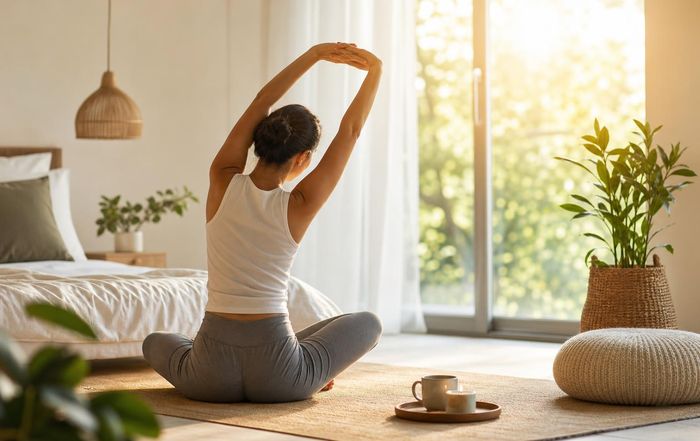
Morning Stretching Habits That Support a Calmer Routine
A calmer morning rarely happens by accident. For many people, the difference between a rushed, anxious start and a grounded, focused day comes down to the first 10-15 minutes after waking. Gentle stretching is one of the simplest ways to bridge the gap between sleep and full alertness, and it can support both physical comfort and emotional balance in a way that fits into almost any lifestyle.
Research in movement science and psychology suggests that low-intensity physical activity, breath awareness, and brief mindfulness practices can reduce perceived stress and improve mood across the day. Gentle stretching sits at the intersection of these elements: it mobilizes joints, increases blood flow, and provides a natural cue to slow the breath and check in with the body. For readers who already think carefully about skincare, makeup, or wellness routines, adding a short, intentional stretch sequence can become another form of daily self-care that complements everything from beauty rituals to productivity habits.
This easy guide looks at how stretching can support a calmer morning routine, what the science actually says, and how to build a simple sequence that feels realistic rather than aspirational.
Why Morning Stretching Helps You Feel Calmer
When someone wakes up, their nervous system is shifting from the slower brainwave patterns of sleep into the more alert state needed for daily tasks. That transition can be jarring, especially if it's driven by a loud alarm, immediately checking messages, or rushing into work or caregiving responsibilities. Gentle stretching offers a different kind of signal to the body: it is movement, but without urgency.
Physiologically, stretching increases blood flow to muscles and connective tissues, helping to ease the stiffness that many people feel after hours of lying still. The American Council on Exercise notes that regular flexibility work can improve range of motion and may reduce muscle tension, which is often linked with perceived stress and discomfort. At the same time, slow, controlled movements paired with deep breathing can activate the parasympathetic nervous system-the "rest and digest" branch that counterbalances the stress-oriented sympathetic system. This is similar to what is seen in gentle yoga or tai chi practices, which have been associated with reductions in anxiety and improved mood in multiple clinical studies.
Psychologically, a short stretching ritual can function as a boundary between sleep and the digital noise of the day. Instead of reaching for a phone first, spending even three to five minutes checking in with the body can promote a sense of agency. Several studies on mind-body practices and mindfulness indicate that even brief, repeated practices help people feel more present and less reactive. Stretching is not a replacement for mental health treatment when that's needed, but as part of a broader wellness routine, it can be one of the most accessible daily tools.
How Stretching Fits Into a Broader Morning Wellness Routine
Many readers already follow structured routines that might include skincare steps, makeup application, or a quick breakfast. Integrating stretching into this mix works best when it is treated as a small, non-negotiable ritual rather than a long workout that requires extra willpower.
One helpful approach is to pair stretching with something that already happens every morning. For example, a person might stretch in bed before standing up, use a few minutes of stretching while a face mask sets, or move through a short sequence right after brushing teeth. Habit researchers often describe this as "anchoring" a new behavior to an existing one, and it can make consistency easier than relying on motivation alone. The U.S. Centers for Disease Control and Prevention (CDC) emphasizes that even short bouts of movement spread throughout the day can contribute to better health, and stretching can be an easy way to begin that daily movement pattern.
From a beauty and fashion perspective, stretching can also help posture and body awareness, which affects how clothing hangs and how someone carries themselves. Tight hip flexors, rounded shoulders from device use, and a stiff neck are all common complaints among people who spend long hours sitting or scrolling. Gentle mobility work can counter some of those patterns, supporting a more open chest and aligned spine, which in turn can influence how confident and comfortable someone feels in their outfit. For readers interested in routines that connect inner and outer presentation, this mind-body link is often as important as any product.
The Science: What We Know (and Don't) About Stretching and Calm
It is useful to be clear about what stretching can and cannot do. While marketing around "morning yoga flows" or "stress-relief stretches" can sound dramatic, scientific evidence is more nuanced.
Static stretching-holding a position for a period of time-has been studied primarily for its effects on flexibility and athletic performance. Harvard Health Publishing notes that regular stretching can improve range of motion and may ease muscle tension, but it is not a cure-all for chronic pain or injury. Dynamic stretching, which involves moving through ranges of motion without long holds, is often recommended as part of a warm-up before more intense activity. For a calm morning routine, a blend of gentle dynamic movements and short static holds tends to feel comfortable for most people.
In terms of emotional calm, stretching is often studied as part of broader practices such as yoga, which also include breath work and meditative focus. Meta-analyses published in journals like PLOS One and the Journal of Psychiatric Research have found that yoga can reduce symptoms of anxiety and depression in some populations, though the exact contribution of stretching versus breathing or mindfulness is difficult to separate. The American Psychological Association has highlighted that any form of regular physical activity, including low-intensity movement, is associated with better mood and reduced stress for many people.
There is less evidence that stretching alone dramatically alters hormone levels such as cortisol in everyday settings, despite popular claims. Some small studies suggest that relaxation-oriented stretching may contribute to lower perceived stress, but the effects are modest and often intertwined with other lifestyle factors like sleep, social support, and overall physical activity. In practice, this means stretching is best understood as one helpful piece of a calm-focused lifestyle, rather than a stand-alone solution.
Foundational Principles for a Calming Stretch Routine
Designing a morning stretching habit that genuinely supports calm involves more than copying a list of poses. A few underlying principles make the difference between a rushed, checkbox routine and something that actually feels grounding.
First, the intensity should be low. The goal is not to push flexibility limits or "feel the burn," but to invite gentle lengthening and movement. Pain, sharp pulling, or breath-holding are signals to back off. Organizations like Mayo Clinic and the American College of Sports Medicine (ACSM) advise that stretching should be taken to the point of mild tension, not discomfort, and that each position can be held for around 10-30 seconds for general flexibility. For a calm-oriented sequence, shorter holds with slow breathing are often enough.
Second, breath is central. Many people unconsciously hold their breath when they stretch intensely, which can increase tension rather than reduce it. Linking each movement to a slow inhale or exhale-without forcing any particular pattern-helps regulate the autonomic nervous system. Some individuals find that extending the exhale slightly longer than the inhale, a technique sometimes called paced breathing, feels especially calming. The Cleveland Clinic and other medical centers provide guidance on simple breathing exercises that can be combined with easy stretches.
Third, attention matters. The same movement can feel either soothing or mechanical depending on where the mind is. Bringing awareness to the sensation of muscles lengthening, the contact of feet with the floor, or the rhythm of the breath can transform a three-minute sequence into a brief mindfulness practice. This does not require elaborate meditation skills; noticing when the mind wanders to emails or tasks and gently returning focus to the body is enough. For readers interested in broader guides and tips on mindfulness, stretching can be a low-pressure place to start.
Finally, consistency is more important than duration. A daily three-minute routine is more likely to influence mood, posture, and body awareness over time than a 30-minute session done once a week. Many behavioral scientists, including those cited by Stanford University and other research institutions, emphasize that small, repeatable actions are the building blocks of sustainable change.
A Gentle 5-10 Minute Morning Stretch Sequence
Everyone's body and schedule are different, but a simple framework can be adapted as needed. The following sequence is designed to be low-impact and accessible for most healthy adults. Individuals with injuries, chronic pain, or medical conditions should consult a healthcare provider or physical therapist before beginning new routines, and reputable sources such as NHS Inform and Health Canada offer additional guidance on safe home exercise.
This example sequence blends lying, seated, and standing movements. It can be done on a mat, carpet, or even in bed for some steps.
Begin with a minute of lying or sitting still, simply noticing the breath. There is no need to change anything yet; the aim is to mark the transition from sleep to wakefulness. Next, introduce gentle full-body stretches, such as reaching the arms overhead while lengthening the legs, then curling into a loose ball. This alternating expansion and contraction mimics natural stretching patterns seen in both humans and animals upon waking and can help mobilize the spine.
From there, moving into slow neck and shoulder mobility can address the areas where many people carry tension. For example, sitting or standing tall, roll the shoulders up, back, and down several times with the breath. Then, gently tilt the head toward one shoulder and hold for a few breaths, repeating on the other side, always avoiding any sharp pain or compressive sensation. Readers who spend long hours on screens may find this particularly helpful, and it pairs well with broader health and fitness strategies like ergonomic adjustments.
The next phase might focus on the spine and hips. Cat-cow movements-alternating between rounding and gently arching the back on hands and knees-are a staple in many yoga traditions because they mobilize multiple segments of the spine in a controlled way. For those who prefer to stay standing, a similar effect can be achieved by placing hands on thighs and slowly rounding and lengthening the back with the breath. Gentle hip circles or figure-four stretches while seated can ease tightness from sitting or certain sleep positions.
Finally, brief lower-body stretches, such as lightly stretching the calves against a wall or gently bending forward to feel length along the backs of the legs, can prepare the body for walking and daily movement. Again, the emphasis is on comfort, not depth. If time is short, even choosing two or three of these options and performing them mindfully can still create a noticeable shift in how the morning feels. Those who enjoy exploring more structured flows may find inspiration in beginner routines from organizations such as Yoga Journal or the American Council on Exercise, while still honoring their own comfort levels.
Integrating Breath and Mindfulness for Added Calm
While stretching alone can feel good, combining it with simple breath and attention practices tends to have a stronger calming effect. Several hospitals and universities, including Johns Hopkins Medicine, highlight that diaphragmatic breathing and brief mindfulness exercises can lower heart rate and reduce subjective anxiety for many people.
One accessible approach is to use a "four-count" breathing rhythm while holding or moving through stretches. For instance, inhale gently for a count of four as the body moves into a position, pause briefly, and exhale for a count of four or slightly longer as the body settles. There is no need to be exact; the count simply gives the mind something to rest on. Over time, this can become a cue for the nervous system that it is safe to relax.
Another layer of mindfulness involves adding a simple mental label to sensations. While feeling a stretch in the back of the legs, someone might silently note, "tight but easing" or "warmth in the calves." This kind of non-judgmental observation, similar to techniques used in mindfulness-based stress reduction (MBSR) programs developed at institutions like the University of Massachusetts Chan Medical School, helps cultivate curiosity instead of frustration about the body's limits. For people who are used to evaluating their appearance in the mirror as part of a beauty or fashion routine, this shift from critique to curiosity can be especially valuable.
Finally, some individuals find it helpful to pair stretches with a short intention or affirmation, not as a forced positivity exercise but as a reminder of what matters that day. Phrases like "moving gently into the day" or "making space for calm" can feel more grounded than grand declarations. The key is to choose language that feels authentic rather than performative.
Adapting Morning Stretching to Different Lifestyles
A calming stretch habit will look different for a parent managing school drop-offs, a shift worker, a student, or someone working remotely. The aim is to adapt the principles rather than copy a single ideal routine.
For people with very limited time, "micro-routines" can be effective. This might mean a 60-second stretch sequence before even getting out of bed, followed by another 60 seconds while waiting for coffee or tea to brew. The World Health Organization (WHO) emphasizes that any movement is better than none, and breaking activity into small segments is perfectly acceptable. Over days and weeks, these micro-moments can become a reliable anchor of calm even in a crowded schedule.
Those who travel frequently or live in small spaces can focus on stretches that require no equipment and minimal floor space, such as standing side bends, shoulder rolls, and ankle circles. For readers interested in international living or frequent work trips, having a portable routine that can be done in a hotel room or guest space can reduce the sense of disruption that often accompanies travel.
Individuals with joint issues, chronic pain, or conditions such as hypermobility may need more tailored guidance. In these cases, working with a physical therapist, certified yoga therapist, or other qualified professional is important. Reputable resources from organizations like the Arthritis Foundation or Versus Arthritis in the UK offer condition-specific suggestions and caution against overstretching unstable joints. A calm routine for these individuals might emphasize gentle isometric engagement, breath work, and small-range mobility rather than deep stretches.
Finally, cultural and personal preferences matter. Some people feel most at ease stretching in quiet, while others enjoy soft music or natural sounds. Some prefer to stretch in loungewear before getting dressed; others incorporate movement later, perhaps between skincare and makeup steps as part of a broader beauty routine. The "right" version is the one that feels sustainable and supportive.
When Morning Stretching Might Not Be Enough
Although stretching can be a valuable tool for calm, it is important not to overstate its role. Persistent anxiety, low mood, or physical pain that interferes with daily life often requires more comprehensive support. Mental health professionals, including psychologists and psychiatrists, emphasize that lifestyle practices like stretching, sleep hygiene, and nutrition are helpful but do not replace evidence-based treatments such as cognitive behavioral therapy or appropriate medication when needed. Trusted organizations like the National Institute of Mental Health (NIMH) and Mind in the UK provide guidance on when to seek professional help.
Similarly, unexplained pain, numbness, or significant mobility limitations should be assessed by a healthcare provider. While gentle movement is encouraged for many conditions, stretching into pain or ignoring red-flag symptoms can worsen underlying issues. Reputable medical centers, including Cleveland Clinic and Mayo Clinic, advise stopping any movement that causes sharp, sudden, or radiating pain and consulting a professional.
For those who are otherwise healthy but find that morning stretching does little to reduce stress, it may be a sign that other lifestyle factors-such as chronic sleep deprivation, high job strain, or lack of social support-need attention. In that case, stretching can still be part of a self-care toolkit, but it may work best alongside adjustments in workload, boundaries around technology, or supportive conversations with employers, family, or friends. Readers interested in broader wellness strategies may also find value in exploring topics like food and nutrition, sleep routines, and stress-management techniques beyond movement.
Bringing It All Together :)
A calmer morning routine does not require elaborate rituals or large blocks of free time. Gentle stretching, combined with simple breath and attention practices, offers a practical way to ease the body out of sleep, reduce physical tension, and create a small pocket of intentionality before the day accelerates. While the scientific evidence suggests modest rather than miraculous effects, those small shifts often accumulate: better posture, a bit less stiffness, a slightly steadier mood, and a stronger sense of connection to one's own body.
The most effective morning stretching habit is the one that feels realistic. For some, that may be a 10-minute sequence on a yoga mat; for others, it might be a few mindful movements in bed or while skincare products absorb. Over time, these practices can sit alongside other elements of personal care-whether that is makeup, nutrition, or movement-as part of a broader approach to feeling and looking well.
The invitation is simple: tomorrow morning, before opening a screen or rushing to the next task, take a minute to move and breathe with intention. Notice how it feels, and let that small experiment guide the next step in shaping a calmer routine.
