
Japanese Cleansing Balms: Textures, Benefits, and Smart Ways to Use Them
Japanese cleansing balms have moved from niche to staple in many skincare routines, especially for people who wear sunscreen and makeup daily. Rooted in Japan's emphasis on gentle but thorough cleansing, these balms are designed to melt away impurities without stripping the skin barrier, making them particularly appealing to anyone dealing with dryness, sensitivity, or early signs of aging.
This guide looks closely at how Japanese cleansing balms work, the textures you'll encounter, the main benefits, and how to use them effectively within a broader routine. It also highlights key ingredients, common concerns such as acne or sensitivity, and how these formulas differ from other cleansing oils and balms on the market.
For readers exploring or refining their skincare routines, it may also be helpful to look at broader skincare and routines coverage alongside this deep dive into cleansing balms.
What Makes Japanese Cleansing Balms Distinct?
Cleansing balms in general are oil-based cleansers in a solid or semi-solid form that emulsify into a milky texture when mixed with water. Japanese versions grew out of Japan's long-standing double-cleansing culture and tend to emphasize three ideas: gentle removal of sunscreen and makeup, protection of the skin barrier, and a sensorial but minimal-irritation experience.
Brands such as Fancl, DHC, Softymo, Attenir, and Shu Uemura have all contributed to this category. Many formulas are designed specifically to remove high-SPF, water-resistant Japanese sunscreens and long-wear makeup, which can be difficult to take off with standard foaming cleansers alone. This focus on sunscreen removal matters because dermatology and public-health bodies like the American Academy of Dermatology and the World Health Organization consistently stress sunscreen as a key tool in skin cancer and photoaging prevention; Japanese cleansing balms are built to handle those stubborn filters.
Compared with many Western-style balms, Japanese formulas often lean lighter in texture and more thoroughly emulsifying, with less waxy residue and a focus on rinsing clean. The sensorial profile-subtle fragrance, smooth spread, and quick rinse-reflects broader Japanese beauty preferences for comfort and refinement rather than heavy occlusion. Readers who are interested in how these preferences shape broader beauty trends may notice similar patterns in toners, sunscreens, and essences emerging from Japan.
Common Textures: From Sorbet to Oil-Gel
Although they all fall under the same category, Japanese cleansing balms can feel quite different on the skin. Texture is not only about preference; it influences how the balm spreads, how easily it rinses, and how suitable it may be for different skin types.
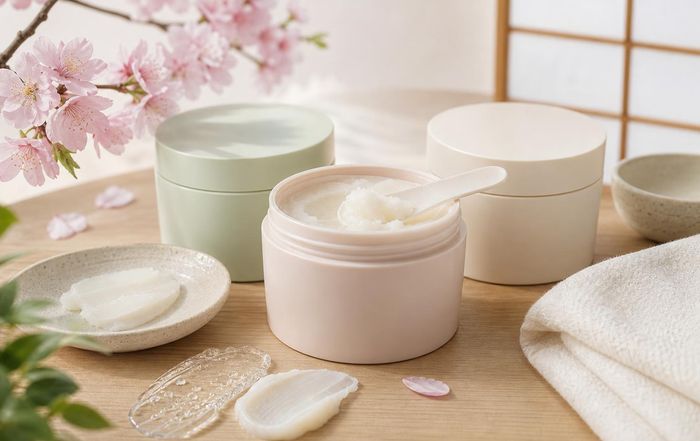
A classic texture is the "sorbet" balm: a semi-solid that scoops out easily, melts almost instantly on contact, and becomes a rich oil as you massage it in. Products like DHC Deep Cleansing Oil are technically oils, but several Japanese balms mimic that same lightweight slip while starting as a soft solid. These balms tend to emulsify into a thin milk when water is added, which is one reason they are popular with combination and normal skin that dislike heavy residue.
A second group feels more like a buttery cream that slowly melts into oil. These formulas often contain more emollient esters and waxes for a richer feel. They can be particularly comfortable on dry or mature skin, especially in colder climates, because they provide a brief cocooning layer before rinsing. However, people prone to congestion may want to check for heavier waxes or certain fatty alcohols if they find these balms leave a film.
A third category, increasingly common in Japan, is the oil-gel hybrid. These balms start as a dense gel that liquefies into a lighter oil and then a very fluid milk. They are often marketed as suitable for use on damp skin and can be attractive to those who dislike the idea of a "greasy" cleanser. Some of these hybrid balms borrow from micellar technology, using surfactants and oil in tandem, similar to micellar waters but in a richer base.
Textural choices also intersect with fragrance and additives. Many Japanese balms are lightly scented with citrus or floral notes, though fragrance-free options exist and are often recommended by dermatologists for very sensitive skin. The National Eczema Association and other allergy organizations generally advise fragrance-free products for those with eczema or reactive skin, so readers with these concerns may wish to prioritize more minimalist formulas.
Key Ingredients and How They Work
At the heart of every Japanese cleansing balm are oils and emulsifiers. Oils such as olive, rice bran, jojoba, and sunflower seed oil are common; they dissolve sebum, sunscreen filters, and pigments by "like dissolves like" chemistry. Rice-derived ingredients are particularly popular in Japanese formulations, reflecting the wider use of rice bran oil and rice ferment in regional skincare traditions.
Emulsifiers-often PEG-based or plant-derived surfactants-allow the balm to transform into a milky liquid when water is added. This emulsification is what makes the balm rinse off rather than leaving a thick oily layer. Cosmetic chemists and dermatologists frequently highlight that oil cleansers with emulsifiers can remove oil-soluble debris more effectively than water-based cleansers alone, while still being gentle to the barrier.
Many Japanese balms also include humectants such as glycerin, butylene glycol, or hyaluronic acid to help offset dehydration, alongside emollients like squalane for a smoother after-feel. Some formulas add mild exfoliants (for example, fruit enzymes like papain or bromelain) or brightening agents such as vitamin C derivatives or arbutin. While these extras can be appealing, dermatologists often emphasize that leave-on products are generally more effective for active ingredients; in a cleanser, contact time is short, so these inclusions should be treated as a bonus rather than the main source of treatment.
For acne-prone or sensitive users, the comedogenicity of oils is a frequent concern. Research summarized by sources like the Journal of Clinical and Aesthetic Dermatology suggests that comedogenic ratings are not absolute and depend on concentration, formulation, and individual skin. Still, some people find that certain oils (like cocoa butter or high-percentage coconut oil) are more likely to clog pores. Japanese balms often avoid these heavier oils in favor of lighter esters or plant oils with a better track record on acne-prone skin, but it is still wise to patch test.
Main Benefits: Why Use a Japanese Cleansing Balm?
The first major benefit is effective removal of sunscreen and makeup, including waterproof mascara, long-wear foundation, and high-adhesion Japanese sunscreens. Many of these sunscreens use film-forming agents and water-resistant filters that are difficult to break down with standard foaming cleansers. Oil-based balms dissolve these layers more thoroughly, reducing the need for harsh scrubbing, which can irritate the skin and disrupt the barrier. This is especially important for those who reapply sunscreen frequently or live in sunny climates where high SPF and water resistance are daily needs.
A second benefit is barrier protection. Traditional foaming cleansers, particularly those containing strong surfactants like sodium lauryl sulfate, can strip lipids from the outer skin layer. Over time, this may contribute to dryness, tightness, and increased transepidermal water loss. Studies on mild cleansers, such as those summarized by the International Journal of Cosmetic Science, indicate that oil-based or low-foaming formulas are generally less disruptive to the barrier. Japanese cleansing balms, when well formulated, aim to leave the skin feeling soft rather than squeaky clean.
Third, balms can support gentle massaging, which some users enjoy as a moment of relaxation and improved microcirculation. While massage itself is not a cure-all, a short, light massage with a slipperier texture can help loosen debris in pores and enhance the sensorial experience of cleansing. For many people, making cleansing more enjoyable increases the likelihood of consistently removing makeup and sunscreen, which is fundamental for maintaining clear and balanced skin.
Fourth, Japanese cleansing balms can be particularly suitable for dry, mature, and sensitive skin. Because they rely on oils rather than strong surfactants to remove impurities, they tend to be less drying and can reduce the cycle of stripping and overcompensating with heavy moisturizers. Dermatology organizations like the British Association of Dermatologists often recommend gentle, non-foaming cleansers as part of regimens for dry or eczema-prone skin, and well-chosen balms can fit into that category.
Finally, balms are travel-friendly and relatively tidy. Their solid or semi-solid format is less likely to leak than liquid oils, and many come in compact jars or tubes. For readers who maintain multi-step routines or beauty travel kits, this can be a practical advantage.
How to Use a Japanese Cleansing Balm Step by Step
Cleansing balms are typically used as the first step of an evening routine, especially in a double-cleansing system. The basic method is consistent across brands, though it is always worth checking each product's instructions.
Most Japanese balms are designed for dry hands and dry face. After washing and drying the hands, a small amount of balm-often about the size of a cherry-is scooped out and warmed briefly between the fingertips so it softens. It is then applied to the face and gently massaged for about 30 to 60 seconds, focusing on areas with more makeup or sunscreen such as the T-zone, hairline, and around the nose. For eye makeup, many brands advise closing the eyes and using very light movements to avoid tugging on the delicate eyelid skin.
Once the makeup and sunscreen appear dissolved and the balm feels fully spread, a small amount of lukewarm water is added to the hands and patted or massaged onto the face. This step emulsifies the balm, turning it milky. Additional water is gradually incorporated until the entire face is covered with this milky fluid, and then it is rinsed away thoroughly. Some users like to repeat the emulsification and rinse step once or twice to ensure there is no residue, especially around the hairline and jaw.
Double cleansing means following the balm with a water-based cleanser. In Japan, this is often a low-pH foaming cleanser or gel. Double cleansing is particularly recommended for those who wear heavy makeup or water-resistant sunscreen, but some dermatologists point out that a single, well-formulated balm may be enough for very dry or sensitive skin that does not wear much product. The American Academy of Dermatology suggests gentle cleansing once or twice daily, so the decision to double cleanse should be tailored to how much product is on the skin and how it feels afterward.
After rinsing, the skin should feel comfortable, not tight or squeaky. At this point, the rest of the routine-essence or toner, serum, moisturizer, and any targeted treatments-can follow. Readers interested in building a full regimen may find it helpful to explore broader guides and tips and makeup content to see how cleansing balms fit into different routines.
Matching Balm Types to Skin Concerns
Choosing the right Japanese cleansing balm depends on more than just brand reputation. Texture, fragrance, and specific ingredients all play roles in how well a balm suits individual skin needs.
For dry or mature skin, richer, creamier balms with added emollients and humectants can feel especially comforting. Ingredients like squalane, shea butter in small amounts, and ceramide-like lipids may help the skin feel supple after rinsing. However, it is still important to avoid overly aggressive scrubbing or extended massages, which can irritate thinner or more fragile skin. Those dealing with visible signs of aging may also want to ensure that the second cleanser and leave-on products are barrier-supportive, as over-cleansing can counteract the benefits of anti-aging serums.
For oily and acne-prone skin, lighter sorbet or gel-oil balms are often a better match. Look for formulas that emphasize non-comedogenic oils and minimal waxes. Japanese brands sometimes label these balms as suitable for "mixed" or "sebum-prone" skin. While oil cleansing can work well for acne-prone individuals, dermatologists such as those cited by the American Academy of Dermatology generally recommend avoiding products that leave a heavy film or contain known pore-clogging ingredients. In practice, that means paying attention to how the skin responds over several weeks and being willing to switch if congestion increases.
Sensitive and rosacea-prone skin often benefits from fragrance-free, colorant-free balms with shorter ingredient lists. Japanese formulations marketed for "sensitive" or "mild" use typically avoid essential oils, strong citrus extracts, and certain alcohols. Because sensitive skin can react unpredictably, patch testing on a small area (such as behind the ear or along the jawline) for several days before full use is prudent. Organizations like the National Rosacea Society note that over-cleansing and harsh products are common triggers, so a very gentle balm can be a helpful alternative to foaming cleansers.
For those who wear heavy or waterproof makeup, a balm specifically tested for waterproof formulas may be useful. Some Japanese balms are marketed as suitable for removing waterproof mascara and long-wear lipstick without requiring separate removers. However, contact lens wearers or people with very sensitive eyes may still prefer to use a dedicated eye makeup remover approved by ophthalmologists, as recommended by groups like the American Optometric Association.
How Japanese Balms Compare with Other Cleansers
It can be helpful to place Japanese cleansing balms in context alongside micellar waters, traditional cleansing oils, and cream cleansers, especially for readers designing a streamlined routine.
Compared with micellar water, balms are generally more effective at removing high-coverage makeup and water-resistant sunscreen in one step. Micellar water uses micelles-tiny clusters of surfactants-to lift away dirt and makeup, but many dermatologists, including those quoted by the Cleveland Clinic, recommend rinsing afterward to avoid leaving surfactants on the skin. Balms, by contrast, are meant to be rinsed off, and their oil content is better suited to dissolving oil-based products.
Relative to liquid cleansing oils, Japanese balms offer similar cleansing mechanisms but in a solid format. Some people prefer balms because they are less messy and easier to control in the palm of the hand, whereas others like the speed and simplicity of pumping out a liquid oil. Many Japanese brands offer both formats, with balms positioned as the more travel-friendly or sensorial option. In terms of skin outcome, there is no inherent superiority; it comes down to formulation and personal preference.
When compared with cream cleansers, balms usually contain a higher proportion of oils and are more targeted toward makeup and sunscreen removal. Cream cleansers may be better suited to morning use or for people who wear minimal products, while a balm can serve as a more thorough evening cleanse. Some users pair a balm with a very mild cream or gel cleanser as the second step in a double cleanse, particularly if they find foaming cleansers too drying. Readers exploring these pairings may find the wellness and health and fitness sections helpful for understanding how skincare choices fit into broader self-care.
Safety, Common Myths, and Practical Tips
A recurring myth is that oil-based cleansing automatically causes breakouts. While it is true that some individuals react poorly to certain oils, there is no universal rule that all oils are comedogenic. Dermatology sources, including the American Academy of Dermatology, emphasize that irritation and barrier disruption are more consistent triggers for acne flares than the mere presence of oil. A well-formulated Japanese cleansing balm that rinses clean and does not contain known irritants can be compatible with acne-prone skin, provided it is followed by suitable treatments and moisturizers.
Another concern is whether daily double cleansing is too much. For people wearing full makeup and high-SPF sunscreen every day, dermatologists generally support a thorough evening cleanse, and many consider a gentle two-step process less damaging than aggressive scrubbing with a single strong cleanser. However, if the skin feels dry, tight, or overly sensitive, it may be worth adjusting the second cleanser to something milder or skipping it on days with minimal product use. Listening to the skin's feedback is key.
Eye safety is another point to consider. Most Japanese cleansing balms are ophthalmologist-tested for use around the eyes, but stinging can still occur, especially if fragrance or essential oils are present. If irritation happens repeatedly, it may be better to keep balm use away from the lash line and rely on a separate, eye-safe remover. Eye-health organizations like the American Academy of Ophthalmology recommend replacing eye-area products regularly and avoiding sharing to reduce infection risk, which extends to cleansing balms that are dipped into with fingers.
Practical hygiene matters as well. Because many balms come in jars, using a clean spatula or thoroughly washed hands to scoop product can help minimize contamination. Storing the balm in a cool, dry place and closing the lid tightly after each use also preserves texture and stability. Most Japanese brands label the recommended period-after-opening (PAO) symbol, and following this guideline reduces the chance of using a product that has degraded.
For readers who enjoy experimenting with new products, it can be tempting to rotate through multiple balms quickly. However, giving each product at least a few weeks of consistent use before judging its effect is often more informative, especially for those managing acne, rosacea, or other chronic skin concerns.
Integrating Japanese Cleansing Balms into a Modern Routine
Japanese cleansing balms fit naturally into contemporary routines that prioritize sunscreen, gentle cleansing, and barrier health. Their strengths lie in dissolving stubborn formulations without relying on harsh surfactants, providing a sensorial and often calming first step at the end of the day. For those building or refining their routines, they can pair well with hydrating toners, targeted serums, and moisturizers tailored to individual concerns.
They also sit at an interesting intersection of tradition and innovation. The emphasis on ritual and texture reflects long-standing Japanese beauty culture, while modern formulations incorporate contemporary cosmetic science, emulsifier technology, and skin-barrier research. As global beauty consumers become more ingredient-literate and attentive to skin health, the appeal of these balanced, efficient cleansers is likely to remain strong.
Readers who want to explore related topics-such as how cleansing choices interact with food and nutrition, lifestyle, or broader fashion and beauty trends-will find many overlapping conversations about skin, wellness, and self-presentation. Within that larger picture, Japanese cleansing balms offer a practical, enjoyable, and often skin-friendly way to start and end the day with a clean slate.
