
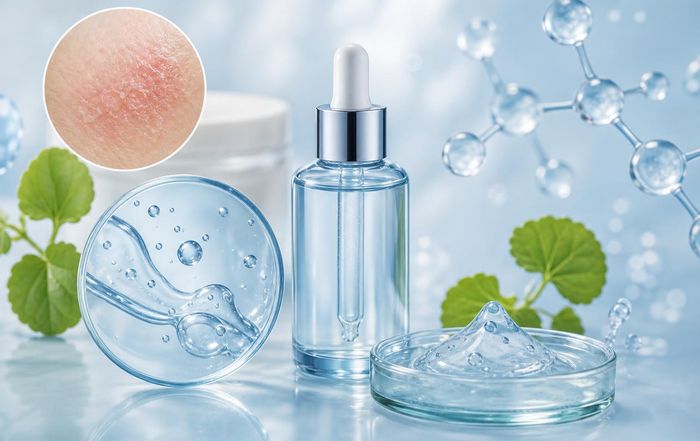
Ingredient Spotlight: Panthenol for Dry, Irritated Skin
Panthenol appears quietly on countless ingredient lists, yet many people are unsure what it actually does or whether it is worth seeking out. For anyone dealing with dryness, tightness, or recurring irritation, this vitamin-derived humectant can be a highly useful ally. Understanding how panthenol works, which forms are most effective, and how to combine it with other skincare ingredients helps consumers move beyond marketing claims and select products that genuinely support a compromised skin barrier.
What panthenol is and how it works in the skin
Panthenol is a provitamin of vitamin B5, also known as provitamin B5. Chemically, it is a stable alcohol form that, once applied to the skin, is converted to pantothenic acid. Pantothenic acid is a component of coenzyme A, which plays a central role in cellular metabolism and in the synthesis of lipids that are crucial for a healthy barrier. This conversion underpins many of panthenol's moisturizing and soothing effects.
Cosmetic chemists classify panthenol as a humectant, meaning it helps attract and hold water in the outer layers of the skin. In vitro and in vivo studies have shown that panthenol can increase stratum corneum hydration and reduce transepidermal water loss (TEWL), making the surface of the skin feel softer and less rough. Research published in the Journal of Dermatological Treatment found that topical dexpanthenol improved barrier function and supported regeneration in compromised skin, including after procedures that disrupt the outer layer. The European Medicines Agency has reviewed dexpanthenol as an active substance in over-the-counter medicinal creams and notes its use in minor skin irritations, mild burns, and diaper rash, further underlining its barrier-supporting role.
Beyond hydration, panthenol appears to influence keratinocyte proliferation and differentiation, processes that are essential for building a resilient skin barrier. Laboratory work cited by the American Academy of Dermatology and other dermatology texts suggests that panthenol can support wound healing and improve the elasticity of the stratum corneum. While most cosmetic products use relatively low concentrations compared with medicinal creams, even these amounts can contribute to better comfort and resilience when used consistently as part of a routine focused on barrier repair and hydration.
For fashionable jet setters who want to better understand how ingredients like panthenol fit into a routine, it can be helpful to explore broader guides to skincare fundamentals and how the barrier functions in relation to dryness, sensitivity, and premature aging.
Forms of panthenol: D-panthenol vs DL-panthenol
Ingredient lists can make panthenol look more complicated than it is. Consumers may see "panthenol," "D-panthenol," or "DL-panthenol" listed on packaging. These names refer to slightly different chemical forms, with practical implications for efficacy.
D-panthenol, also written as dexpanthenol, is the biologically active isomer that the skin can convert efficiently into pantothenic acid. Many clinical studies, including those summarized by the National Center for Biotechnology Information (NCBI), focus on dexpanthenol in concentrations ranging from 2% to 5% in creams and ointments for irritated or compromised skin. This is the form most commonly used in dermatological preparations and is generally considered the gold standard from a performance perspective.
DL-panthenol is a racemic mixture containing both the D and L isomers. The L form is not biologically active in the same way, so a product using DL-panthenol contains only about half as much active D-panthenol by weight. Cosmetic formulators may still choose DL-panthenol for cost or formulation reasons, and it can still offer humectant benefits, but consumers looking for maximum barrier support may prefer products that specify D-panthenol or dexpanthenol. When a label simply lists "panthenol," it often refers to D-panthenol, but this is not guaranteed; some brands specify the isomer on their ingredient lists or on technical documentation available on their websites.
Internationally, dexpanthenol is also used in ophthalmic solutions and nasal sprays to support mucosal hydration, which speaks to its safety profile and moisturizing capabilities on delicate tissues. Regulatory reviews by agencies such as the U.S. Food and Drug Administration (FDA) and the European Commission's Scientific Committee on Consumer Safety (SCCS) have generally found topical panthenol safe at the concentrations used in cosmetics and over-the-counter preparations, although, as with any ingredient, individual sensitivities can occur.
Why panthenol is useful for dry, irritated, or sensitive skin
Dry and irritated skin often reflects a compromised barrier, where lipids and natural moisturizing factors are depleted and microscopic cracks allow water to escape more easily. Panthenol acts on several aspects of this problem at once, which is why it appears so frequently in formulations aimed at sensitive or reactive skin.
First, as a humectant, panthenol binds water in the stratum corneum, which can immediately reduce the feeling of tightness and roughness. Clinical work published in Cutis and other dermatology journals has shown that dexpanthenol-containing creams can improve skin softness and elasticity after a few days of regular use, particularly in dry, environmentally stressed skin. Second, its role in supporting lipid synthesis and keratinocyte differentiation means that, over time, panthenol may help the skin restore a more coherent, less leaky barrier structure. This is especially relevant for people whose dryness is worsened by frequent washing, harsh surfactants, or low humidity.
Third, panthenol has documented soothing properties. Studies summarized by the American Academy of Dermatology and DermNet NZ report reduced erythema (redness) and improved comfort when panthenol is applied to irritated skin, including after procedures such as laser resurfacing or chemical peels. It is not a steroid or a drug in standard cosmetic concentrations, but its ability to modulate inflammation and support repair makes it a useful adjunct to more targeted treatments. For example, some post-procedure care protocols include dexpanthenol-based creams to help maintain moisture and comfort during healing.
For readers exploring broader strategies to manage dryness and sensitivity, looking at routines that emphasize gentle cleansing, barrier-focused moisturizers, and minimal fragrance can be helpful. Resources on routines and wellness often highlight lifestyle and environmental factors that interact with topical care, such as indoor heating, air travel, or occupational exposures.
Evidence for panthenol in common skin concerns
Panthenol is not a cure-all, but its use is supported by a meaningful body of clinical and observational data across several everyday skin concerns. For dry, rough hands or body skin, randomized controlled trials have found that dexpanthenol creams can improve hydration and reduce scaling compared with untreated skin, particularly when used after washing. A review in Journal of Cosmetic Science notes that formulations containing panthenol, glycerin, and occlusive agents such as petrolatum or dimethicone can significantly reduce TEWL and restore comfort in xerotic skin.
In the context of minor irritations and superficial wounds, dexpanthenol has been used in Europe for decades in medicinal creams and ointments. The European Medicines Agency product information for certain dexpanthenol creams describes indications such as mild sunburn, abrasions, and diaper rash, with clinical data showing faster re-epithelialization and reduced discomfort. While cosmetic products cannot make medicinal claims, this background helps explain why many barrier creams and so-called "cica" products include panthenol alongside ingredients like madecassoside or centella asiatica extract.
Panthenol is also common in after-sun products, where its humectant and soothing properties can help offset the dryness and irritation that follow UV exposure. The Skin Cancer Foundation and American Academy of Dermatology emphasize that after-sun care should never replace proper sun protection, but hydrating ingredients such as panthenol and aloe vera can support comfort and recovery when combined with strict avoidance of further UV exposure.
For those dealing with recurrent dryness related to exercise, climate, or lifestyle, integrating panthenol into a broader health and fitness and wellness strategy-adequate hydration, balanced diet, and protection from environmental stressors-can be more effective than relying on a single ingredient in isolation.
Safety, tolerability, and who should be cautious
Overall, panthenol is considered a low-risk ingredient with a favorable safety profile. The Cosmetic Ingredient Review (CIR) Expert Panel, an independent body that evaluates cosmetic ingredients for safety, has concluded that panthenol and pantothenic acid are safe in current cosmetic use practices. Typical concentrations in moisturizers, serums, and cleansers range from about 0.5% to 5%, though leave-on products often sit at the lower end of that range.
Adverse reactions to panthenol are uncommon but not impossible. Case reports in dermatology literature describe occasional allergic contact dermatitis attributed to dexpanthenol, often confirmed by patch testing. People with very reactive skin or a history of multiple cosmetic allergies may wish to introduce new products containing panthenol gradually, testing them on a small area for several days before applying widely. If redness, itching, or burning worsens, discontinuing the product and seeking evaluation from a dermatologist is advisable.
As with any ingredient, context matters. A product can contain panthenol yet still be irritating if it also includes high levels of fragrance, sensitizing preservatives, or harsh surfactants. For those with conditions such as atopic dermatitis, rosacea, or chronic hand eczema, dermatologists often recommend fragrance-free, alcohol-free formulations that combine humectants like panthenol and glycerin with occlusives and skin-identical lipids. Organizations such as the National Eczema Association provide guidance on selecting products that meet their criteria for sensitive and eczema-prone skin.
Readers interested in how ingredients like panthenol, ceramides, and niacinamide work together in sensitive-skin products may find it useful to explore broader guides and tips on choosing cleansers, moisturizers, and targeted treatments that minimize the risk of flare-ups.
How to choose panthenol products for dry, irritated skin
Selecting an effective panthenol product involves more than simply spotting the ingredient on a label. The overall formula, concentration, and product type all influence how beneficial it will be for dry or irritated skin. Moisturizers and serums are typically the most helpful vehicles, as they remain on the skin long enough for panthenol to bind water and support repair. Wash-off products like cleansers can still contribute to comfort, especially when they are sulfate-free and include panthenol and other humectants, but their impact is naturally more limited.
When reading ingredient lists, panthenol that appears within the first half of the list is more likely to be present at a meaningful level, though this is not an absolute rule. Some brands disclose approximate percentages in product descriptions or technical sheets. Products marketed as "intensive repair," "barrier cream," or "recovery balm" often include panthenol alongside occlusives such as petrolatum, mineral oil, or silicones, and sometimes with ceramides and cholesterol. This combination can be especially useful for very dry, chapped, or windburned skin.
For the face, lighter emulsions or gel-cream textures containing panthenol can be more comfortable, particularly for those who are prone to breakouts. While panthenol itself is not considered comedogenic, very occlusive vehicles can sometimes exacerbate acne in susceptible individuals. Checking for non-comedogenic labeling and paying attention to how the skin responds over several weeks is more reliable than relying solely on ingredient lists. Resources focused on beauty and brands and products can help readers compare different formulas and textures.
Because ingredient marketing can be inconsistent, some consumers may wish to look up products on databases such as INCI Decoder or CosDNA, which compile ingredient lists and basic safety information. While these sites are not substitutes for professional advice or regulatory evaluations, they can provide a clearer view of where panthenol sits in a formula and what else it is combined with.
Combining panthenol with other skincare ingredients
Panthenol is notably versatile and tends to play well with other common skincare actives, which makes it easy to incorporate into existing routines. For dry or irritated skin, it pairs particularly well with other barrier-focused ingredients: glycerin, hyaluronic acid, urea in low concentrations, ceramides, cholesterol, and fatty acids. Dermatology literature and cosmetic science texts frequently highlight combinations of humectants plus occlusives as especially effective for restoring hydration and reducing TEWL.
For those using potentially irritating actives such as retinoids, alpha-hydroxy acids (AHAs), or benzoyl peroxide, panthenol can help buffer some of the associated dryness and discomfort. Many over-the-counter retinol creams now include panthenol and other soothing agents to improve tolerability. The American Academy of Dermatology suggests that people experiencing retinoid irritation may benefit from applying a gentle moisturizer soon after their treatment; choosing one with panthenol can add an extra layer of comfort and support.
Panthenol also appears in many so-called "cica creams" and calming serums that feature centella asiatica extracts, madecassoside, or allantoin. These formulas are designed to address redness and support barrier recovery after procedures, over-exfoliation, or environmental stressors. Combining panthenol with niacinamide can be particularly helpful, as niacinamide has evidence for improving barrier function, reducing TEWL, and supporting even skin tone. When layering, a typical sequence might involve a gentle cleanser, a hydrating toner or essence, a panthenol-containing serum, and then a moisturizer that includes occlusives and additional barrier lipids.
Readers interested in how ingredient combinations reflect broader trends in skincare-such as the shift toward barrier repair and "skinimalism"-may find it useful to track how panthenol appears in newer launches alongside ceramides, peptides, and microbiome-focused components.
Incorporating panthenol into daily routines
In practical terms, using panthenol effectively is less about strict rules and more about consistency and context. For very dry or irritated skin, a panthenol-containing moisturizer or balm can be applied twice daily, or more often to hands and body areas that are washed frequently. After showering, applying such a product to still-damp skin can help lock in water and enhance the humectant effect. For facial routines, many people prefer to use lighter panthenol serums or lotions in the morning under sunscreen and slightly richer textures at night.
Those living in cold, windy climates or working in environments with low humidity, frequent handwashing, or exposure to irritants may benefit from keeping a panthenol-rich hand cream or barrier ointment nearby. Occupational dermatology research, including work published in Contact Dermatitis, shows that regular use of emollient and barrier creams can reduce the incidence and severity of irritant contact dermatitis in healthcare workers and others who wash their hands often. Products that combine panthenol with occlusives and mild anti-inflammatory agents can be especially useful in this context.
For readers who incorporate makeup into their daily routine, base products such as primers, foundations, or tinted moisturizers that include panthenol can provide subtle ongoing hydration throughout the day. Exploring superb makeup and fashion content that integrates skin health with aesthetic choices can help align coverage, finish, and comfort, particularly for those whose dryness makes certain textures look patchy or accentuate flaking.
Finally, it is worth emphasizing that topical care, including panthenol, works best when combined with broader lifestyle factors: adequate fluid intake, a balanced diet rich in essential fatty acids, controlled indoor humidity, and protection from UV radiation and harsh weather. Organizations such as the World Health Organization (WHO) and national dermatology societies highlight these broader determinants of skin health, reminding consumers that no single ingredient can fully compensate for chronic environmental or lifestyle stressors.
When panthenol is helpful-and when it is not enough
Panthenol is a well-studied, generally well-tolerated ingredient that can meaningfully improve comfort, hydration, and barrier function in dry or irritated skin. It is a strong choice for those seeking to calm tightness, support recovery after mild irritation, or bolster a routine built around gentle cleansing and barrier repair. Its compatibility with other actives and its presence in many textures-from lightweight serums to rich balms-make it easy to adapt to different skin types and climates.
However, persistent or severe symptoms such as intense itching, widespread redness, oozing, or pain require professional evaluation. Conditions like atopic dermatitis, psoriasis, contact dermatitis, or rosacea often need targeted medical treatments, prescription topicals, or systemic medications. In such cases, panthenol-containing products can serve as supportive care but should not delay consultation with a dermatologist or qualified healthcare professional. National dermatology organizations, including the British Association of Dermatologists and American Academy of Dermatology, provide guidance on when to seek help and how to recognize signs that go beyond simple dryness.
For many consumers, especially those with mild to moderate dryness or occasional irritation from weather, travel, or routine cosmetic use, panthenol offers a pragmatic, evidence-supported way to make the skin feel more comfortable and resilient. Used thoughtfully within a routine that respects the skin barrier, it can be an understated but valuable ingredient that earns its place on the label.
