
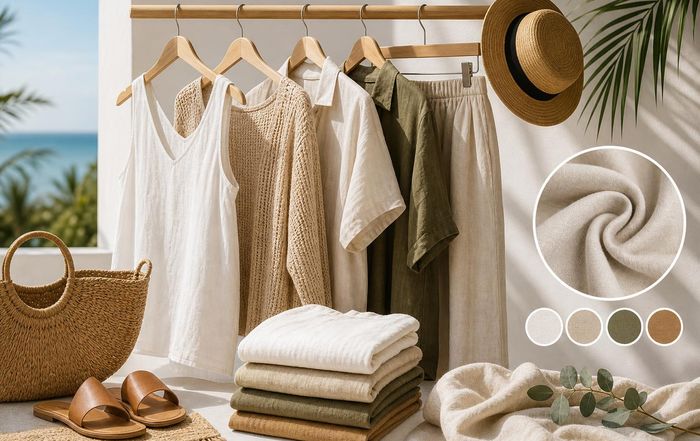
Breathable Fabrics for Australian Summer Outfits: What Really Keeps You Cool
When temperatures climb past 30°C with high UV and often high humidity, "summer clothes" in Australia need to do more than look light and bright. They have to manage sweat, block harsh sun, work with changing levels of humidity from Darwin to Melbourne, and survive frequent washing, all while aligning with growing concerns about sustainability. Understanding what "breathable" really means - and how different fabrics behave in heat - makes it much easier to build a wardrobe that feels comfortable instead of sticky and stifling.
This fashion guide looks at the main natural and synthetic fibers used in warm-weather clothing, how they perform in Australian conditions, and how to choose fabrics and weaves that genuinely keep you cooler. It also explores styling tips and care habits that help you get more from your summer pieces, whether you're dressing for the office, the beach, or a night out.
What "Breathable" Fabric Actually Means in Hot Weather
Breathability is often used loosely in fashion marketing, but in textile science it refers to how easily air and moisture (water vapour and sweat) move through a fabric. In a hot Australian summer, the most comfortable fabrics tend to balance four key properties:
Air permeability - how easily air can pass through the weave or knit. Looser weaves like open-weave linen or gauzy cotton allow more airflow than dense twill or satin constructions.
Moisture management - how fabric absorbs, spreads, and releases sweat. Natural fibers like cotton and linen can absorb moisture into their fibers, while many performance synthetics are engineered to move sweat along the surface of the fiber so it can evaporate faster. The Hohenstein Institute and other textile labs measure this through moisture vapour transmission and drying time tests.
Thermal conductivity - how quickly a fabric transfers heat away from the body. Linen, for example, feels cool to the touch because it conducts heat relatively well and doesn't cling, allowing warm air to escape.
Weight and structure - lighter fabrics usually feel cooler, but very thin synthetics can cling and trap humidity. A mid-weight, loose linen can feel cooler than a flimsy polyester chiffon because it stands away from the skin and lets air circulate.
The ideal summer fabric for Australian conditions is typically light to mid-weight, loosely woven or knitted, with good moisture management and a structure that doesn't cling tightly to damp skin. How the garment is cut and styled matters as much as the fiber itself, so it can help to think of "breathable outfit systems" rather than just individual items.
For readers interested in how fabric touches and textures influence perceived comfort, resources on textile handle and comfort from textile science journals offer deeper technical insight.
Linen: The Classic Hot-Climate Workhorse
Linen has a long history in hot regions for good reason. Made from the fibers of the flax plant, it offers a combination of breathability, moisture management, and structure that works particularly well in Australian summers.
Linen fibers are naturally hollow and relatively stiff compared with cotton. This stiffness means linen garments tend to stand slightly away from the body, creating a fine layer of air between the skin and the fabric. That air gap, combined with linen's high moisture absorption and quick drying, helps sweat evaporate rather than sit on the skin. The European Confederation of Flax and Hemp (CELC) notes that flax fibers can absorb up to about 20% of their weight in moisture without feeling damp, which is valuable in humid coastal cities like Brisbane or Sydney.
For Australian wardrobes, linen works especially well in:
Relaxed shirts and shirtdresses: A loose-cut linen shirt in white or pale colours can provide coverage from UV while still feeling cool. Pairing with breathable shorts or wide-leg trousers creates a versatile base for both city and beach settings.
Wide-leg trousers and culottes: The drape and airflow around the legs are noticeably more comfortable than tight jeans in heat.
Co-ords and sets: Matching linen separates in neutral tones can dress up easily with accessories while still feeling casual and airy.
The downside is wrinkling, but many people now see soft creasing as part of linen's relaxed aesthetic. For those who prefer a smoother look, linen-cotton or linen-viscose blends can reduce creasing while retaining much of the breathability. When shopping, checking fabric labels for higher linen percentages and feeling the weight and openness of the weave can help you judge how cool a garment will be.
Readers looking to build seasonal routines around fabric care and outfit planning may also find the site's routines and guides and tips sections useful for related wardrobe organisation ideas.
Cotton: Versatile, Comfortable, and Dependent on Weave
Cotton is one of the most common fibers in summer clothing and is widely recommended by dermatologists, including the American Academy of Dermatology in its guidance on choosing clothes for sensitive skin. Its popularity in hot weather is well earned, but not all cotton garments perform equally.
Cotton fibers are soft, breathable, and able to absorb significant moisture. However, once saturated, heavy cotton - such as thick denim or dense jersey - can feel wet and clingy, taking time to dry in humid conditions. The key is focusing on fabric weight and construction:
Lightweight cotton poplin, voile, and lawn: These crisp, fine weaves are excellent for summer shirts, dresses, and nightwear. They allow good airflow and dry more quickly than heavier cotton.
Gauze and double gauze: Often used in children's clothing and casual womenswear, these airy, slightly crinkled fabrics trap small pockets of air, making them comfortable in dry heat.
Cotton jersey: Common in T-shirts, jersey can be comfortable if it is light and not too tight. For intense heat or exercise, performance fabrics may be better than standard cotton jersey because of faster drying.
For Australian summer outfits, cotton is particularly useful where softness against the skin matters, such as inner layers, T-shirts, underwear, and sleepwear. It also pairs well with more structured outer layers in linen or technical fabrics. To avoid overheating, it helps to avoid heavy brushed cotton, thick flannel, and rigid denim on very hot days.
Those interested in how cotton compares with newer fibers like lyocell can explore summaries from organizations such as the Textile Exchange, which provides overviews of preferred fiber and material trends.
Bamboo, Lyocell, and Modal: Soft, Breathable Regenerated Fibers
Bamboo viscose, lyocell (often branded as TENCEL™), and modal are part of a family of regenerated cellulose fibers made from plant material that is dissolved and extruded into new fibers. While they are not "natural" in the same sense as linen or cotton, they can feel very cool and soft in summer.
Lyocell and modal, in particular, are known for:
High moisture absorption: They can absorb and release moisture efficiently, which helps regulate body temperature.
Smooth, cool handfeel: The fibers are very fine, giving fabrics a silky, drapey quality that many people find more comfortable than standard cotton in humid heat.
Good breathability: Studies comparing lyocell and cotton show similar or better moisture vapour transmission in many fabric constructions.
These fibers are common in dresses, blouses, sleepwear, and active lifestyle pieces. In Australian conditions, they can be especially comfortable where humidity is high and clingy fabrics quickly feel sticky. However, because they drape closely to the body, the cut of the garment matters: looser silhouettes will feel cooler than tight bodycon styles.
Sustainability claims around bamboo and viscose can be confusing. The Changing Markets Foundation and other NGOs have raised concerns about pollution in some viscose supply chains, while brands using TENCEL™ lyocell highlight the closed-loop manufacturing process that recycles most solvents. For consumers, checking for reputable certifications such as OEKO-TEX® STANDARD 100 or FSC-certified wood sources can provide some reassurance when sustainability is a priority.
Performance Synthetics: When "Moisture-Wicking" Helps and When It Doesn't
Polyester and nylon are often criticised as "sweaty" fabrics, but that is only part of the story. In everyday fashion - especially dense, cheap polyester tops and dresses - the criticism is often accurate: low air permeability and poor moisture management can trap heat and humidity against the skin. However, in technical sportswear, synthetics can outperform natural fibers in specific conditions.
Modern performance fabrics from brands like Nike Dri-FIT, Adidas AEROREADY, and Lululemon are engineered to be moisture-wicking, moving sweat along the surface of the fiber so it can evaporate quickly. This can be particularly effective during high-intensity activity such as running or outdoor workouts in Australian summer, where pure cotton might become waterlogged. The Australian Institute of Sport notes in its heat and hydration guidelines that clothing choice affects thermoregulation, and breathable, moisture-wicking sportswear can support performance in hot conditions.
For everyday summer outfits, synthetics are best used thoughtfully:
Great for: Activewear, swimwear, and some outer layers where quick drying and durability matter.
Use with care for: Office dresses, blouses, and fashion pieces worn in non-air-conditioned environments. If choosing polyester, look for mesh panels, looser cuts, and lightweight constructions.
Avoid: Heavy, fully lined polyester garments for daytime wear in extreme heat.
Recycled polyester (rPET) is increasingly common, but it does not inherently change breathability. Microplastic shedding during washing remains a concern; using a microfibre-catching bag or filter and washing synthetics less frequently can help mitigate this.
Readers who enjoy exploring the intersection of beauty, wellness, and tech-driven textiles may also appreciate the publication's coverage of technology beauty and trends, where innovations in fabric and smart clothing sometimes overlap with skincare and sun protection.
Blends and Weaves: Why the Label Is Only Half the Story
Many garments are blends of fibers - cotton-linen, cotton-polyester, viscose-nylon, and so on. Blends can offer useful combinations of properties, such as improved durability, less wrinkling, or a particular drape. However, the performance of a summer outfit depends on more than the fiber percentages on the tag.
Two factors often matter as much as the fiber content:
Weave or knit structure:
Plain weave and open weaves generally breathe better than satin or twill weaves.
Mesh, piqué, and some rib knits allow more airflow than dense jersey.The HKS Textile Research Institute and similar labs have shown in comfort testing that air permeability can vary dramatically between fabrics made from the same fiber but different weaves.
Fabric weight and thickness:
A 50% cotton / 50% polyester lightweight poplin may feel cooler than a 100% cotton heavy sateen.
A cotton-linen blend in a medium weight can be more practical than very fine pure linen that creases instantly.
When shopping for Australian summer pieces, it can help to:
Hold the fabric up to the light: if you can see some light through it, airflow is likely to be reasonable.
Scrunch the fabric lightly in your hand: if it springs back and feels crisp rather than plasticky, it is more likely to be comfortable.
Check the lining: a breathable outer fabric can be undermined by a non-breathable synthetic lining. Natural or regenerated linings (cotton, viscose, cupro) usually feel cooler.
For those curating a capsule wardrobe, browsing the site's fashion and brands and products sections can help identify labels that state fabric composition and weaving details more clearly.
Dressing for Different Australian Summer Conditions
Australia's climate zones vary widely. What works in dry inland heat may not be ideal for tropical humidity or cooler coastal evenings. Thinking about local microclimates can help refine fabric choices and outfit formulas.
In humid coastal cities such as Brisbane, Darwin, and parts of Sydney, fabrics that manage moisture well and don't cling are crucial. Linen, lightweight cotton, and lyocell all perform well, especially in loose silhouettes. Avoiding multiple synthetic layers is important; a single breathable dress or co-ord often feels better than layered separates with polyester lining.
In dry heat common in inland regions, evaporation works efficiently, so even slightly heavier natural fabrics can feel comfortable as long as they allow airflow. Linen trousers, cotton poplin shirts, and mid-weight chambray can work well, especially when combined with wide-brim hats and UV-protective accessories. The Cancer Council Australia recommends tightly woven fabrics for UV protection, so in very high UV environments, a slightly denser weave in a loose cut can offer better sun safety than ultra-sheer fabrics.
For office environments with strong air conditioning, layering breathable fabrics can balance the transition between outdoor heat and cool interiors. A sleeveless or short-sleeve cotton or lyocell base layer under a lightweight linen blazer or cotton cardigan allows you to adapt quickly to changing temperatures without resorting to synthetics that trap heat on the commute.
Those interested in how clothing choices intersect with overall wellbeing in hot weather might also explore the site's wellness and health and fitness coverage, where hydration, heat management, and sun safety are frequent themes.
Styling Tips to Maximise Breathability in Summer Outfits
Choosing the right fabric is only half the equation; how garments are cut and combined also shapes how cool they feel. A few principles can make a noticeable difference in Australian summers:
Prioritise ease and movement: Garments that skim rather than cling allow air to circulate. A loose linen shirt over a cotton tank, or a relaxed A-line dress in lyocell, will almost always feel cooler than a tight synthetic bodycon dress, regardless of fiber.
Use strategic layering, not bulk: A light cotton or bamboo slip under a slightly sheer linen dress can protect skin from rougher fibers without adding much heat. Avoid stacking multiple thick layers, especially with polyester blends.
Choose lighter colours for sun exposure: Light colours reflect more sunlight and can keep fabric surfaces cooler. The World Health Organization notes in its UV protection advice that colour, weave density, and coverage all affect UV protection; combining pale colours with good coverage and a hat is often more practical than relying on ultra-sheer dark fabrics.
Ventilation details matter: Side slits, open backs with coverage from a breathable underlayer, cropped wide-leg trousers, and gathered necklines that don't sit tightly all help hot air escape.
Footwear and accessories: Natural leather or fabric sandals, cotton socks, and straw or raffia hats are often more breathable than fully synthetic shoes and accessories. While not strictly "fabric" choices, they influence overall comfort in the heat.
Incorporating these principles into everyday dressing can turn a few well-chosen pieces into a flexible summer wardrobe that works for both casual and more polished looks.
Care, Longevity, and Sustainability in a Hot Climate
Frequent washing is almost inevitable in Australian summers, but it can shorten garment life and increase environmental impact. Thoughtful care helps breathable fabrics stay comfortable and last longer.
For linen and cotton, washing in cool to warm water, air drying in the shade, and avoiding over-drying in a tumble dryer can reduce shrinkage and maintain softness. Overuse of fabric softeners can reduce moisture absorption over time; many textile experts and organisations such as the Good Housekeeping Institute note that line drying and gentle detergents are often sufficient for softness.
For bamboo, lyocell, and modal, gentle cycles and lower temperatures are usually recommended to prevent fibre damage and shrinkage. These fabrics can be more delicate when wet, so supporting them when hanging to dry helps prevent stretching. Checking care labels is essential, as blends behave differently.
For synthetics, washing in cooler water and using a microfibre-catching bag or filter can reduce microplastic release. The International Union for Conservation of Nature (IUCN) has highlighted microplastic pollution from textiles as a growing concern, making it worth considering natural or regenerated fibers where practical, especially for everyday garments washed frequently.
Choosing higher-quality breathable fabrics and caring for them well aligns with a more sustainable approach to fashion, reducing the need for constant replacement and helping to keep wardrobes cohesive. Browsing broader beauty and trends content can also provide inspiration for styling existing pieces in new ways, rather than relying on constant new purchases.
Building a Breathable Summer Wardrobe That Suits Your Lifestyle
For Australian summers, the most comfortable wardrobes are built around a small set of reliable fabric and fit combinations. Many people find it helpful to identify two or three "hero" fabrics - often linen, cotton, and one regenerated cellulose like lyocell - and then choose silhouettes that suit their daily routines, whether that means office dressing, beach days, or active weekends.
A few practical starting points include:
A couple of linen or cotton-linen shirts in light colours for work and casual wear.
Wide-leg trousers or culottes in linen or breathable blends for days when shorts feel too casual.
Lightweight cotton or lyocell dresses in relaxed cuts that can be dressed up or down.
A small rotation of technical sportswear for exercise, prioritising moisture-wicking synthetics designed for high heat.
Breathable underlayers (cotton or bamboo) that make sheer or textured outer garments more comfortable.
Over time, paying attention to how different fabrics feel on the hottest days - not just how they look in fitting rooms - makes it easier to make confident choices. By combining fabric knowledge with considered styling and care, it becomes possible to move through even the most intense Australian summer days feeling cooler, drier, and more at ease in your clothes.
